Support Chiropractic Research!

BLOG

Evidence-Based Nonpharmacologic Strategies

By |May 27, 2018|Clinical Guidelines, Pain Management|

Evidence-Based Nonpharmacologic Strategies for Comprehensive Pain Care: The Consortium Pain Task Force White Paper

The Chiro.Org Blog


SOURCE:   Explore (NY). 2018 (Mar 1) [Epub]

Heather Tick, MD, Arya Nielsen, PhD, Kenneth R. Pelletier, PhD, MD, Robert Bonakdar, MD, Samantha Simmons, MPH, Ronald Glick, MD, Emily Ratner, MD, Russell L. Lemmon, MD, Peter Wayne, PhD, Veronica Zador, BSc

Departments of Family Medicine,
Anesthesiology and Pain Medicine,
University of Washington School of Medicine,
Seattle, WA.


Medical pain management is in crisis; from the pervasiveness of pain to inadequate pain treatment, from the escalation of prescription opioids to an epidemic in addiction, diversion and overdose deaths. The rising costs of pain care and managing adverse effects of that care have prompted action from state and federal agencies including the

Department of Defense (DOD,
Veterans Health Administration (VHA),
National Institutes of Health (NIH),
Food and Drug Administration (FDA) and the
Centers for Disease Control and Prevention (CDC).

There is pressure for pain medicine to shift away from reliance on opioids, ineffective procedures and surgeries toward comprehensive pain management that includes evidence-based nonpharmacologic options. This White Paper details the historical context and magnitude of the current pain problem including individual, social and economic impacts as well as the challenges of pain management for patients and a healthcare workforce engaging prevalent strategies not entirely based in current evidence. Detailed here is the evidence-base for nonpharmacologic therapies effective in postsurgical pain with opioid sparing, acute non-surgical pain, cancer pain and chronic pain.

Therapies reviewed include

acupuncture therapy,
massage therapy,
osteopathic and chiropractic manipulation,
meditative movement therapies Tai chi and yoga,
mind body behavioral interventions,
dietary components and
self-care/self-efficacy strategies.

Transforming the system of pain care to a responsive comprehensive model necessitates that options for treatment and collaborative care must be evidence-based and include effective nonpharmacologic strategies that have the advantage of reduced risks of adverse events and addiction liability.

The evidence demands a call to action to increase awareness of effective nonpharmacologic treatments for pain, to train healthcare practitioners and administrators in the evidence base of effective nonpharmacologic practice, to advocate for policy initiatives that remedy system and reimbursement barriers to evidence-informed comprehensive pain care, and to promote ongoing research and dissemination of the role of effective nonpharmacologic treatments in pain, focused on the short- and long-term therapeutic and economic impact of comprehensive care practices.

There are more articles like this @ our:

Low Back Pain Page
and the:
Low Back Pain Guidelines Page

(more…)

Spinal Manipulative Therapy-specific Changes

By |May 26, 2018|Pain Management|

Spinal Manipulative Therapy-specific Changes in Pain Sensitivity in Individuals with Low Back Pain

The Chiro.Org Blog


SOURCE:   Journal of Pain 2014 (Feb); 15 (2): 136–148

Joel E Bialosky, PT, PhD, Steven Z George, PT, PhD, Maggie E Horn, Donald D Price, PhD, Roland Staud, MD, and Michael E Robinson, PhD


Department of Physical Therapy,
Center for Pain Research
and Behavioral Health,
University of Florida,
Gainesville, Florida.


Spinal manipulative therapy (SMT) is effective for some individuals experiencing low back pain; however, the mechanisms are not established regarding the role of placebo. SMT is associated with changes in pain sensitivity, suggesting related altered central nervous system response or processing of afferent nociceptive input. Placebo is also associated with changes in pain sensitivity, and the efficacy of SMT for changes in pain sensitivity beyond placebo has not been adequately considered. We randomly assigned 110 participants with low back pain to receive SMT, placebo SMT, placebo SMT with the instructional set “The manual therapy technique you will receive has been shown to significantly reduce low back pain in some people,” or no intervention.

Participants receiving the SMT and placebo SMT received their assigned intervention 6 times over 2 weeks. Pain sensitivity was assessed prior to and immediately following the assigned intervention during the first session. Clinical outcomes were assessed at baseline and following 2 weeks of participation in the study. Immediate attenuation of suprathreshold heat response was greatest following SMT (P = .05, partial η2 = .07). Group-dependent differences were not observed for changes in pain intensity and disability at 2 weeks. Participant satisfaction was greatest following the enhanced placebo SMT.

This study was registered at www.clinicaltrials.gov under the identifier NCT01168999.

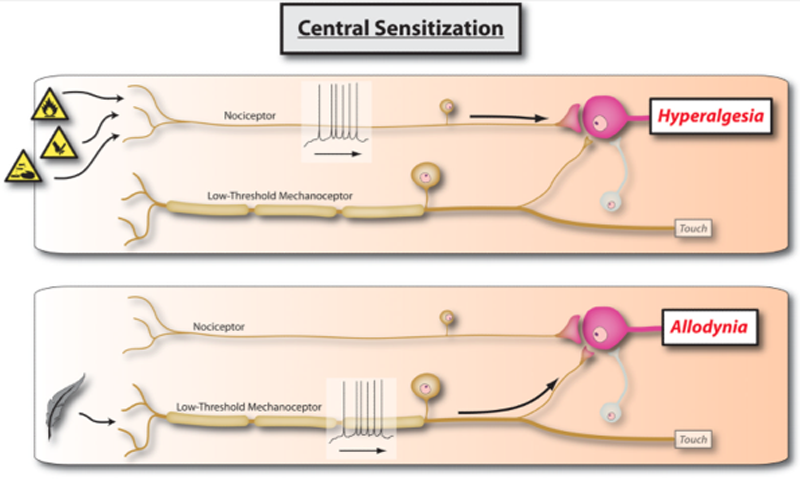
PERSPECTIVE:   The results of this study indicate attenuation of pain sensitivity is greater in response to SMT than the expectation of receiving an SMT. These findings suggest a potential mechanism of SMT related to lessening of central sensitization and may indicate a preclinical effect beyond the expectations of receiving SMT.

There are more articles like this @ our:

Low Back Pain and Chiropractic Page and the:

Chiropractic and Spinal Pain Management Page

(more…)

Effect of Usual Medical Care Plus Chiropractic Care vs Usual

By |May 23, 2018|Low Back Pain, Veterans|

Effect of Usual Medical Care Plus Chiropractic Care vs Usual Medical Care Alone
on Pain and Disability Among US Service Members With Low Back Pain.
A Comparative Effectiveness Clinical Trial

The Chiro.Org Blog


SOURCE:   JAMA Network Open. 2018 (May 18); 1 (1): e180105

Christine M. Goertz, DC, PhD 1; Cynthia R. Long, PhD 1; Robert D. Vining, DC 1; Katherine A. Pohlman, DC, MS 2; Joan Walter, JD, PA 3; Ian Coulter, PhD 4

(1) Palmer College of Chiropractic,
Palmer Center for Chiropractic Research,
Davenport, Iowa

(2) Parker University Research Institute,
Dallas, Texas

(3) Samueli Institute for Information Biology,
Silver Spring, Maryland

(4) RAND Corporation,
Santa Monica, California


Importance   It is critically important to evaluate the effect of nonpharmacological treatments on low back pain and associated disability.

Objective   To determine whether the addition of chiropractic care to usual medical care results in better pain relief and pain-related function when compared with usual medical care alone.

Design, Setting, and Participants   A 3–site pragmatic comparative effectiveness clinical trial using adaptive allocation was conducted from September 28, 2012, to February 13, 2016, at 2 large military medical centers in major metropolitan areas and 1 smaller hospital at a military training site. Eligible participants were active-duty US service members aged 18 to 50 years with low back pain from a musculoskeletal source.

Interventions   The intervention period was 6 weeks. Usual medical care included self-care, medications, physical therapy, and pain clinic referral. Chiropractic care included spinal manipulative therapy in the low back and adjacent regions and additional therapeutic procedures such as rehabilitative exercise, cryotherapy, superficial heat, and other manual therapies.

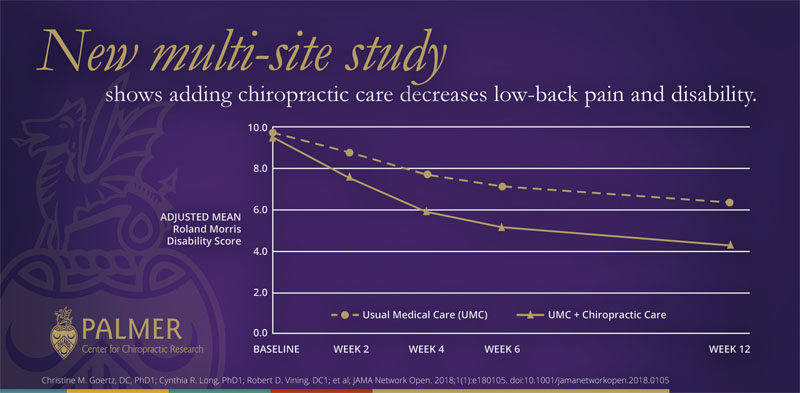
Main Outcomes and Measures   Coprimary outcomes were low back pain intensity (Numerical Rating Scale; scores ranging from 0 [no low back pain] to 10 [worst possible low back pain]) and disability (Roland Morris Disability Questionnaire; scores ranging from 0–24, with higher scores indicating greater disability) at 6 weeks. Secondary outcomes included perceived improvement, satisfaction (Numerical Rating Scale; scores ranging from 0 [not at all satisfied] to 10 [extremely satisfied]), and medication use. The coprimary outcomes were modeled with linear mixed-effects regression over baseline and weeks 2, 4, 6, and 12.

Results   Of the 806 screened patients who were recruited through either clinician referrals or self-referrals, 750 were enrolled (250 at each site). The mean (SD) participant age was 30.9 (8.7) years, 175 participants (23.3%) were female, and 243 participants (32.4%) were nonwhite. Statistically significant site × time × group interactions were found in all models. Adjusted mean differences in scores at week 6 were statistically significant in favor of usual medical care plus chiropractic care compared with usual medical care alone overall for low back pain intensity (mean difference, –1.1; 95% CI, –1.4 to –0.7), disability (mean difference, –2.2; 95% CI, –3.1 to –1.2), and satisfaction (mean difference, 2.5; 95% CI, 2.1 to 2.8) as well as at each site. Adjusted odd ratios at week 6 were also statistically significant in favor of usual medical care plus chiropractic care overall for perceived improvement (odds ratio = 0.18; 95% CI, 0.13–0.25) and self-reported pain medication use (odds ratio = 0.73; 95% CI, 0.54–0.97). No serious related adverse events were reported.

There are more articles like this @ our:

Chiropractic Care For Veterans Page and the:

Low Back Pain and Chiropractic Page

(more…)

Chiropractic Care Improves Usual Management for Low Back Pain

By |May 22, 2018|Veterans|

Chiropractic Care Improves Usual Management for Low Back Pain

The Chiro.Org Blog


SOURCE:   Medscape Medical News ~ May 21, 2018


Adding chiropractic care to standard medical management of low back pain (LBP) in a military population reduced patient-reported pain and disability and improved satisfaction scores compared with standard treatment alone, new data show.

The findings, reported by Christine M. Goertz, DC, PhD, from Palmer College of Chiropractic, Davenport, Iowa, and colleagues in an article published online May 18 in JAMA Network Open, confirm results from the team’s pilot study.

In addition, the new data align with recent guidelines from the American College of Physicians that recommend inclusion of spinal manipulation, among other nondrug treatments, as first-line therapy for acute and chronic low-back pain.

For the current study, Goertz and colleagues enrolled 750 active-duty US service members aged 18 to 50 years with LBP from three military facilities in a pragmatic comparative effectiveness trial.

Patients were screened between September 28, 2012, and November 20, 2015, and 250 patients from each of the study sites were allocated to receive usual medical care with chiropractic care (375 participants) or usual medical care alone (375 participants). Usual medical care was defined as any care recommended or prescribed by nonchiropractic military clinicians to treat LBP, including self-management advice, drug treatment, physical therapy, or referral to a pain clinic.

There are more articles like this @ our:

Chiropractic Care For Veterans Page

(more…)

Epidemiology: Spinal Manipulation Utilization

By |May 22, 2018|Chiropractic Care|

Epidemiology: Spinal Manipulation Utilization

The Chiro.Org Blog


SOURCE:   J Electromyogr Kinesiol. 2012 (Oct); 22 (5): 648–654


Eric L. Hurwitz

Department of Public Health Sciences,
John A. Burns School of Medicine,
University of Hawaii,
M?noa, Honolulu, HI 96822, USA.


The objectives of this article are to

        (1)   describe spinal manipulation use by time, place, and person, and

        (2)   identify predictors of the use of spinal manipulation.

We conducted a systematic review of the English-language literature published from January 1, 1980 through June 30, 2011. Of 822 citations identified, 213 were deemed potentially relevant; 75 were included after further consideration. Twenty-one additional articles were identified from reference lists. The literature is heavily weighted toward North America, Europe, and Australia and thus largely precludes inferences about spinal manipulation use in other parts of the world. In the regions covered by the literature, chiropractors, osteopaths, and physical therapists are most likely to deliver spinal manipulation, often in conjunction with other conservative therapies.

Back and neck pain are the most frequent indications for receiving spinal manipulation; non-musculoskeletal conditions comprise a very small percentage of indications. Although spinal manipulation is more commonly used in adults than children, evidence suggests that spinal manipulation may be more likely used for non-musculoskeletal ailments in children than in adults. Patient satisfaction with spinal manipulation is very high.


From the Full-Text Article:

Introduction

Although spinal manipulation has been practiced for thousands of years in several cultures spanning the globe, it is most commonly associated with chiropractic and osteopathy, which originated in the late 1800s in the United States (Pettman, 2007). The purpose of this article is to review the literature on the use of spinal manipulation. Specifically, our objectives are twofold: (1) To describe spinal manipulation use by time (temporal trends), place (geographic distribution), and person (practitioner and patient), and (2) to identify predictors of the use of spinal manipulation.

There are more articles like this @ our:

About Chiropractic Page

(more…)

Chiropractic Treatment Including Instrument-assisted Manipulation

By |May 21, 2018|Vertigo|

Chiropractic Treatment Including Instrument-assisted Manipulation for Non-specific Dizziness and Neck Pain in Community-dwelling Older People: A Feasibility Randomised Sham-controlled Trial

The Chiro.Org Blog


SOURCE:   Chiropractic & Manual Therapies 2018 (May 10); 26: 14


Julie C. Kendall, Simon D. French, Jan Hartvigsen, and Michael F. Azari

School of Health and Biomedical Sciences,
RMIT University,
PO Box 71 Bundoora,
Melbourne, VIC 3083 Australia.


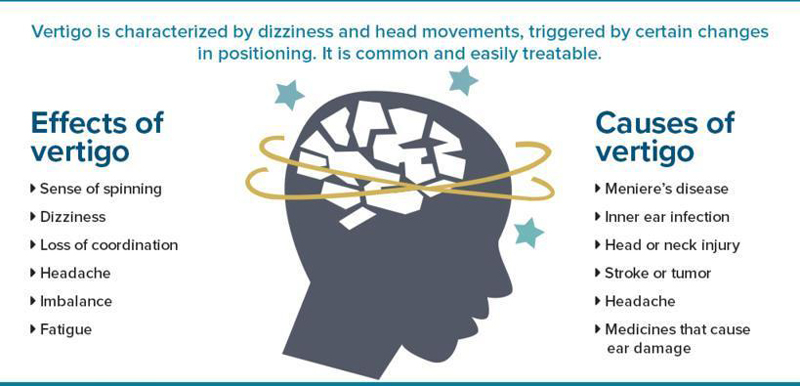
BACKGROUND:   Dizziness in older people is a risk factor for falls. Neck pain is associated with dizziness and responds favourably to neck manipulation. However, it is unknown if chiropractic intervention including instrument-assisted manipulation of the neck in older people with neck pain can also improve dizziness.

METHODS:   This parallel two-arm pilot trial was conducted in Melbourne, Australia over nine months (October 2015 to June 2016). Participants aged 65–85 years, with self-reported chronic neck pain and dizziness, were recruited from the general public through advertisements in local community newspapers and via Facebook. Participants were randomised using a permuted block method to one of two groups: 1) Activator II™-instrument-assisted cervical and thoracic spine manipulation plus a combination of: light massage; mobilisation; range of motion exercises; and home advice about the application of heat, or 2) Sham-Activator II™-instrument-assisted manipulation (set to zero impulse) plus gentle touch of cervical and thoracic spinal regions. Participants were blinded to group allocation. The interventions were delivered weekly for four weeks. Assessments were conducted one week pre- and post-intervention. Clinical outcomes were assessed blindly and included: dizziness (dizziness handicap inventory [DHI]); neck pain (neck disability index [NDI]); self-reported concerns of falling; mood; physical function; and treatment satisfaction. Feasibility outcomes included recruitment rates, compliance with intervention and outcome assessment, study location, success of blinding, costs and harms.

RESULTS:   Out of 162 enquiries, 24 participants were screened as eligible and randomised to either the chiropractic (n = 13) or sham (n = 11) intervention group. Compliance was satisfactory with only two participants lost to follow up; thus, post-intervention data for 12 chiropractic intervention and 10 sham intervention participants were analysed. Blinding was similar between groups. Mild harms of increased spinal pain or headaches were reported by 6 participants. Costs amounted to AUD$2635 per participant. The data showed a trend favouring the chiropractic group in terms of clinically-significant improvements in both NDI and DHI scores. Sample sizes of n = 150 or n = 222 for dizziness or neck pain disability as the primary outcome measure, respectively, would be needed for a fully powered trial.

There are more articles like this @ our:

Vertigo, Balance and Chiropractic Page

(more…)