Support Chiropractic Research!

Frank M. Painter

About Frank M. Painter

I was introduced to Chiro.Org in early 1996, where my friend Joe Garolis helped me learn HTML, the "mark-up language" for websites. We have been fortunate that journals like JMPT have given us permission to reproduce some early important articles in Full-Text format. Maintaining the Org website has been, and remains, my favorite hobby.

Knowledge Transfer within the Canadian Chiropractic Community

By |April 10, 2017|Chiropractic Care, Evidence-based Practice, Guidelines|

Knowledge Transfer within the Canadian Chiropractic Community. Part 2: Narrowing the Evidence-Practice Gap

The Chiro.Org Blog


SOURCE:   J Can Chiropr Assoc. 2014 (Sep); 58 (3): 206–214


Greg Kawchuk, DC, MSc, PhD, Genevieve Newton, DC, PhD,
John Srbely, DC, PhD, Steven Passmore, Hons BKin, DC, PhD,
André Bussières, DC, FCCS (C), Jason W. Busse, DC, PhD,
and Paul Bruno, BHK, DC, PhD

Associate Professor and Canada Research Chair
in Spinal Function,
Faculty of Rehabilitation Medicine,
University of Alberta


Introduction

This two-part commentary aims to provide clinicians with a basic understanding of knowledge translation (KT), a term that is often used interchangeably with phrases such as knowledge transfer, translational research, knowledge mobilization, and knowledge exchange. [1] Knowledge translation, also known as the science of implementation, is increasingly recognized as a critical element in improving healthcare delivery and aligning the use of research knowledge with clinical practice. [2] The focus of our commentary relates to how these KT processes link with evidence-based chiropractic care.

There are more articles like this @ our:

The Guidelines Section and the:

The Evidence-based Practice Page

(more…)

Knowledge Transfer within the Canadian Chiropractic Community. Part 1: Understanding Evidence-Practice Gaps

By |April 9, 2017|Guidelines, Knowledge Transfer|

Knowledge Transfer within the Canadian Chiropractic Community. Part 1: Understanding Evidence-Practice Gaps

The Chiro.Org Blog


SOURCE:   J Can Chiropr Assoc. 2013 (Jun); 57 (2): 111–115


Greg Kawchuk, DC, PhD, Paul Bruno, BHK, DC, PhD,
Jason W. Busse, DC, PhD, André Bussières, DC, FCCS(C), PhD,
Mark Erwin, DC, PhD, Steven Passmore, Hons BKin, DC, PhD,
and John Srbely, DC, PhD

Associate Professor and Canada Research Chair
in Spinal Function,
Faculty of Rehabilitation Medicine,
University of Alberta


Overview

This two-part commentary aims to provide a basic understanding of knowledge translation (KT), how KT is currently integrated in the chiropractic community and our view of how to improve KT in our profession. Part 1 presents an overview of KT and discusses some of the common barriers to successful KT within the chiropractic profession. Part 2 will suggest strategies to mitigate these barriers and reduce the evidence-practice gap for both the profession at large and for practicing clinicians.


Introduction

New knowledge is created at such a rapid pace that health care professionals find it difficult, if not impossible, to keep up to date. In a single day alone, 75 clinical trials and 11 systematic reviews are published. [1] As a result, it is incredibly difficult to keep up to date with the literature in order to implement new knowledge that may optimize patient care, increase benefits, or reduce harm. In an effort to promote evidence-based practice, many researchers and funding agencies are now focusing on processes to deliver emerging evidence successfully to clinicians and other stakeholders; this process has been termed KT.

What is KT?

There are more articles like this @ our:

The Guidelines Section and the:
The Evidence-based Practice Page

(more…)

Spinal Pain in Danish School Children

By |April 7, 2017|Pediatrics, Spinal Joint Pain|

Spinal Pain in Danish School Children – How Often and How Long? The CHAMPS Study-DK

The Chiro.Org Blog


SOURCE:   BMC Musculoskelet Disord. 2017 (Mar 27); 18 (1): 67


Kristina Boe Dissing, Lise Hestbæk, Jan Hartvigsen,
Christopher Williams, Steven Kamper, Eleanor Boyle,
and Niels Wedderkopp

Department of Sports Science and Clinical Biomechanics,
Faculty of Health Sciences,
University of Southern Denmark,
Campusvej 55, DK-5230, Odense M, Denmark.


BACKGROUND:   Spinal pain in children and adolescents is a common condition, usually transitory, but the picture of spinal pain still needs elucidation, mainly due to variation in measurement methods. The aim of this study was to describe the occurrence of spinal pain in 8-15 year-old Danish school children, over a 3-year period. Specifically determining the characteristics of spinal pain in terms of frequency and duration.

METHODS:   The study was a 3-year prospective longitudinal cohort study including 1,400 school children. The outcomes were based on weekly text messages (SMS) to the parents inquiring about the child’s musculoskeletal pain, and on clinical data from examinations of the children.

RESULTS:   The 3-year prevalence was 55%. The prevalence was 29%, 33% and 31% for each of the three study years respectively, and increased statistically significantly with age, especially for lumbopelvic pain. Most children had few and short-lasting episodes with spinal pain, but more than one out of five children had three or more episodes during a study year and 17% of all episodes lasted for more than 4 weeks.

There are more articles like this @ our:

Chiropractic Pediatrics Section

(more…)

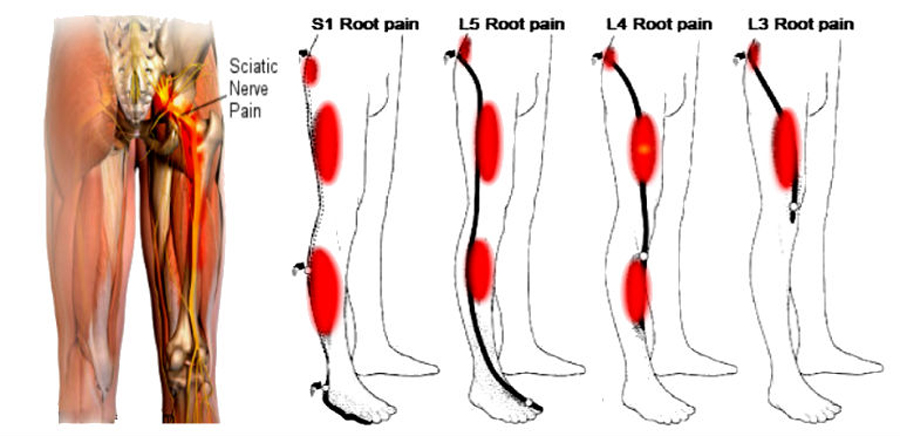
Leg Pain Location and Neurological Signs Relate to Outcomes in Primary Care Patients with Low Back Pain

By |April 6, 2017|Clinical Decision Rule, Sciatica|

Leg Pain Location and Neurological Signs Relate to Outcomes in Primary Care Patients with Low Back Pain

The Chiro.Org Blog


SOURCE:   BMC Musculoskelet Disord. 2017 (Mar 31); 18 (1): 133


Lisbeth Hartvigsen, Lise Hestbaek, Charlotte Lebouef-Yde,
Werner Vach and Alice Kongsted

Department of Sports Science and Clinical Biomechanics,
University of Southern Denmark


BACKGROUND:   Low back pain (LBP) patients with related leg pain and signs of nerve root involvement are considered to have a worse prognosis than patients with LBP alone. However, it is unclear whether leg pain location above or below the knee and the presence of neurological signs are important in primary care patients. The objectives of this study were to explore whether the four Quebec Task Force categories (QTFC) based on the location of pain and on neurological signs have different characteristics at the time of care seeking, whether these QTFC are associated with outcome, and if so whether there is an obvious ranking of the four QTFC on the severity of outcomes.

METHOD:   Adult patients seeking care for LBP in chiropractic or general practice were classified into the four QTFC based on self-reported information and clinical findings. Analyses were performed to test the associations between the QTFC and baseline characteristics as well as the outcomes global perceived effect and activity limitation after 2 weeks, 3 months, and 1 year and also 1-year trajectories of LBP intensity.

RESULTS:   The study comprised 1,271 patients; 947 from chiropractic practice and 324 from general practice. The QTFC at presentation were statistically significantly associated with most of the baseline characteristics, with activity limitation at all follow-up time points, with global perceived effect at 2 weeks but not 3 months and 1 year, and with trajectories of LBP. Severity of outcomes in the QTFC increased from LBP alone, across LBP with leg pain above the knee and below the knee to LBP with nerve root involvement. However, the variation within the categories was considerable.

There are more articles like this @ our:

Clinical Prediction Rule Page and the:

Low Back Pain and Chiropractic Page

(more…)

Pain Location Matters: The Impact of Leg Pain on Health Care Use, Work Disability and Quality of Life in Patients with Low Back Pain

By |April 5, 2017|Low Back Pain, Outcome Assessment, Sciatica|

Pain Location Matters: The Impact of Leg Pain on Health Care Use, Work Disability and Quality of Life in Patients with Low Back Pain

The Chiro.Org Blog


SOURCE:   Eur Spine J. 2015 (Mar); 24 (3): 444–451

Samantha L. Hider, David G. T. Whitehurst,
Elaine Thomas, Nadine E. Foster

Arthritis Research UK Primary Care Centre,
Keele University, Keele,
Staffordshire, ST5 5BG, UK.


PURPOSE:   In low back pain (LBP) patients, those with radiating leg pain or sciatica have poorer pain and disability outcomes. Few studies have assessed the effect of leg pain on health care use and quality of life.

METHODS:   Prospective cohort study of 1,581 UK LBP primary care consulters. Back pain, employment, health care utilisation, and quality of life (EQ-5D) data were collected at baseline, 6 and 12 months. At baseline, patients were classified as reporting

(1)   LBP only

(2)   LBP and leg pain above the knee only (LBP + AK) or

(3)   LBP and leg pain extending below the knee (LBP + BK).

RESULTS:   Self-reported leg pain was common; at baseline 645 (41%) reported LBP only, 392 (25%) reported LBP + AK and 544 (34%) reported LBP + BK. Patients with LBP + BK, compared to those with LBP only, were significantly more likely to be unemployed, take time off work, consult their family doctor, receive physical therapy, or be referred to other health care practitioners. There were statistically significant decrements in EQ-5D scores for LBP + AK compared to LBP only, and for LBP + BK compared to LBP + AK (p ≤ 0.05 for all comparisons).

There are more articles like this @ our:

Radiculopathy and Chiropractic Page and the:

Low Back Pain and Chiropractic Page

(more…)

Complementary and Alternative Medicine Use by Children with Pain in the United States

By |March 28, 2017|Pediatrics, Spinal Joint Pain|

Complementary and Alternative Medicine Use by Children with Pain in the United States

The Chiro.Org Blog


SOURCE:   Acad Pediatr. 2017 (Feb 20).  pii: S1876-2859(17)30063-3


Cornelius B. Groenewald, MBChB, Sarah E. Beals-Erickson, PhD, Jaime Ralston-Wilson, DAOM, LAc, Jennifer A. Rabbitts, MB, ChB, Tonya M. Palermo, PhD

Department of Anesthesiology and Pain Medicine,
University of Washington School of Medicine and Seattle Children’s Hospital.
M/S MB.11.500, 4800 Sand Point Way NE,
Seattle, WA 98105, USA.


OBJECTIVE:   Chronic pain is reported by 15-25% of children. Growing evidence from clinical samples suggests that complementary and alternative medicine (CAM) therapies are desired by families and may benefit some children with pain conditions. The objective of this study is to provide estimates of CAM use by children with pain in the United States.

METHODS:   We analyzed data from the 2012 National Health Interview Survey (NHIS) to estimate patterns, predictors, and perceived benefits of CAM use among children 4-17 years of age with and without painful conditions in the US. We used χ2 tests to compare the prevalence rates of CAM use among children with pain to CAM use among children without pain. Multivariable logistic regression was used to examine factors associated with CAM use within the group of children with pain conditions.

RESULTS:   Parents reported that 26.6% of children had pain conditions (e.g. headache, abdominal, musculoskeletal pain) in the past year; of these children, 21.3% used CAM. In contrast only 8.1% of children without pain conditions used CAM (χ2: p<.001). CAM use among children with pain was associated with female sex (adjusted odds ratio (aOR)=1.49, p=0.005), higher income (aOR=1.61, p=0.027), and presence of 4+ comorbidities (aOR=2.01, p=0.013). Among children with pain who used CAM the 2 most commonly used CAM modalities were biologically-based therapies (47.3%) (e.g., special diets and herbal supplements) and manipulative or body-based therapies (46.3%) (e.g., chiropractic and massage).

There are more articles like this @ our:

Chiropractic Pediatrics Page and the:

Chiropractic and Spinal Pain Page

(more…)