

Support Chiropractic Research!

BLOG

The Provision of Chiropractic, Physiotherapy and Osteopathic Services

By |April 20, 2018|Chiropractic Care|

The Provision of Chiropractic, Physiotherapy and Osteopathic Services Within the Australian Private Health-care System: A Report of Recent Trends

The Chiro.Org Blog


SOURCE:   Chiropractic & Manual Therapies 2014 (Jan 15); 22 (1): 3


Roger M Engel, Benjamin T Brown, Michael S Swain, and Reidar P Lystad

Department of Chiropractic,
Macquarie University,
Balaclava Rd, North Ryde 2109,
Australia.


BACKGROUND:   Chiropractors, physiotherapists, and osteopaths receive training in the diagnosis and management of musculoskeletal conditions. As a result there is considerable overlap in the types of conditions that are encountered clinically by these practitioners. In Australia, the majority of benefits paid for these services come from the private sector. The purpose of this article is to quantify and describe the development in service utilization and the cost of benefits paid to users of these healthcare services by private health insurers. An exploration of the factors that may have influenced the observed trends is also presented.

METHODS:   A review of data from the Australian Bureau of Statistics, Australian Health Practitioner Regulation Agency, and the Australian Government Private Health Insurance Administration Council was conducted. An analysis of chiropractic, physiotherapy and osteopathic service utilisation and cost of service utilisation trend was performed along with the level of benefits and services over time.

RESULTS:   In 2012, the number of physiotherapists working in the private sector was 2.9 times larger than that of chiropractic, and 7.8 times that of the osteopathic profession. The total number of services provided by chiropractors, physiotherapists, and osteopaths increased steadily over the past 15 years. For the majority of this period, chiropractors provided more services than the other two professions. The average number of services provided by chiropractors was approximately two and a half times that of physiotherapists and four and a half times that of osteopaths.

There are more articles like this @ our:
About Chiropractic Page

(more…)

Patients’ Experiences and Expectations of Chiropractic Care

By |April 19, 2018|Patient Expectations|

Patients’ Experiences and Expectations of Chiropractic Care:
A National Cross-sectional Survey

The Chiro.Org Blog


SOURCE:   Chiropractic & Manual Therapies 2015 (Jan 16); 23 (1): 3


Hugh MacPherson, Elizabeth Newbronner, Ruth Chamberlain and Ann Hopton

Department of Health Sciences,
University of York,
York, UK.


BACKGROUND:   Not enough is understood about patients’ views of chiropractic care. The aims of this research were to explore patients’ experiences and expectations, their perceptions of benefits and risks, and the implications for chiropractors’ continuing fitness to practise.

METHODS:   Survey questions were formulated from existing literature, published guidance on good practice from the General Chiropractic Council, and from 28 telephone interviews and a small focus group with chiropractic patients using a semi-structured topic guide. In its final form, the survey elicited patients’ ratings on expectations regarding 33 aspects of care. In a national cross-sectional survey, a number of sampling methods were required as a consequence of the low practitioner response rate.

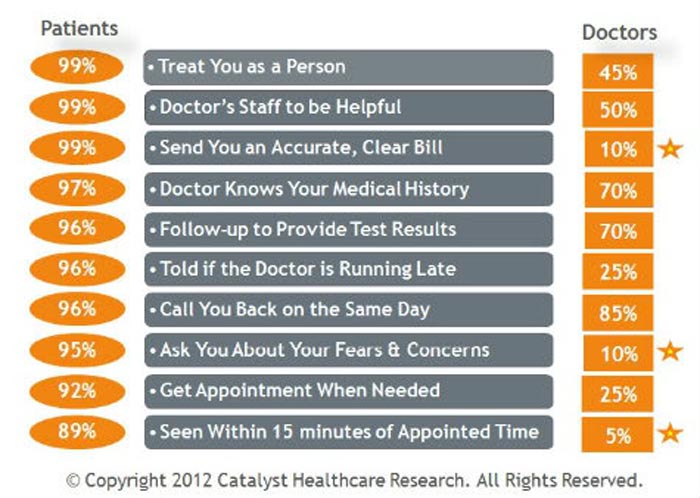
RESULTS:   In total, 544 completed questionnaires were received from chiropractic patients, a lower response rate than expected (8%). The two main benefits that patients reported regarding their chiropractic care were reduced pain (92%) and increased mobility (80%). Of respondents, 20% reported unexpected or unpleasant reactions to their treatment, most commonly tiredness or fatigue (32%), and extra pain (36%). In most cases they expressed low levels of concern about these reactions. Patients’ expectations were met for most aspects of care. The four aspects of practice where expectations were least well met comprised: having more information on the cost of the treatment plan at the first consultation (80%); the chiropractor contacting the patient’s general practitioner if necessary (62%); having a discussion about a referral to another healthcare practitioner (62%); and providing a method for confidential feedback (66%).

There are more articles like this @ our:

Patient Expectations Page

(more…)

The Chiropractic Profession: A Scoping Review of Utilization

By |April 18, 2018|Chiropractic Care|

The Chiropractic Profession: A Scoping Review of Utilization Rates, Reasons for Seeking Care, Patient Profiles, and Care Provided

The Chiro.Org Blog


SOURCE:   Chiropractic & Manual Therapies 2017 (Nov 22);   25:   35


Peter J. H. Beliveau, Jessica J. Wong, Deborah A. Sutton, Nir Ben Simon, André E. Bussières, Silvano A. Mior and Simon D. French

Department of Public Health Sciences,
Queen’s University,
Kingston, Canada.


BACKGROUND:   Previous research has investigated utilization rates, who sees chiropractors, for what reasons, and the type of care that chiropractors provide. However, these studies have not been comprehensively synthesized. We aimed to give a global overview by summarizing the current literature on the utilization of chiropractic services, reasons for seeking care, patient profiles, and assessment and treatment provided.

METHODS:   Systematic searches were conducted in MEDLINE, CINAHL, and Index to Chiropractic Literature using keywords and subject headings (MeSH or ChiroSH terms) from database inception to January 2016. Eligible studies: 1) were published in English or French; 2) were case series, descriptive, cross-sectional, or cohort studies; 3) described patients receiving chiropractic services; and 4) reported on the following theme(s): utilization rates of chiropractic services; reasons for attending chiropractic care; profiles of chiropractic patients; or, types of chiropractic services provided. Paired reviewers independently screened all citations and data were extracted from eligible studies. We provided descriptive numerical analysis, e.g. identifying the median rate and interquartile range (e.g., chiropractic utilization rate) stratified by study population or condition.

RESULTS:   The literature search retrieved 14,149 articles; 328 studies (reported in 337 articles) were relevant and reported on chiropractic utilization (245 studies), reason for attending chiropractic care (85 studies), patient demographics (130 studies), and assessment and treatment provided (34 studies). Globally, the median 12-month utilization of chiropractic services was 9.1% (interquartile range (IQR): 6.7%-13.1%) and remained stable between 1980 and 2015. Most patients consulting chiropractors were female (57.0%, IQR: 53.2%-60.0%) with a median age of 43.4 years (IQR: 39.6-48.0), and were employed (median: 77.3%, IQR: 70.3%-85.0%). The most common reported reasons for people attending chiropractic care were (median) low back pain (49.7%, IQR: 43.0%-60.2%), neck pain (22.5%, IQR: 16.3%-24.5%), and extremity problems (10.0%, IQR: 4.3%-22.0%). The most common treatment provided by chiropractors included (median) spinal manipulation (79.3%, IQR: 55.4%-91.3%), soft-tissue therapy (35.1%, IQR: 16.5%-52.0%), and formal patient education (31.3%, IQR: 22.6%-65.0%).

There are more articles like this @ our:
About Chiropractic Page

(more…)

Validity and Reliability of Clinical Prediction Rules

By |April 17, 2018|Cervical Spine Trauma|

Validity and Reliability of Clinical Prediction Rules used to Screen for Cervical Spine Injury in Alert Low-risk Patients with Blunt Trauma to the Neck: Part 2. A Systematic Review from the Cervical Assessment and Diagnosis Research Evaluation (CADRE) Collaboration

The Chiro.Org Blog


SOURCE:   European Spine Journal 2017 (Sep 22) [Epub]


N. Moser, N. Lemeunier, D. Southerst, H. Shearer, K. Murnaghan, D. Sutton, P. Cote

Division of Graduate Education and Research,
Canadian Memorial Chiropractic College (CMCC),
6100 Leslie Street,
Toronto, ON, Canada.


PURPOSE:   To update findings of the 2000-2010 Bone and Joint Decade Task Force on Neck Pain and its Associated Disorders (Neck Pain Task Force) on the validity and reliability of clinical prediction rules used to screen for cervical spine injury in alert low-risk adult patients with blunt trauma to the neck.

METHODS:   We searched four databases from 2005 to 2015. Pairs of independent reviewers critically appraised eligible studies using the modified QUADAS-2 and QAREL criteria. We synthesized low risk of bias studies following best evidence synthesis principles.

RESULTS:   We screened 679 citations; five had a low risk of bias and were included in our synthesis. The sensitivity of the Canadian C-spine rule ranged from 0.90 to 1.00 with negative predictive values ranging from 99 to 100%. Inter-rater reliability of the Canadian C-spine rule varied from k = 0.60 between nurses and physicians to k = 0.93 among paramedics. The inter-rater reliability of the Nexus Low-Risk Criteria was k = 0.53 between resident physicians and faculty physicians.

There are more articles like this @ our:

Clinical Prediction Rule Page

(more…)

Integration of Doctors of Chiropractic Into Private Sector Health Care

By |April 13, 2018|Integrative Care|

Integration of Doctors of Chiropractic Into Private Sector Health Care Facilities in the United States: A Descriptive Survey

The Chiro.Org Blog


SOURCE:   J Manipulative Physiol Ther. 2018 (Feb); 41 (2): 149–155


Stacie A. Salsbury, PhD, RN, Christine M. Goertz, DC, PhD, Elissa J. Twist, DC, MS, Anthony J. Lisi, DC

Palmer Center for Chiropractic Research,
Palmer College of Chiropractic,
Davenport, Iowa.


OBJECTIVE:   The purpose of this study was to describe the demographic, facility, and practice characteristics of doctors of chiropractic (DCs) working in private sector health care settings in the United States.

METHODS:   We conducted an online, cross-sectional survey using a purposive sample of DCs (n = 50) working in integrated health care facilities. The 36-item survey collected demographic, facility, chiropractic, and interdisciplinary practice characteristics, which were analyzed with descriptive statistics.

RESULTS:   The response rate was 76% (n = 38). Most respondents were men and mid-career professionals with a mean 21 years of experience in chiropractic. Doctors of chiropractic reported working in hospitals (40%), multispecialty offices (21%), ambulatory clinics (16%), or other (21%) health care settings. Most (68%) were employees and received salary compensation (59%). The median number of DCs per setting was 2 (range 1–8). Most DCs used the same health record as medical staff and worked in the same clinical setting. More than 60% reported co-management of patients with medical professionals. Integrated DCs most often received and made referrals to primary care, physical medicine, pain medicine, orthopedics, and physical or occupational therapy. Although in many facilities the DCs were exclusive providers of spinal manipulation (43%), in most, manipulative therapies also were delivered by physical therapists and osteopathic or medical physicians. Informal face-to-face consultations and shared health records were the most common communication methods.

There are more articles like this @ our:
Integrated Health Care and Chiropractic Page

(more…)

Spinal Manipulative Therapy and Other Conservative Treatments

By |April 12, 2018|Guidelines, Low Back Pain|

Spinal Manipulative Therapy and Other Conservative Treatments for Low Back Pain:
A Guideline From the Canadian Chiropractic Guideline Initiative

The Chiro.Org Blog


SOURCE:   J Manipulative Physiol Ther. 2018 (Mar 29) [Epub]


André E. Bussières, DC, FCCS(C), PhD, Gregory Stewart, DC, Fadi Al-Zoubi, PT, MSc, Philip Decina, DC, Martin Descarreaux, DC, PhD, Danielle Haskett, BSc, Cesar Hincapié, DC, PhD, Isabelle Pagé, DC, MSc, Steven Passmore, DC, PhD, John Srbely, DC, PhD, Maja Stupar, DC, PhD, Joel Weisberg, DC, Joseph Ornelas, DC, PhD

School of Physical and Occupational Therapy,
Faculty of Medicine, McGill University,
Montreal, Québec, Canada


OBJECTIVE: &nbsp The objective of this study was to develop a clinical practice guideline on the management of acute and chronic low back pain (LBP) in adults. The aim was to develop a guideline to provide best practice recommendations on the initial assessment and monitoring of people with low back pain and address the use of spinal manipulation therapy (SMT) compared with other commonly used conservative treatments.

METHODS: &nbsp The topic areas were chosen based on an Agency for Healthcare Research and Quality comparative effectiveness review, specific to spinal manipulation as a nonpharmacological intervention. The panel updated the search strategies in Medline. We assessed admissible systematic reviews and randomized controlled trials for each question using A Measurement Tool to Assess Systematic Reviews and Cochrane Back Review Group criteria. Evidence profiles were used to summarize judgments of the evidence quality and link recommendations to the supporting evidence. Using the Evidence to Decision Framework, the guideline panel determined the certainty of evidence and strength of the recommendations. Consensus was achieved using a modified Delphi technique. The guideline was peer reviewed by an 8-member multidisciplinary external committee.

RESULTS: &nbsp For patients with acute (0-3 months) back pain, we suggest offering advice (posture, staying active), reassurance, education and self-management strategies in addition to SMT, usual medical care when deemed beneficial, or a combination of SMT and usual medical care to improve pain and disability. For patients with chronic (>3 months) back pain, we suggest offering advice and education, SMT or SMT as part of a multimodal therapy (exercise, myofascial therapy or usual medical care when deemed beneficial). For patients with chronic back-related leg pain, we suggest offering advice and education along with SMT and home exercise (positioning and stabilization exercises).

There are more articles like this @ our:

Low Back Pain Guidelines Page

(more…)