
Support Chiropractic Research!

Chiropractic Management

Chiropractic Students Versus Emergency Care Practitioners in Simulated Musculoskeletal Emergencies

By |November 11, 2025|All About Chiropractic, Care Plans, Cervical Disk Herniation, Chiropractic Education, Chiropractic Management, Diagnosis, Escalation of Care, Evidence-based Medicine|

Chiropractic Students Versus Emergency Care Practitioners in Simulated Musculoskeletal Emergencies

The Chiro.Org Blog


SOURCE:   Health SA 2025 (Oct 31): 30: 3195


Ivanna Balanco • Helen Slabber • Christopher Yelverton

Department of Chiropractic,
Faculty of Health Sciences,
University of Johannesburg,
Johannesburg, South Africa.


Background:   As primary contact practitioners, chiropractors and emergency care practitioners (ECPs are first points of access for patients with musculoskeletal (MSK) complaints. A comparison of their diagnostic competency in distinguishing these presentations from underlying emergency pathologies remains an understudied area.

Aim:   To compare the diagnostic abilities of Master of Health Science (MHSc) chiropractic students and ECPs in distinguishing MSK from emergency conditions.

Setting:   The research was conducted at the University of Johannesburg, Faculty of Health Sciences, simulation laboratory.

Methods:   First-year (n = 10) and second-year Master’s (n = 10) chiropractic students and ECPs (n = 10) were assessed using standardised patient scenarios: meningitis, disc herniation and stroke, and assessed on diagnostic assessment, diagnosis and clinical and diagnostic investigation referrals.

Results:   Second-year MHSc students outperformed ECPs in the clinical management of a disc herniation case (Case 2; p < 0.01). Diagnostic accuracy was high (> 90%) for meningitis and stroke across all groups. Differences in investigation preferences emerged, with chiropractic students favouring advanced imaging and ECPs recommending more basic tests. No significant performance differences were found in the other two cases.

Conclusion:   Based on a simulated assessment, chiropractic students demonstrated equivalent competence to emergency care practitioners (ECPs) in diagnosing emergencies, but outperformed them in managing an MSK condition. These preliminary findings suggest chiropractors could contribute to the management of MSK burden in emergency departments.

Contribution:   MHSc chiropractic training enhances diagnostic proficiency in differentiating MSK disorders from emergent pathologies, an important competency for safe and effective practice as primary contact practitioners.

Keywords:   chiropractic; clinical competence; diagnosis; emergency medical services; musculoskeletal disease; simulation.


From the FULL TEXT Article:

Introduction

Musculoskeletal (MSK) conditions represent a significant global health burden, ranking as the second leading cause of disability worldwide and affecting approximately one in five working-age adults (Lowe, Taylor & Hill 2017; Weinstein 2016). Back pain, a prevalent MSK complaint, contributes substantially to reduced work productivity, absenteeism and healthcare costs (Ingram & Symmons 2018; Menke 2003). This high prevalence strains healthcare systems, leading to long wait times for specialist care, including surgery (Joshipura & Gosselin 2020).

There are more articles like this @

ALL ABOUT CHIROPRACTIC Section

(more…)

Clinical Course of Spinal Pain in Adolescents: A Feasibility Study in a Chiropractic Setting

By |February 21, 2025|Chiropractic Management, Pediatrics, Spinal Joint Pain|

Clinical Course of Spinal Pain in Adolescents: A Feasibility Study in a Chiropractic Setting

The Chiro.Org Blog


SOURCE:   BMJ Open 2025 (Jan 30); 15 (1): e088834
Laura RC Montgomery • Steven J Kamper • Anika Young • Amber Beynon • Katherine A Pohlman • Lise Hestbæk • Mark J Hancock • Simon D French • Christopher G Maher • Michael S Swain

Faculty of Medicine and Health,
The University of Sydney,
Sydney, New South Wales, Australia


Design:   Prospective feasibility study.

Objectives:   To inform the design and conduct of a large-scale clinical cohort study investigating adolescents with moderate-to-severe spinal pain.

Setting:   Chiropractic care in Sydney, Australia.

Participants:   Adolescents aged 12-17 years with spinal pain (≥4/10 pain intensity score).

Methods:   Adolescents and chiropractors completed baseline and week-12 follow-up questionnaires, with adolescents reporting pain intensity and recovery weekly via text messages during weeks 1-11. Questionnaire measures included spinal pain, pain coping, quality of life, physical activity, clinical assessment findings and care delivered. Chiropractors provided usual clinical care. We conducted a descriptive feasibility analysis.

Primary outcomes:   (1) Recruitment rate, (2) response rate to each data collection instrument and (3) retention rate.

Results:   From May 2021 to February 2023, 20 chiropractors from 10 clinics were enrolled (invited n=85). 10 chiropractors recruited 45 adolescents (15.4±1.4 years, 43% female) over 13.5 months, excluding an 8-month pause due to COVID-19 disruptions. The average recruitment rate was 0.6 adolescents/recruiting chiropractor/month. We achieved a 100% response to chiropractor baseline and follow-up questionnaires, 98% to adolescent baseline, 94% average response to combined weekly text messages and 93% retention of adolescents at study completion.

Conclusions:   Our high response and retention rates demonstrate feasible data collection methods in this population. Addressing low recruitment by expanding the number and type of clinicians is necessary for a successful larger study.

Keywords:   Adolescent; Back pain; Prognosis.


STRENGTHS AND LIMITATIONS OF THIS STUDY.

  • This study used a prospective clinical cohort design to investigate the feasibility of studying adolescents with moderate to severe spinal pain in Australian chiropractic care.

  • Weekly data collection tracked pain intensity and recovery, providing valuable insight into the clinical course of spinal pain in adolescents.

    There are more articles like this @

    SPINAL PAIN IN CHILDREN Section

    (more…)

Association Between Chiropractic Spinal Manipulation for Sciatica and Opioid-related Adverse Events: A Retrospective Cohort Study

By |January 31, 2025|Adverse Drug Reactions, Adverse Events, Chiropractic Management, Low Back Pain, Opioid Epidemic, Sciatica|

Association Between Chiropractic Spinal Manipulation for Sciatica and Opioid-related Adverse Events: A Retrospective Cohort Study

The Chiro.Org Blog


SOURCE:   PLoS One 2025 (Jan 28); 20 (1): e0317663

  OPEN ACCESS   

Robert J. Trager • Zachary A. Cupler • Roshini Srinivasan • Elleson G. Harper • Jaime A. Perez

Connor Whole Health,
University Hospitals Cleveland Medical Center,
Cleveland, Ohio, United States of America.


Background:   Patients receiving chiropractic spinal manipulation (CSM) for spinal pain are less likely to be prescribed opioids, and some evidence suggests that these patients have a lower risk of any type of adverse drug event. We hypothesize that adults receiving CSM for sciatica will have a reduced risk of opioid-related adverse drug events (ORADEs) over a one-year follow-up compared to matched controls not receiving CSM.

Methods:   We searched a United States (US) claims-based data resource (Diamond Network, TriNetX, Inc.) of more than 216 million patients, yielding data ranging from 2009 to 2024. We included patients aged ?18 years with sciatica, excluding those post-spine surgery, prior anesthesia, serious pathology, high risk of ORADEs, and an ORADE ? 1-year prior. Patients were divided into two cohorts: (1) CSM and (2) usual medical care. We used propensity score matching to control for confounding variables associated with ORADEs. Comparative outcomes were analyzed by calculating risk ratios (RRs) and 95% confidence intervals (CIs) for the incidence of ORADEs and oral opioid prescription between cohorts.

Results:   372,471 patients per cohort remained after matching. The incidence of ORADEs over 1-year follow-up was less in the CSM cohort compared to the usual medical care cohort (CSM: 0.09%; usual medical care: 0.30%), yielding an RR of 0.29 (95% CI: 0.25-0.32; P < .00001). CSM patients had a lower risk of receiving an oral opioid prescription (RR of 0.68 [95% CI: 0.68-0.69; P < .00001]).

Conclusions:   This study found that adults with sciatica who initially received CSM had a lower risk of an ORADE compared to matched controls not initially receiving CSM, likely explained by a lower probability of opioid prescription. These findings corroborate existing practice guidelines which recommend adding CSM to the management of sciatica when appropriately indicated.


From the FULL TEXT Article:

There is more like this @

LOW BACK PAIN Section and the

ADVERSE EVENTS Section and the


OPIOID EPIDEMIC Section

(more…)

Proprioceptive Cervicogenic Dizziness: A Narrative Review of Pathogenesis, Diagnosis, and Treatment

By |December 22, 2024|Cervicogenic Dizziness, Chiropractic Management|

Proprioceptive Cervicogenic Dizziness: A Narrative Review of Pathogenesis, Diagnosis, and Treatment

The Chiro.Org Blog


SOURCE:   J Clinical Medicine 2022 (Oct 26); 11 (21): 6293
Yongchao Li • Liang Yang • Chen Dai • Baogan Peng

The Third Medical Centre of Chinese PLA General Hospital,
Department of Orthopedics,
69 Yongding Road,
Beijing 100039, China.


FROM:   J Orthop Sports Phys Ther 2009


Basic science and clinical evidence suggest that cervical spine disorders can lead to dizziness. The cervical spine has highly developed proprioceptive receptors, whose input information is integrated with the visual and vestibular systems in the central nervous system, acting on the neck and eye muscleThere are many more studiess to maintain the coordinative motion of the head, eyes, neck, and body through various reflex activities.

When the cervical proprioceptive input changes due to the mismatch or conflict between vestibular, visual, and proprioceptive inputs, cervicogenic dizziness may occur. The diagnosis of cervicogenic dizziness can be determined based on clinical features, diagnostic tests, and the exclusion of other possible sources of dizziness. The cervical torsion test appears to be the best diagnostic method for cervicogenic dizziness.

Based on the available evidence, we first developed the diagnostic criteria for cervicogenic dizziness. Treatment for cervicogenic dizziness is similar to that for neck pain, and manual therapy is most widely recommended.

Keywords:   cervical proprioception; cervicogenic dizziness; diagnosis; management; neck pain; proprioceptors.


From the FULL TEXT Article:

Introduction

Dizziness is one of the most common reasons for consultation in adult patients. [1, 2] It is an umbrella term used to describe various sensations, including vertigo, disequilibrium, lightheadedness, or presyncope (Table 1). [2] From this perspective, vertigo is just one part of dizziness. However, in the light of the International Bárány Society for NeuroOtology [3], dizziness and vertigo are no longer subordinate but independent allelic symptoms. Dizziness and vertigo may coexist or occur sequentially (Table 2). [3] In 1955, Ryan and Cope [4] first described dizziness caused by neck disorders as cervical vertigo, also known as cervicogenic vertigo, cervicogenic dizziness or cervical dizziness. In this review, we use cervicogenic dizziness to name this trouble. A recent clinical observation of a large number of cases (1,000 cases) found that cervicogenic dizziness accounted for 89% of all dizziness, or vertigo. [5] Cervical spondylosis was one of the common causes of dizziness in the elderly in a community survey. [1] Among patients with cervical vertebral whiplash injuries, the prevalence of dizziness has been variously reported, ranging from 20% to 90%. [6] Nearly half of patients with neck pain have cervicogenic dizziness. [1] However, cervicogenic dizziness is the most controversial among all dizziness because its pathogenesis is unclear, and its diagnosis and treatment are difficult. [6-9]

Cervicogenic dizziness is considered to have four different pathogenesis, but proprioceptive cervicogenic dizziness is the most common and accepted by most scholars. [6] Unlike other forms of dizziness, cervicogenic dizziness is of interest not only to neurologists but also to physiotherapists, pain physicians, and orthopedic surgeons. The purpose of this narrative review is to highlight the pathophysiology, diagnosis, and treatment of cervicogenic dizziness from the perspective of the cervical proprioceptive afferent disorder.

There are more articles like this @

VERTIGO and/or BALANCE Section

(more…)

Chiropractic Care for Workers with Low Back Pain

By |December 31, 2023|Chiropractic Management, Cost-Effectiveness of Chiropractic, Workers' Compensation|

Chiropractic Care for Workers with Low Back Pain

The Chiro.Org Blog


SOURCE:   Workers Compensation Research Institute (May 17, 2022)
Dongchun Wang, Kathryn Mueller, Randall Lea, M.D., Donald R. Murphy


Related Topics:   Medical Costs, Outcomes for Injured Workers, Physical Medicine, Utilization

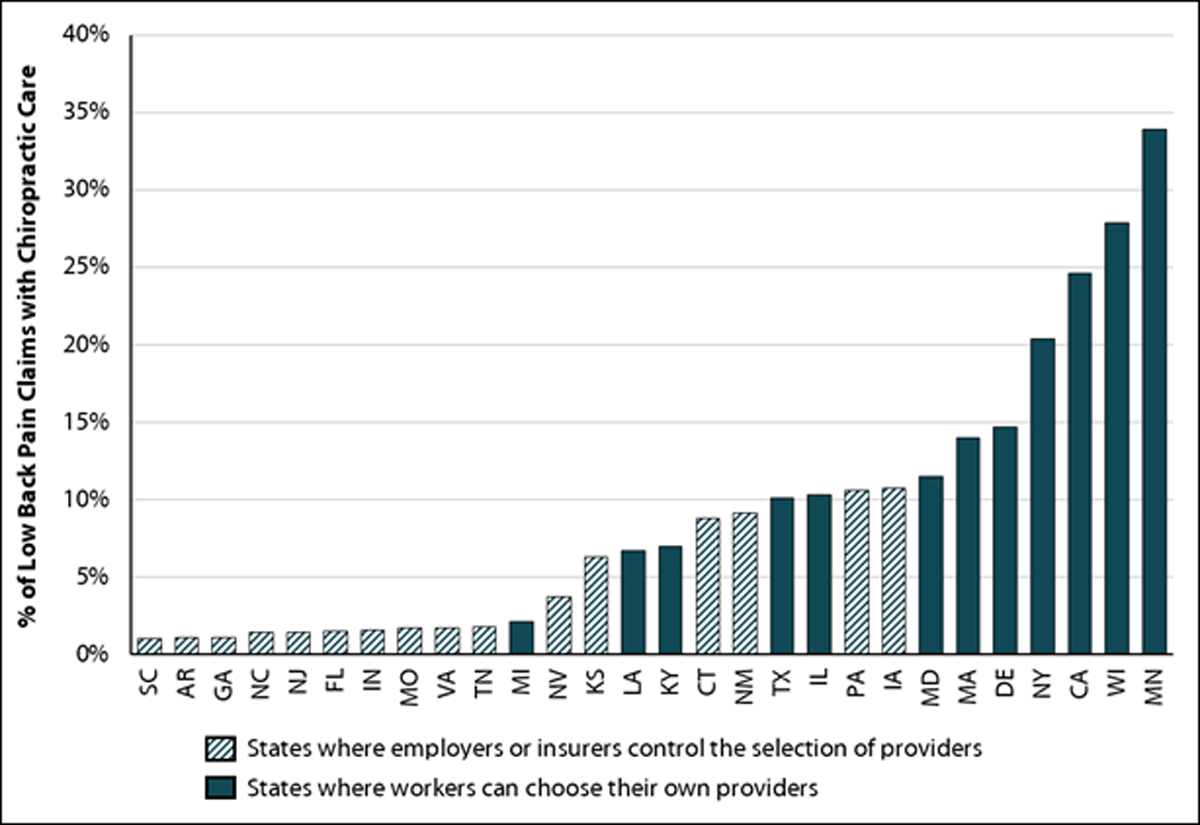
Cambridge, MA, May 17, 2022 —   Today, the Workers Compensation Research Institute (WCRI) announced the release of a new study on chiropractic care for low back pain. The study reveals substantial variation in the use of chiropractic care across 28 states and offers insights into the patterns and outcomes of chiropractic care.

“Chiropractors often participate in the delivery of physical medicine services for low back pain, but few workers received chiropractic care in states where employers or insurers control the selection of providers,” said John Ruser, WCRI’s president and CEO. “This study will be helpful for policymakers and stakeholders who are interested in re-evaluating the role of chiropractors, especially those who have been adopting evidence-based practices and contributing to cost-effective care.”

This study, Chiropractic Care for Workers with Low Back Pain, describes the prevalence of chiropractic care and provider patterns of physical medicine treatment for workers with low back pain. It provides some evidence as to how different provider patterns of physical medicine treatment are associated with variations in overall medical and indemnity costs, and the duration of temporary disability. The study also looks at the utilization of medical services, including magnetic imaging studies, opioid prescriptions, and pain management injections.

The following is a sample of the study’s key findings:

There are more articles like this @
WORKERS’ COMPENSATION Section

(more…)

A Systems Approach for Assessing Low Back Pain Care Quality in Veterans Health Administration Chiropractic Visits: A Cross-Sectional Analysis

By |December 28, 2023|Chiropractic Management, Veterans|

A Systems Approach for Assessing Low Back Pain Care Quality in Veterans Health Administration Chiropractic Visits: A Cross-Sectional Analysis

The Chiro.Org Blog


SOURCE:   J Manipulative Physiol Ther 2023 (Dec 22) [EPUB]

  OPEN ACCESS   

Ryan D. Muller, DC, MS • Sarah E. Graham, DC • Xiwen Zhao, MSPH • Anna R. Sites, MSN, RN • Kelsey L. Corcoran, DC • Anthony J. Lisi, DC

VA Connecticut Healthcare System,
West Haven, Connecticut;
Yale School of Medicine,
Yale University,
New Haven, Connecticut.


Objective:   The purpose of this study was to explore a systemwide process for assessing components of low back pain (LBP) care quality in Veterans Health Administration (VHA) chiropractic visits using electronic health record (EHR) data.

thods:   MeWe performed a cross-sectional quality improvement project. We randomly sampled 1000 on-station VHA chiropractic initial visits occurring from October 1, 2017, to September 30, 2018, for patients with no such visits within the prior 12 months. Characteristics of LBP visits were extracted from VHA national EHR data via structured data queries and manual chart review. We developed quality indicators for history and/or examination and treatment procedures using previously published literature and calculated frequencies of visits meeting these indicators.

There is more like this @

LOW BACK PAIN Section and

CHIROPRACTIC CARE FOR VETERANS Section

(more…)