

Support Chiropractic Research!

Chiropractic Care

Radiologic Manifestations of Spinal Subluxations

By |March 30, 2012|Chiropractic Care, Radiology, Subluxation|

Radiologic Manifestations of Spinal Subluxations

The Chiro.Org Blog


We would all like to thank Dr. Richard C. Schafer, DC, PhD, FICC for his lifetime commitment to the profession. In the future we will continue to add materials from RC’s copyrighted books for your use.

This is Chapter 6 from RC’s best-selling book:
“Basic Chiropractic Procedural Manual”

These materials are provided as a service to our profession. There is no charge for individuals to copy and file these materials. However, they cannot be sold or used in any group or commercial venture without written permission from ACAPress.


Chapter 6: Radiologic Manifestations of Spinal Subluxations

This chapter describes the radiologic signs that may be expected when spinal subluxations are demonstrable by radiography. Through the years, there have been several concepts within the chiropractic profession about what actually constitutes a subluxation. Each has had its rationale (anatomical, neurologic, or kinematic), and each has had certain validity contributing to our understanding of this complex phenomenon.

You may review the full Chapter 6 @:

Radiologic Manifestations of Spinal Subluxations


Kinetic Intersegmental Subluxations


Segmental hypomobility, also called a “fixation subluxation” by many clinicians, may affect one or several motor units.

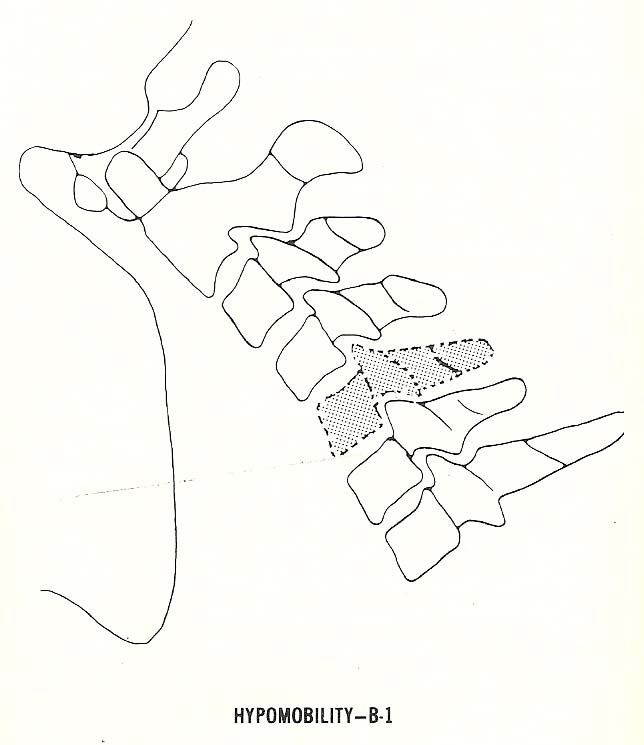
It is characterized by reduced motion of the “Spinal Motion Unit” (Please refer to Spinal Anatomy 101), which has been forced to the extreme of a range of motion (eg, flexion, extension, etc). See Figure 6.14. Stress views or videofluoroscopy are necessary to depict this and other kinetic subluxations radiographically, but motion palpation and some orthopedic tests may reveal their presence clinically.

Editor’s Note:   In the following picture, the inferior facet of C5 fails to slide forwards and upwards upon the superior facet of C6. Because of that, the IVF cannot open more fully, and the spinous process of C5 fails to move away from the C6 spinous. All together, these are the classic signs of HYPO-mobility.

(more…)

The Chiropractic Care of Patients with Asthma

By |March 19, 2012|Asthma, Chiropractic Care, Placebo, Spinal Manipulation|

The Chiropractic Care of Patients with Asthma: A Systematic Review of the Literature to Inform Clinical Practice

The Chiro.Org Blog


SOURCE:   Clinical Chiropractic 2012 (Mar); 15 (1): 23–30


Joel Alcantara, Joey D. Alcantara, Junjoe Alcantara

International Chiropractic Pediatric Association,
Media, 327 N Middletown Rd,
Media, PA 19063, USA


Introduction   Estimates place some 300 million people worldwide suffer from asthma with 180,000 deaths attributed to the disease. The financial burden from Asthma in Western countries ranges from $300 to $1,300 per patient per year. In the United States, asthma medication costs between $1 billion and $6.2 billion per annum. With an increasing prevalence of 50% every decade, there is no question that the burden of asthma is tremendous. The prevalence of complementary and alternative medicine (CAM) use amongst adult asthmatics ranges from 4% to 79% whilst, in children, it ranges from 33% to 89%. Of the various practitioner-based CAM therapies, chiropractic stands as the most popular for both children and adults. As with other chiropractors, the authors aspire to the principles of evidence-based practice in the care of asthma sufferers. Recent systematic reviews of the literature places into question the effectiveness of chiropractic. To assuage the discord between our clinical experience and those of our patients with the dissonant literature, we performed a systematic review of the literature on the chiropractic care of patients with asthma.

Methods   Our systematic review utilized the following databases for the years indicated: MANTIS [1965–2010]; Pubmed [1966–2010]; ICL [1984–2010]; EMBASE [1974–2010], AMED [1967–2010], CINAHL [1964–2010], Index to Chiropractic Literature [1984–2010], Alt-Health Watch [1965–2010] and PsychINFO [1965–2010]. Inclusion criteria for manuscript review were manuscripts of primary investigation/report published in peer-reviewed journals in the English language involving the care of asthmatic patients.

Results   The studies found span of research designs from non-experimental to true experimental studies consisting of 3 randomized controlled clinical trials (RCTs), 10 case reports, 3 case series, 7 cohort studies, 3 survey studies, 5 commentaries8 and 6 systematic reviews. The lower level design studies provide some measure of evidence on the effectiveness of chiropractic care for patients with asthma while a critical appraisal of 3 RCTs revealed questionable validity of the sham SMTs involved and hence the conclusions and interpretations derived from them. The RCTs on chiropractic and asthma are arguably comparison trials rather than controlled clinical trials per se.

There are more articles like this @ our:

Asthma and Chiropractic Page

(more…)

Clinical Decision-making to Facilitate Appropriate Patient Management in Chiropractic Practice: ‘The 3-questions Model’

By |March 15, 2012|Chiropractic Care, Clinical Decision-making, Diagnosis, Education|

Clinical Decision-making to Facilitate Appropriate Patient Management in Chiropractic Practice: ‘The 3-questions Model’

The Chiro.Org Blog


SOURCE:   Chiropractic & Manual Therapies 2012 (Mar 14); 20: 6


Lyndon G Amorin-Woods and Gregory F Parkin-Smith

Murdoch University, School of Chiropractic and Sports Science, South Street, Murdoch, 6150 Perth, Western Australia. L.Woods@murdoch.edu.au


Background:   A definitive diagnosis in chiropractic clinical practice is frequently elusive, yet decisions around management are still necessary. Often, a clinical impression is made after the exclusion of serious illness or injury, and care provided within the context of diagnostic uncertainty. Rather than focussing on labelling the condition, the clinician may choose to develop a defendable management plan since the response to treatment often clarifies the diagnosis.

Discussion:   This paper explores the concept and elements of defensive problem-solving practice, with a view to developing a model of agile, pragmatic decision-making amenable to real-world application. A theoretical framework that reflects the elements of this approach will be offered in order to validate the potential of a so called ‘3-Questions Model’;

Summary:   Clinical decision-making is considered to be a key characteristic of any modern healthcare practitioner. It is, thus, prudent for chiropractors to re-visit the concept of defensible practice with a view to facilitate capable clinical decision-making and competent patient examination skills. In turn, the perception of competence and trustworthiness of chiropractors within the wider healthcare community helps integration of chiropractic services into broader healthcare settings.


From the FULL TEXT Article:

Development of the 3-questions Model

The chiropractic profession, particularly in Western countries, finds itself in a rapidly evolving healthcare landscape, with ‘modernisation’ being a consequence of escalating costs, an aging population, and an ever-diminishing relative resource base [9]. With a view to rationalising resources health system decision-makers are increasingly vigilant about the delivery of safe, evidence-based, cost-effective care, summarised as “the right care at the right time in the right place” [10, 11]. With this imperative in mind, the authors propose three straightforward questions that frame clinical decision-making within the context of diagnostic uncertainty.

There are more articles like this @ our:

Low Back Pain Page and the

A Clinical Model for the Diagnosis and Management Page

(more…)

The Role of Chiropractic Care in Older Adults

By |February 26, 2012|Chiropractic Care, Health Care Reform, Research, Spinal Manipulation|

The Role of Chiropractic Care in Older Adults

The Chiro.Org Blog


SOURCE:   Chiropractic & Manual Therapies 2012 (Feb 21), 20: 3


Paul E Dougherty, Cheryl Hawk, Debra K Weiner,
Brian Gleberzon, Kari Andrew, Lisa Killinger


There are a rising number of older adults; in the US alone nearly 20% of the population will be 65 or older by 2030. Chiropractic is one of the most frequently utilized types of complementary and alternative care by older adults, used by an estimated 5% of older adults in the U.S. annually. Chiropractic care involves many different types of interventions, including preventive strategies. This commentary by experts in the field of geriatrics, discusses the evidence for the use of spinal manipulative therapy, acupuncture, nutritional counseling and fall prevention strategies as delivered by doctors of chiropractic. Given the utilization of chiropractic services by the older adult, it is imperative that providers be familiar with the evidence for and the prudent use of different management strategies for older adults.

Introduction:

By 2030, nearly one in five U.S. residents is expected to be age 65 or older [1]. An estimated 14% of patients treated by doctors of chiropractic (DCs) are 65 and older [2]. The most common reason for an older adult to see a DC is musculoskeletal pain, most often lower back pain [3]. Although the most common reason for older adults seeking chiropractic care is for musculoskeletal symptoms, DCs may also provide a diverse range of services to these patients [4] .Given this fact, for the purpose of this manuscript chiropractic care will be defined as; “the provision by a doctor of chiropractic of services related to patient assessment, maintenance of health, prevention of illness, and treatment of illness or injury.” The focus of this manuscript is to describe the evidence for achievement of some of these goals in the older adult population. The purpose of this manuscript is to present an overview of information to the practicing chiropractor on utilization of specific management tools. This is not meant to be a systematic review of the literature or an evidence based guideline. The authors each have personal experience in evaluating and treating older adults as well as established expertise in research and publication in these areas. The authors recognize that there is a need for further research in the area of management of the older adult by DC’s and discuss in the conclusion future research considerations. (more…)

Complementary and Alternative Medical Therapies for Children With Attention-deficit/Hyperactivity Disorder (ADHD)

By |February 21, 2012|ADHD, Attention Deficit, Chiropractic Care, Food Sensitivity, Supplementation|

Complementary and Alternative Medical Therapies for Children With Attention-deficit/Hyperactivity Disorder (ADHD)

The Chiro.Org Blog


SOURCE:   Alternative Medicine Review 2011 (Dec); 16 (4): 323–37


Janice Pellow, M.Tech (Hom),
Elizabeth M. Solomon, HD, ND, DO, BA,
Candice N. Barnard, M.Tech (Hom), B.Phys.Ed

University of Johannesburg, Department of Homeopathy,
Johannesburg, South Africa.


Attention-deficit/hyperactivity disorder (ADHD) is a commonly diagnosed childhood disorder characterized by impulsivity, inattention, and hyperactivity. ADHD affects up to 1 in 20 children in the United States. The underlying etiologies of ADHD may be heterogeneous and diverse, and many possible risk factors in the development of ADHD have been identified. Conventional treatment usually consists of behavioral accommodations and medication, with stimulant medication most commonly being prescribed. Parents concerned about the side effects and long-term use of conventional medications are increasingly seeking alternatives to pharmacologic treatment. Complementary and alternative medicine (CAM) offers parents various treatment options for this condition, including dietary modifications, nutritional supplementation, herbal medicine, and homeopathy. CAM appears to be most effective when prescribed holistically and according to each individual’s characteristic symptoms. Possible etiologies and risk factors for the condition also need to be considered when developing a treatment plan. This article serves to highlight the latest research regarding the most commonly used CAM for children with ADHD.


Table 1.   Risk Factors for ADHD (more…)

Cervical Spine Trauma

By |January 23, 2012|Chiropractic Care, Education|

Cervical Spine Trauma

The Chiro.Org Blog


We would all like to thank Dr. Richard C. Schafer, DC, PhD, FICC for his lifetime commitment to the profession. In the future we will continue to add materials from RC’s copyrighted books for your use.

This is Chapter 4 from RC’s best-selling book:

“Chiropractic Posttraumatic Rehabilitation”

These materials are provided as a service to our profession. There is no charge for individuals to copy and file these materials. However, they cannot be sold or used in any group or commercial venture without written permission from ACAPress.


CHAPTER 4:   CERVICAL SPINE TRAUMA

The cervical spine provides musculoskeletal stability and supports for the cranium, and a flexible and protective column for movement, balance adaptation, and housing of the spinal cord and vertebral artery. It also allows for directional orientation of the eyes and ears. Nowhere in the spine is the relationship between the osseous structures and the surrounding neurologic and vascular beds as intimate or subject to disturbance as it is in the cervical region.

BACKGROUND

Whether induced by trauma or not, cervical subluxation syndromes may be reflected in total body habitus. IVF insults and the effects of articular fixations can manifest throughout the motor, sensory, and autonomic nervous systems. Many peripheral nerve symptoms in the shoulder, arm, and hand will find their origin in the cervical spine, as may numerous brainstem disorders.


COMMON INJURIES AND DISORDERS OF THE CERVICAL SPINE


Cervical spine injuries can be classified as

(1) mild (eg, contusions, strains);

(2) moderate (eg, subluxations, sprains, occult fractures, nerve contusions, neurapraxias);

(3) severe (eg, axonotmesis, dislocation, stable fracture without neurologic deficit); and

(4) dangerous (eg, unstable fracture-dislocation, spinal cord or nerve root injury).

Spasm of the sternocleidomastoideus and trapezius can be due to strain or irritation of the sensory fibers of the spinal accessory nerve as they exit with the C2—C4 spinal nerves. The C1 and C2 nerves are especially vulnerable because they do not have the protection of an IVF. Radicular symptoms are rarely evident unless an IVD protrusion or herniation is present.

PREVALENCE

Because of its great mobility and relatively small structures, the cervical spine is the most frequent site of severe spinal nerve injury and subluxations. A large variety of cervical contusions, Grade 1—3 strains and sprains, subluxations, disc syndromes, dislocations, and fractures will be seen as the result of trauma.

The most vulnerable segments to injury are the axis and C5—C6 according to accident statistics. Surprisingly, the atlas is the least involved of all cervical vertebrae. In terms of segmental structure, the vertebral arch (50%), vertebral body (30%), and IVD (30%) are most commonly involved in severe cervical trauma. While the anterior ligaments are only involved in 2% of injuries, the posterior ligaments are involved in 16% of injuries.

EMERGENCY CARE

In the emergency-care situation, the patient with spinal cord injury must be treated as if the spinal column were fractured, even when there is no external evidence. Immediate and obvious symptom of spinal cord injury parallel those of fractures of the spinal column. The establishment of an adequate airway takes priority over all other concerns except for spurting hemorrhage. (more…)