

Support Chiropractic Research!

BLOG

A Population-based, Incidence Cohort Study of Mid-back Pain After Traffic Collisions

By |December 11, 2016|Traffic Collisions, Whiplash|

A Population-based, Incidence Cohort Study of Mid-back Pain After Traffic Collisions: Factors Associated with Global Recovery

The Chiro.Org Blog


Eur J Pain. 2015 (Nov); 19 (10): 1486–1495 ~ FULL TEXT


M.S. Johansson, E. Boyle, J. Hartvigsen,
M. Jensen Stochkendahl, L. Carroll, and
J.D. Cassidy

Department of Sports Science and Clinical Biomechanics,
Faculty of Health,
University of Southern Denmark,
Odense, Denmark.


BACKGROUND:   Traffic collisions often result in a wide range of symptoms included in the umbrella term whiplash-associated disorders. Mid-back pain (MBP) is one of these symptoms. The incidence and prognosis of different traffic injuries and their related conditions (e.g. neck pain, low back pain, depression or others) has been investigated previously; however, knowledge about traffic collision-related MBP is lacking. The study objectives were to describe the incidence, course of recovery and prognosis of MBP after traffic collisions, in terms of global self-reported recovery.

METHODS:   Longitudinal data from a population-based inception cohort of all traffic injuries occurring in Saskatchewan, Canada, during a 2-year period were used. Annual overall and age-sex-specific incidence rates were calculated, the course of recovery was described using the Kaplan-Meier technique, and associations between participant characteristics and time-to-self-reported recovery were explored in 3,496 MBP cases using Cox proportional hazards models.

RESULTS:   The yearly incidence rate was 236 per 100,000 population during the study period, and was highest in women and in young persons. The median time-to-first reported recovery was 101 days (95% CI: 99-104) and about 23% were still not recovered after 1 year. Participant’s expectation for recovery, general health, extent of severely affecting comorbidities and having experienced a previous traffic injury were some of the prognostic factors identified.

There are more articles like this @ our:
The Whiplash Page

(more…)

Is EBM Damaging the Social Conscience of Chiropractic?

By |December 7, 2016|Chiropractic Management, Evidence-based Medicine|

Commentary: Is EBM Damaging the Social Conscience of Chiropractic?

The Chiro.Org Blog


Chiropractic J Australia 2016 (Dec); 44 (3): 203–213 ~ FULL TEXT


Phillip Stuart Ebrall, BAppSc(Chiropr), GradCert (Learn&Teach), PhD

Senior Education Advisor,
Tokyo College of Chiropractic;
Faculty of Medicine,
International Medical University,
Kuala Lumpur


Introduction:   One expression of the social conscience of chiropractic is the provision by chiropractic educational institutions of low-cost or free chiropractic care to disadvantaged communities. It is expected that institutions offer to all patients the same full standard of care that is the hallmark of traditional chiropractic.

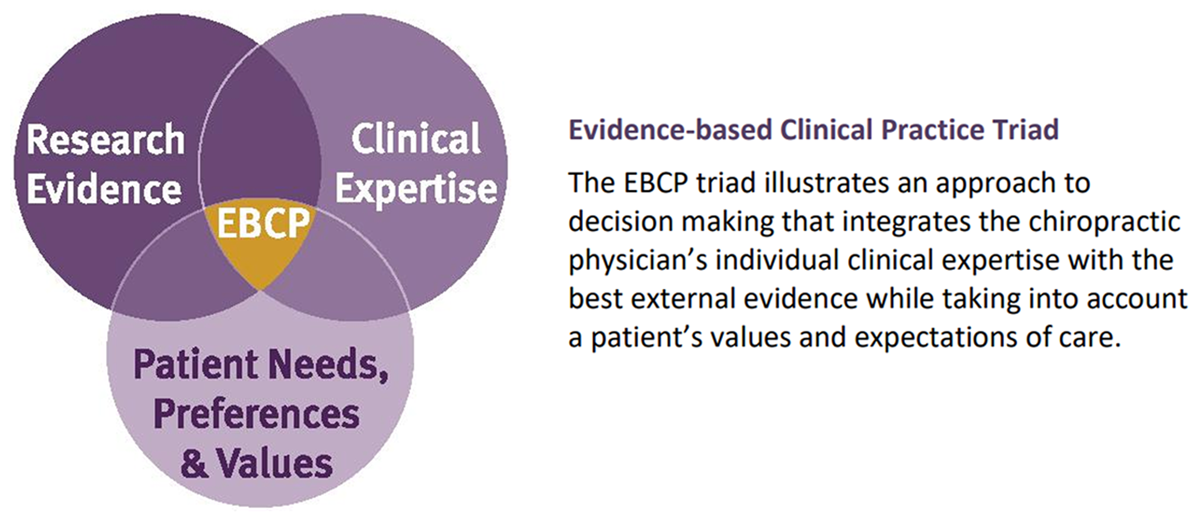
Objective:   To explore whether an observed schism occurring within chiropractic education, where a minority of institutions are minimising the major premise of the discipline and replacing it with an emphasis on only the science or literature component of the evidence-based triad, has any potential impact on the quality of care provided particularly within the charitable context.

There are more articles like this @ our:

Chiropractic Subluxation Page

(more…)

Clinical Practice Guidelines for the Noninvasive Management of Low Back Pain

By |December 2, 2016|Chiropractic Care, Guidelines, Low Back Pain|

Clinical Practice Guidelines for the Noninvasive Management of Low Back Pain: A Systematic Review by the Ontario Protocol for Traffic Injury Management (OPTIMa) Collaboration

The Chiro.Org Blog


Eur J Pain. 2016 (Oct 6) ~ FULL TEXT


J.J. Wong, P. Côté, D.A. Sutton, K. Randhawa, H. Yu, S. Varatharajan, R. Goldgrub, M. Nordin, D.P.

UOIT-CMCC Centre for the Study of
Disability Prevention and Rehabilitation,
University of Ontario Institute of Technology (UOIT)
Canadian Memorial Chiropractic College (CMCC),
Oshawa, ON, Canada.


BACKGROUND: &nbsp Low back pain (LBP) is a major health problem, having a substantial effect on peoples’ quality of life and placing a significant economic burden on healthcare systems and, more broadly, societies. Many interventions to alleviate LBP are available but their cost effectiveness is unclear.

We conducted a systematic review of guidelines on the management of low back pain (LBP) to assess their methodological quality and guide care. We synthesized guidelines on the management of LBP published from 2005 to 2014 following best evidence synthesis principles. We searched MEDLINE, EMBASE, CINAHL, PsycINFO, Cochrane, DARE, National Health Services Economic Evaluation Database, Health Technology Assessment Database, Index to Chiropractic Literature and grey literature. Independent reviewers critically appraised eligible guidelines using AGREE II criteria. We screened 2504 citations; 13 guidelines were eligible for critical appraisal, and 10 had a low risk of bias.

According to high-quality guidelines:

(1)   all patients with acute or chronic LBP should receive education, reassurance and instruction on self-management options;

(2)   patients with acute LBP should be encouraged to return to activity and may benefit from paracetamol, nonsteroidal anti-inflammatory drugs (NSAIDs), or spinal manipulation;

(3)   the management of chronic LBP may include exercise, paracetamol or NSAIDs, manual therapy, acupuncture, and multimodal rehabilitation (combined physical and psychological treatment); and

(4)   patients with lumbar disc herniation with radiculopathy may benefit from spinal manipulation.

There are more articles like this @ our:

Low Back Pain and Chiropractic Page

and the:

Low Back Pain Guidelines Section

(more…)

Genetic Risk, Adherence to a Healthy Lifestyle, and Coronary Disease

By |November 29, 2016|Coronary Disease|

Genetic Risk, Adherence to a Healthy Lifestyle, and Coronary Disease

The Chiro.Org Blog


N Engl J Med 2016 (Nov 13);   [Epub] ~ FULL TEXT


Amit V. Khera, M.D., Connor A. Emdin, D.Phil.,
Isabel Drake, Ph.D., et. al.

Center for Human Genetics Research,
Massachusetts General Hospital,
185 Cambridge St., CPZN 5.252,
Boston, MA 02114


BACKGROUND   Both genetic and lifestyle factors contribute to individual-level risk of coronary artery disease. The extent to which increased genetic risk can be offset by a healthy lifestyle is unknown.

METHODS   Using a polygenic score of DNA sequence polymorphisms, we quantified genetic risk for coronary artery disease in three prospective cohorts — 7,814 participants in the Atherosclerosis Risk in Communities (ARIC) study, 21,222 in the Women’s Genome Health Study (WGHS), and 22,389 in the Malmö Diet and Cancer Study (MDCS) — and in 4,260 participants in the cross-sectional BioImage Study for whom genotype and covariate data were available. We also determined adherence to a healthy lifestyle among the participants using a scoring system consisting of four factors: no current smoking, no obesity, regular physical activity, and a healthy diet.

RESULTS   The relative risk of incident coronary events was 91% higher among participants at high genetic risk (top quintile of polygenic scores) than among those at low genetic risk (bottom quintile of polygenic scores) (hazard ratio, 1.91; 95% confidence interval [CI], 1.75 to 2.09). A favorable lifestyle (defined as at least three of the four healthy lifestyle factors) was associated with a substantially lower risk of coronary events than an unfavorable lifestyle (defined as no or only one healthy lifestyle factor), regardless of the genetic risk category. Among participants at high genetic risk, a favorable lifestyle was associated with a 46% lower relative risk of coronary events than an unfavorable lifestyle (hazard ratio, 0.54; 95% CI, 0.47 to 0.63). This finding corresponded to a reduction in the standardized 10-year incidence of coronary events from 10.7% for an unfavorable lifestyle to 5.1% for a favorable lifestyle in ARIC, from 4.6% to 2.0% in WGHS, and from 8.2% to 5.3% in MDCS. In the BioImage Study, a favorable lifestyle was associated with significantly less coronary-artery calcification within each genetic risk category.

There are more articles like this @ our:

The Nutrition Page

(more…)

Conservative Management of Uncomplicated Mechanical Neck Pain in a Military Aviator

By |November 20, 2016|Conservative Management, Military Aviator|

Conservative Management of Uncomplicated Mechanical Neck Pain in a Military Aviator

The Chiro.Org Blog


SOURCE:   J Can Chiropr Assoc. 2010 (Jun); 54 (2): 92–99


Bart N. Green, DC, MSEd, Andrew S. Dunn, DC, MEd, MS,
LCDR Solomon M. Pearce, DO, and
Claire D. Johnson, DC, MSEd

Chiropractic Division,
Department of Physical and Occupational Therapy,
Naval Medical Center, San Diego,
Marine Corps Air Station Miramar,
Branch Medical Clinic,
San Diego, CA 92145-2002


Non-radicular neck pain arising from local musculoskeletal structures, known as mechanical neck pain or somatic dysfunction, is highly prevalent in the fighter jet aviator population. The management of this problem includes both therapeutic and aeromedical decisions. In addition to non-steroidal anti-inflammatory medications, waiver guides recommend therapeutic exercise and manipulative therapy as treatments for somatic spine pain in aviators, and such treatments are employed in many military locations. However, there are currently no published studies that describe the use of manipulative therapy for fighter jet aviators. We report the case of an F/A-18 instructor pilot who experienced long-term relief of uncomplicated mechanical neck pain following interdisciplinary management that included manipulation and a home exercise program. Diagnostic considerations, conservative treatment options, and aeromedical concerns are discussed.

KEYWORDS:   aviation; exercise therapy; manipulation; manual therapy; neck pain; spinal


The Full-Text Article:

Introduction

Fighter jet aviators are exposed to large tensile, axial compression, and shear forces when flying, especially during aerial combat maneuvers (ACM). [1] Non-radicular neck pain arising from mechanical structures in the neck (somatic pain) is a common outcome of exposure to high gravitational (G) forces. [2] The weight of the helmet and oxygen mask and the various non-neutral head postures assumed when observing for enemy aircraft contribute to this problem. [1] Spinal disorders can result in disability [3] and conditions that may disqualify pilots from flight duties. [4] Thus, neck pain in the fighter jet aviator population has a negative impact on work performance, productivity, and is a threat to combat readiness. [5]

There are more articles like this @ our:

Chiropractic Care For Veterans Page

(more…)

The Effect of Chiropractic Treatment on the Reaction and Response Times of Special Operation Forces Military Personnel

By |November 19, 2016|Veterans|

The Effect of Chiropractic Treatment on the Reaction and Response Times of Special Operation Forces Military Personnel: Study Protocol for a Randomized Controlled Trial

The Chiro.Org Blog


SOURCE:   Trials. 2016 (Sep 20); 17 (1): 457


James W. DeVocht, Dean L. Smith, Cynthia R. Long, Lance Corber, Bridget Kane, Thomas M. Jones and Christine M. Goertz

Palmer Center for Chiropractic Research,
741 Brady St,
Davenport, IA, 52803, USA.


BACKGROUND:   Chiropractic care is commonly used to treat musculoskeletal conditions and has been endorsed by clinical practice guidelines as being evidence-based and cost-effective for the treatment of patients with low back pain. Gaps in the literature exist regarding the physiological outcomes of chiropractic treatment. Previous pilot work has indicated the possibility of improvements in response time following the application of chiropractic treatment. However, it is unknown whether or not chiropractic treatment is able to improve reaction and response times in specific populations of interest. One such population is the U.S. military special operation forces’ (SOF) personnel.

METHODS:   This study is a randomized controlled trial of 120 asymptomatic volunteer SOF personnel. All participants are examined by a study doctor of chiropractic (DC) for eligibility prior to randomization. The participants are randomly allocated to either a treatment group receiving four treatments of chiropractic manipulative therapy (CMT) over 2 weeks or to a wait-list control group. The wait-list group does not receive any treatment but has assessments at the same time interval as the treatment group. The outcome measures are simple reaction times for dominant hand and dominant foot, choice reaction time with prompts calling for either hand or either foot, response time using Fitts’ law tasks for small movements involving eye-hand coordination, and brief whole body movements using the t-wall, a commercially available product. At the first visit, all five tests are completed so that participants can familiarize themselves with the equipment and protocol. Assessments at the second and the final visits are used for data analysis.

There are more articles like this @ our:

Chiropractic Care For Veterans Page

(more…)