

Support Chiropractic Research!

BLOG

Does Cervical Spine Manipulation Reduce Pain in People with Degenerative Cervical Radiculopathy? A Systematic Review of the Evidence, and a Meta-analysis

By |November 16, 2016|Radiculopathy|

Does Cervical Spine Manipulation Reduce Pain in People with Degenerative Cervical Radiculopathy? A Systematic Review of the Evidence, and a Meta-analysis

The Chiro.Org Blog


SOURCE:   Clin Rehabil. 2016 (Feb); 30 (2): 145-155


Liguo Zhu, Xu Wei and Shangquan Wang

Department of Spine,
Wangjing Hospital,
Beijing, People’s Republic of China.


OBJECTIVE:   To access the effectiveness and safety of cervical spine manipulation for cervical radiculopathy.

DATA SOURCES:   PubMed, the Cochrane Central Registry of Controlled Trials (CENTRAL) in the Cochrane Library, EMBASE, Chinese Biomedical Literature Database (CBM), Chinese National Knowledge Infrastructure (CNKI), Chinese Scientific Journal Database (VIP), Wanfang data, the website of Chinese clinical trial registry and international clinical trial registry by US National Institutes of Health.

REVIEW METHODS:   Randomized controlled trials that investigated the effects of cervical manipulation compared with no treatment, placebo or conventional therapies on pain measurement in patients with degenerative cervical radiculopathy were searched. Two authors independently evaluated the quality of the trials according to the risk of bias assessment provided by the PEDro (physiotherapy evidence database) scale. RevMan V.5.2.0 software was employed for data analysis. The GRADE approach was used to evaluate the overall quality of the evidence.

RESULTS:   Three trials with 502 participants were included. Meta-analysis suggested that cervical spine manipulation (mean difference 1.28, 95% confidence interval 0.80 to 1.75; P < 0.00001; heterogeneity: Chi2 = 8.57, P = 0.01, I2 = 77%) improving visual analogue scale for pain showed superior immediate effects compared with cervical computer traction. The overall strength of evidence was judged to be moderate quality. One out of three trials reported the adverse events and none with a small sample size.

There are more articles like this @ our:
Radiculopathy and Chiropractic Page

(more…)

The Chiropractic Scope of Practice in the United States: A Cross-sectional Survey

By |November 14, 2016|Scope of Practice|

The Chiropractic Scope of Practice in the United States: A Cross-sectional Survey

The Chiro.Org Blog


SOURCE:   J Manipulative Physiol Ther. 2014 (Jul); 37 (6): 363–376


Mabel Chang, DC, MPH

National University of Health Sciences-Florida,
Pinellas Park, FL.


OBJECTIVE:   The purpose of this study was to assess the current status of chiropractic practice laws in the United States. This survey is an update and expansion of 3 original surveys conducted in 1987, 1992, and 1998.

METHODS:   A cross-sectional survey of licensure officials from the Federation of Chiropractic Licensing Boards e-mail list was conducted in 2011 requesting information about chiropractic practice laws and 97 diagnostic, evaluation, and management procedures. To evaluate content validity, the survey was distributed in draft form at the fall 2010 Federation of Chiropractic Licensing Boards regional meeting to regulatory board members and feedback was requested. Comments were reviewed and incorporated into the final survey. A duplicate question was imbedded in the survey to test reliability.

RESULTS:   Partial or complete responses were received from 96% (n = 51) of the jurisdictions in the United States. The states with the highest number of services that could be performed were Missouri (n = 92), New Mexico (n = 91), Kansas (n = 89), Utah (n = 89), Oklahoma (n = 88), Illinois (n = 87), and Alabama (n = 86). The states with the highest number of services that cannot be performed are New Hampshire (n = 49), Hawaii (n = 47), Michigan (n = 42), New Jersey (n = 39), Mississippi (n = 39), and Texas (n = 30).

There are more articles like this @ our:
Chiropractors Are Spinal Health Care Experts Page

(more…)

Cost Analysis Related to Dose-response of Spinal Manipulative Therapy for Chronic Low Back Pain

By |November 12, 2016|Chiropractic Care, Chronic Low Back Pain, Cost-Effectiveness|

Cost Analysis Related to Dose-response of Spinal Manipulative Therapy for Chronic Low Back Pain: Outcomes from a Randomized Controlled Trial

The Chiro.Org Blog


SOURCE:   J Manipulative Physiol Ther. 2014 (Jun); 37 (5): 300–311


Darcy A. Vavrek, ND, MS, Rajiv Sharma, PhD,
Mitchell Haas, DC, MA

University of Western States,
Portland, OR.


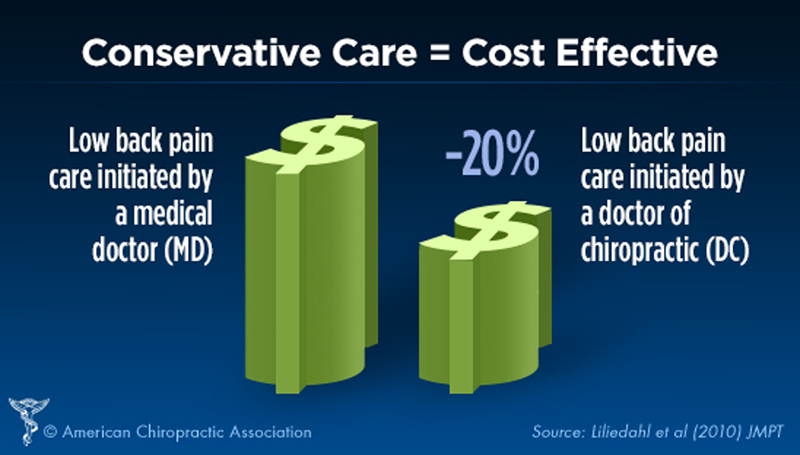
OBJECTIVE:   The purpose of this analysis is to report the incremental costs and benefits of different doses of spinal manipulative therapy (SMT) in patients with chronic low back pain (LBP).

METHODS:   We randomized 400 patients with chronic LBP to receive a dose of 0, 6, 12, or 18 sessions of SMT. Participants were scheduled for 18 visits for 6 weeks and received SMT or light massage control from a doctor of chiropractic. Societal costs in the year after study enrollment were estimated using patient reports of health care use and lost productivity. The main health outcomes were the number of pain-free days and disability-free days. Multiple regression was performed on outcomes and log-transformed cost data.

There are more articles like this @ our:

Low Back Pain and Chiropractic Page

and the:

Cost-Effectiveness of Chiropractic Page

(more…)

Spine Care as a Framework for the Chiropractic Identity

By |November 6, 2016|Chiropractic Identity, Professional Identity|

Spine Care as a Framework for the Chiropractic Identity

The Chiro.Org Blog


SOURCE:   Journal of Chiropractic Humanities 2016 (Nov 4)


Michael Schneider, DC, PhD, Donald Murphy, DC,
Jan Hartvigsen, DC, PhD

Department of Physical Therapy,
University of Pittsburgh,
Pittsburgh, PA


Objective   The purpose of this commentary is to provide an argument for the role and identity of chiropractors as spine care providers within the context of the greater health care system.

Discussion   Surveys of the general public and chiropractors indicate that the majority of patients seek chiropractic services for back and neck pain. Insurance company utilization data confirm these findings. Regulatory and legal language found in chiropractic practice acts reveals that most jurisdictions define the chiropractic scope of practice as based on a foundation of spine care. Educational accrediting and testing organizations have been shaped around a chiropractic education that produces graduates who focus on the diagnosis and treatment of spine and musculoskeletal disorders. Spine care is thus the common denominator and theme throughout all aspects of chiropractic practice, legislation, and education globally.

There are more articles like this @ our:

Chiropractors as the Spinal Health Care Experts Page

(more…)

Regular Use of Medication for Musculoskeletal Pain and Risk of Long-term Sickness Absence: A Prospective Cohort Study Among the General Working Population

By |November 4, 2016|Iatrogenic Injury, Pain Medication|

Regular Use of Medication for Musculoskeletal Pain and Risk of Long-term Sickness Absence:

A Prospective Cohort Study Among the General Working Population

The Chiro.Org Blog


SOURCE:   Eur J Pain. 2016 (Aug 26) [Epub]


E. Sundstrup, M.D. Jakobsen, S.V. Thorsen, L.L. Andersen

National Research Centre for the Working Environment,
Copenhagen, Denmark.

Physical Activity and Human Performance group, SMI,
Department of Health Science and Technology,
Aalborg University, Denmark.


BACKGROUND:   The aim was to determine the prospective association between use of pain medication – due to musculoskeletal pain in the low back, neck/shoulder and hand/wrist – and long-term sickness absence.

METHODS:   Cox-regression analysis was performed to estimate the prospective association between regular use of pain medication and long-term sickness absence (LTSA; at least 6 consecutive weeks) among 9,544 employees from the general working population (Danish Work Environment Cohort Study 2010) and free from LTSA during 2009-2010. The fully adjusted model was controlled for age, gender, body mass index, smoking, leisure physical activity, job group, physical activity at work, psychosocial work environment, pain intensity, mental health and chronic disease.

There are more articles like this @ our:

Chiropractic and Pain Management Page

(more…)

Parker University Inaugurates William E. Morgan, D.C. as Their New President

By |November 3, 2016|ADHD, Announcement|

Parker University Inaugurates William E. Morgan, D.C. as Their New President

The Chiro.Org Blog


SOURCE:   Yahoo! News ~ November 2, 2016


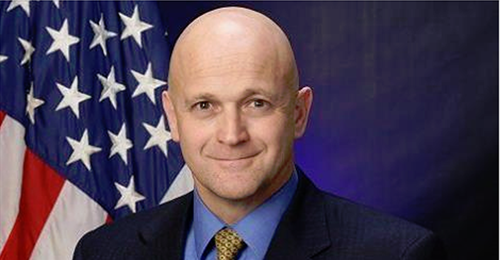
DALLAS, TX–(Marketwired – November 02, 2016) – The Board of Trustees, Faculty, Staff, Students, and Alumni of Parker University are pleased to announce and celebrate the inauguration of their new president, William E. Morgan, DC. As the seventh president of Parker University, Dr. Morgan will begin his term presiding over an expanding roster of both programs and students as Parker University pursues its mission of comprehensive education dedicated to research, service, and education.

The inauguration was held at 1:30pm on the Parker University main campus in Dallas, Texas at the Standard Process Student Activity Center on October 7, 2016. General Walter E. Boomer was present as a special guest of the president, who invited him to make a special presentation on his behalf.

General Boomer is a retired four-star general and assistant commandant of the United States Marine Corps and a business executive. He led all Marines in Operations Desert Shield and Desert Storm during the Gulf War. He later served as the Chairman and CEO of Rogers Corporation, retiring in 2004. He is the current lead director of Baxter International. General Boomer is a 1960 graduate of Duke University; he later earned a master’s degree from American University.


About Dr. Morgan, Seventh President of Parker University

In 1998, Dr. Morgan was chosen to establish the first chiropractic clinic at the National Naval Medical Center in Bethesda, Maryland, which later became Walter Reed National Military Medical Center. In 2015, Walter Reed recognized Dr. Morgan with its highest honor for clinical excellence, the Master Clinician’s Award.

During the last 18 years at the military’s most prestigious medical centers, he practiced in an integrative setting providing chiropractic care to the injured troops returning from the wars in Iraq and Afghanistan.

(more…)