Support Chiropractic Research!

BLOG

U.S. Comptroller Appoints Chiropractor Christine Goertz

By |September 18, 2019|Announcement|

U.S. Comptroller Appoints Chiropractor Christine Goertz as Chair of PCORI Board

The Chiro.Org Blog


SOURCE:   Patient-Centered Outcomes Research Institute


PCORI Welcomes Christine Goertz as Next Chairperson and Sharon Levine as Next Vice Chairperson of Board of Governors Statement from PCORI Executive Director Joe Selby, MD, MPH

September 17, 2019

WASHINGTON, DC — The U.S. Government Accountability Office (GAO) today announced the appointment of Christine Goertz, DC, PhD, as the next Chairperson of the Patient-Centered Outcomes Research Institute (PCORI) Board of Governors, and the appointment of Sharon Levine, MD, as the next Vice Chairperson.

Goertz, who has been a member of PCORI’s Board since 2010 and its Vice Chairperson since September 2018, succeeds Grayson Norquist, MD, MSPH, as Chairperson upon his completion of a full term in this position. Norquist will continue to serve out the remainder of his current term as a Board member.

Levine, who has been a PCORI Board member since September 2010, takes over the Vice Chairperson role being vacated by Goertz. Both her and Goertz’s appointments are three-year terms ending September 2022.

“We are delighted with the GAO’s appointments and I look forward to continuing to work closely with Dr. Goertz and Dr. Levine in their new leadership roles,” said PCORI Executive Director Joe Selby, MD, MPH. “Their complementary expertise and long histories with PCORI will serve us and our Board very well in continuing to pursue our mission of helping people make better-informed healthcare decisions through patient-centered research.”

Selby also thanked Norquist “for his tireless, thoughtful, and wise leadership of the Board over the past six years during a time of significant expansion of PCORI’s research funding and efforts to promote the implementation of the growing body of useful evidence it is producing. We are grateful and pleased that he will continue to share his valuable insights and expertise with PCORI through his ongoing service on the Board.”

Goertz is currently the Chief Executive Officer of the Spine Institute for Quality. As of October, she will begin new positions as Professor in the Department of Orthopaedic Surgery at Duke University Medical Center and Director of System Development and Coordination for Spine Health at Duke Health.

Levine, a board-certified pediatrician, is a physician with the Southern California Permanente Medical Group. She practiced and held leadership positions within The Permanente Medical Group, a large multi-specialty group practice in California, from 1977 to 2017.

Norquist is Vice-Chair of the Emory University Department of Psychiatry and Behavioral Sciences, and Chief of Psychiatry Service at Grady Health System.

The diverse membership of PCORI’s Board is appointed by the Comptroller General of the United States and represents a broad range of perspectives and collective expertise in clinical health sciences research.


(more…)

Chiropractic, One Big Unhappy Family?

By |September 10, 2019|Evidence-based Practice|

Chiropractic, One Big Unhappy Family: Better Together or Apart?

The Chiro.Org Blog


SOURCE:   Chiropractic & Manual Therapies 2019 (Feb 21); 27: 4

Charlotte Leboeuf-Yde, Stanley I. Innes, Kenneth J. Young, Gregory Neil Kawchuk and Jan Hartvigsen

Institute for Regional Health Research,
University of Southern Denmark, DK-5000
Odense C, Denmark.


Editorial Comment:

It’s with heavy heart that I realize that it’s all come down to this: chiropractic depicted as a bad soap-opera marriage.

What is more upsetting is that this article is penned by some of the best, brightest and most-published of our chiropractic researchers. I love these folks!

That said, I’d like to challenge some of their assumptions. Chiropractic is not a marriage between chiropractors. At best, it’s a Family.

And families interact. I just might marry your sister, for example.

Now you may not like me, or you may not like our marriage. But that’s a personal problem.

The word Evidence has taken on a sacred-cow glow lately, and is only eclipsed by the adoption of the word skeptic by every Tom, Dick and Harry blog-opinionist/critic on the planet. So, let’s set the stage for the conversation.

This article dishes up several reasons why (as they call themselves) the ‘evidence-friendly’ faction are opposed to the ‘traditional’ group.

Here’s a short list of the infractions that are practiced by the ‘traditionalists’

  1. They ‘believe’ in “subluxations”

  2. Some of them ‘believe’ that you can find “subluxations” on x-rays

  3. Some of them ‘believe’ that correcting “subluxations” leads to improved health

So let’s address these concerns, one at a time.

  1. The Medicare and Medicaid definition of “subluxations” is:

    There are more articles like this @ our:

    What is the Chiropractic Subluxation? Page

    (more…)

Access to Chiropractic Care and the Cost of Spine Conditions Among Older Adults

By |August 18, 2019|Uncategorized|

Access to Chiropractic Care and the Cost of Spine Conditions Among Older Adults

The Chiro.Org Blog


SOURCE:   American J Managed Care 2019 (Aug); 25 (8): e230–e236

Matthew A. Davis, PhD, DC, MPH et. al.

Matthew A. Davis, PhD, DC, MPH
University of Michigan,
400 N Ingalls St, Room 4347,
Ann Arbor, MI 48109.


Objectives:   Chiropractic care is a service that operates outside of the conventional medical system and is reimbursed by Medicare. Our objective was to examine the extent to which accessibility of chiropractic care affects spending on medical spine care among Medicare beneficiaries.

Study Design:   Retrospective cohort study that used beneficiary relocation as a quasi-experiment.

Methods:   We used a combination of national data on provider location and Medicare claims to perform a quasi-experimental study to examine the effect of chiropractic care accessibility on healthcare spending. We identified 84,679 older adults enrolled in Medicare with a spine condition who relocated once between 2010 and 2014. For each year, we measured accessibility using the variable-distance enhanced 2-step floating catchment area method. Using data for the years before and after relocation, we estimated the effect of moving to an area of lower or higher chiropractic accessibility on spine-related spending adjusted for access to medical physicians.

Results:   There are approximately 45,000 active chiropractors in the United States, and local accessibility varies considerably. A negative dose–response relationship was observed for spine-related spending on medical evaluation and management as well as diagnostic imaging and testing (mean differences, $20 and $40, respectively, among those exposed to increasingly higher chiropractic accessibility; P <.05 for both). Associations with other types of spine-related spending were not significant.

There are more articles like this @ our:

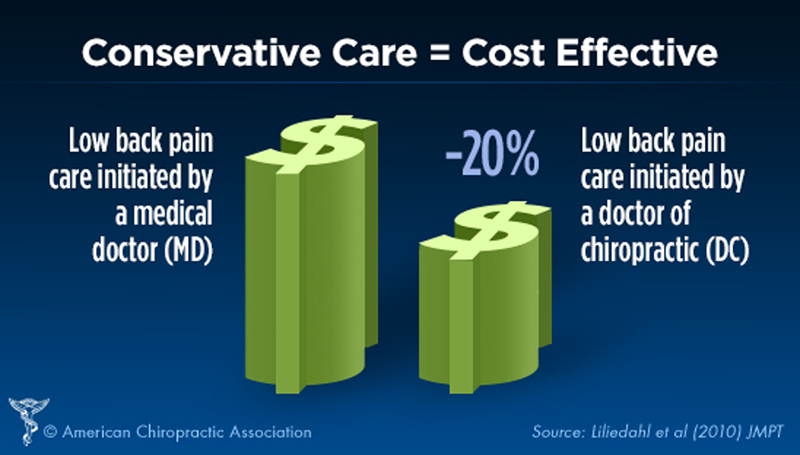
Cost-Effectiveness of Chiropractic Page

(more…)

The Global Spine Care Initiative

By |August 10, 2019|Chronic Neck Pain, Low Back Pain|

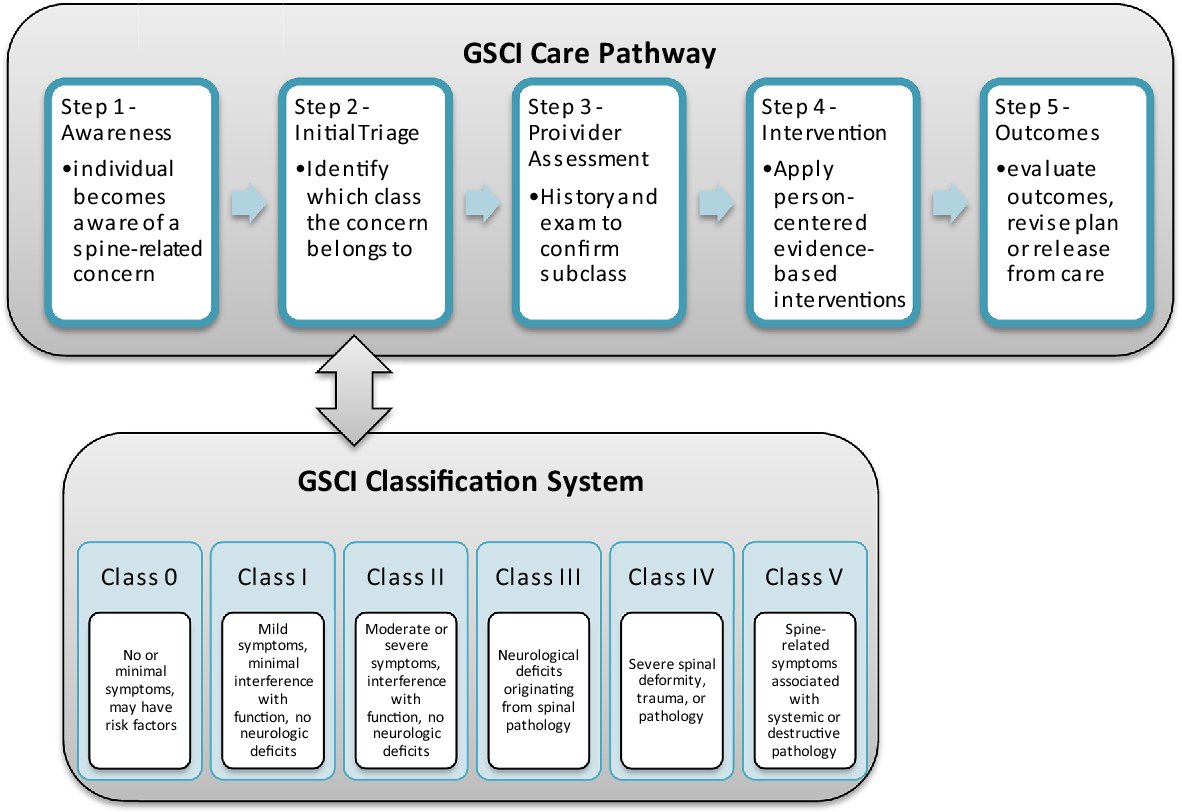
The Global Spine Care Initiative: Applying Evidence-based Guidelines on the Non-invasive Management of Back and Neck Pain to Low- and Middle-income Communities

The Chiro.Org Blog


SOURCE:   European Spine Journal 2018 (Sep); 27 (Suppl 6): 851–860

Roger Chou, Pierre Côté, Kristi Randhawa, Paola Torres, Hainan Yu, Margareta Nordin, Eric L. Hurwitz, Scott Haldeman, Christine Cedraschi

Department of Medical Informatics and Clinical Epidemiology,
Oregon Health and Science University,
Portland, OR, USA.


PURPOSE:   The purpose of this review was to develop recommendations for the management of spinal disorders in low-income communities, with a focus on non-invasive pharmacological and non-pharmacological therapies for non-specific low back and neck pain.

METHODS:   We synthesized two evidence-based clinical practice guidelines for the management of low back and neck pain. Our recommendations considered benefits, harms, quality of evidence, and costs, with attention to feasibility in medically underserved areas and low- and middle-income countries.

RESULTS:   Clinicians should provide education and reassurance, advise patients to remain active, and provide information about self-care options. For acute low back and neck pain without serious pathology, primary conservative treatment options are exercise, manual therapy, superficial heat, and nonsteroidal anti-inflammatory drugs (NSAIDs).

There are more articles like this @ our:

LOW BACK PAIN Page and the:

CHRONIC NECK PAIN Page

(more…)

Maternal Report of Outcomes of Chiropractic Care for Infants

By |July 2, 2019|Patient Satisfaction, Pediatrics|

Maternal Report of Outcomes of Chiropractic Care for Infants

The Chiro.Org Blog


SOURCE:   J Manipulative Physiol Ther. 2019 (Mar; 42 (3): 167–176

Joyce E. Miller, DC, PhD, Heather A. Hanson, DC, MSc, Mandy Hiew, BA, Derek S. Lo Tiap Kwong, BA, Zicheng Mok, BA, Yun-Han Tee, BA

Outpatient Teaching Clinic,
AECC University College,
Bournemouth, Dorset, UK.


OBJECTIVE:   The purpose of this study was to investigate the report by mothers of their infants’ condition before and after a trial of care provided by registered chiropractic clinicians in addition to ratings of satisfaction, cost of care, and reports of any adverse events or side effects. A second purpose was to report the demographic profile of infants who presented for care to 16 chiropractic clinics in the United Kingdom.

METHODS:   This observational study prospectively collected reports by mothers of their infants’ demographic profiles and outcomes across several domains of infant behavior and their own mental state using the United Kingdom Infant Questionnaire. Participating registered chiropractors were recruited through the Royal College of Chiropractors annual meeting in January 2016, and 15 clinics and the Anglo-European College of Chiropractic University College teaching clinic volunteered to participate.

RESULTS:   In all, 2001 mothers completed intake questionnaires and 1092 completed follow-up forms. Statistically significant (P < .05) improvements were reported across all aspects of infant behavior studied, including feeding problems, sleep issues, excessive crying, problems with supine sleep position, infant pain, restricted cervical range of motion, and time performing prone positioning. Maternal ratings of depression, anxiety, and satisfaction with motherhood also demonstrated statistically significant improvement (P < .05). In total, 82% (n = 797) reported definite improvement of their infants on a global impression of change scale. As well, 95% (n = 475) reported feeling that the care was cost-effective, and 90.9% (n = 712) rated their satisfaction 8 or higher on an 11–point scale. Minor self-limiting side effects were reported (5.8%, n = 42/727) but no adverse events.

There are more articles like this @ our:

PEDIATRICS Section

(more…)

Observed Patterns of Cervical Radiculopathy

By |July 1, 2019|Radiculopathy|

Observed Patterns of Cervical Radiculopathy: How Often Do They Differ From a Standard, “Netter Diagram” Distribution?

The Chiro.Org Blog


SOURCE:   Spine J. 2019 (Jul); 19 (7): 1137–1142

Steven J. McAnany MD , John M. Rhee MD , Evan O. Baird MD , Weilong Shi MD , Jeffrey Konopka MD , Thomas M. Neustein MD , Rafael Arceo MD

Department of Orthopedic Surgery,
Hospital for Special Surgery,
535 East 70th St,
New York, NY 10021, USA.


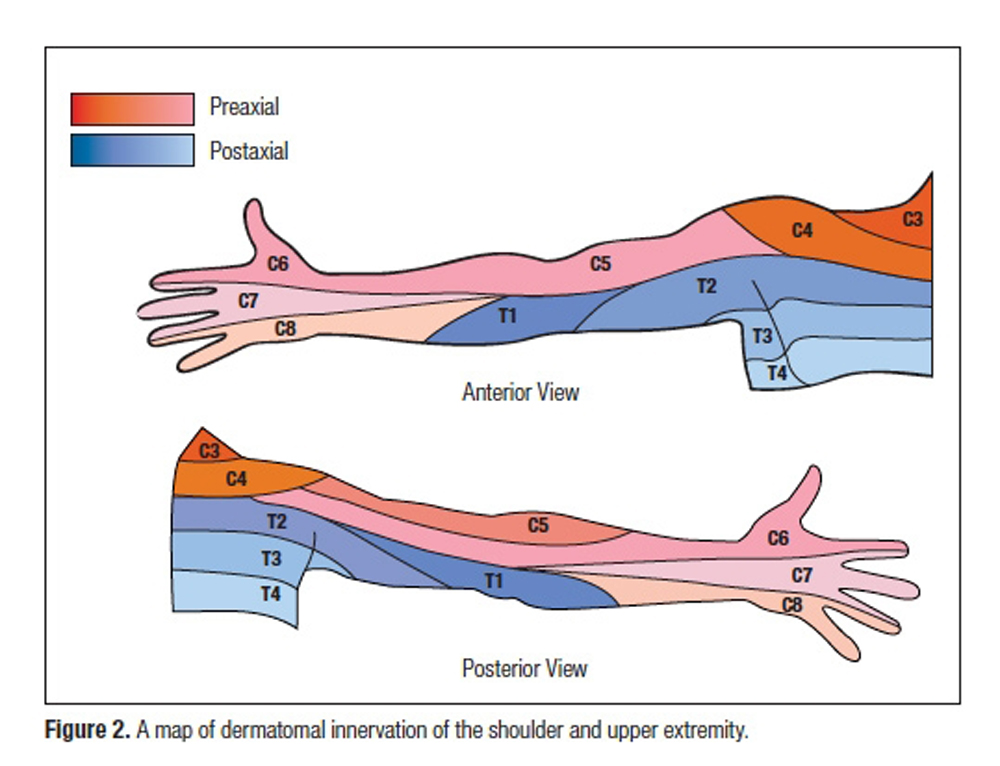
BACKGROUND CONTEXT:   Traditionally, cervical radiculopathy is thought to present with symptoms and signs in a standard, textbook, reproducible pattern as seen in a “Netter diagram.” To date, no study has directly examined cervical radicular patterns attributable to single level pathology in patients undergoing ACDF.

PURPOSE:   The purpose of this study is to examine cervical radiculopathy patterns in a surgical population and determine how often patients present with the standard textbook (ie, Netter diagram) versus nonstandard patterns.

STUDY DESIGN/SETTING:   A retrospective study.

PATIENT SAMPLE:   Patients who had single-level radiculopathy with at least 75% improvement of preoperative symptoms following ACDF were included.

OUTCOME MEASURES:   Epidemiologic variables were collected including age, sex, weight, body mass index, laterality of symptoms, duration of symptoms prior to operative intervention, and the presence of diabetes mellitus. The observed pattern of radiculopathy at presentation, including associated neck, shoulder, upper arm, forearm, and hand pain and/or numbness, was determined from chart review and patient-derived pain diagrams.

METHODS:   We identified all patients with single level cervical radiculopathy operated on between March 2011 and March 2016 by six surgeons. The observed pattern of radiculopathy was compared to a standard textbook pattern of radiculopathy that strictly adheres to a dermatomal map Fisher exact test was used to analyze categorical data and Student t test was used for continuous variables.

There are more articles like this @ our:

RADICULOPATHY Page

(more…)