Support Chiropractic Research!

Frank M. Painter

About Frank M. Painter

I was introduced to Chiro.Org in early 1996, where my friend Joe Garolis helped me learn HTML, the "mark-up language" for websites. We have been fortunate that journals like JMPT have given us permission to reproduce some early important articles in Full-Text format. Maintaining the Org website has been, and remains, my favorite hobby.

Subclinical Recurrent Neck Pain and its Treatment Impacts

By |March 3, 2018|Subluxation|

Subclinical Recurrent Neck Pain and its Treatment Impacts Motor Training-induced Plasticity of the Cerebellum and Motor Cortex

The Chiro.Org Blog


SOURCE:   PLoS One. 2018 (Feb 28); 13 (2): e0193413


Julianne K. Baarbé, Paul Yielder, Heidi Haavik, Michael W. R. Holmes, Bernadette Ann Murphy

Division of Neurology,
Krembil Research Institute,
University Health Network,
Toronto, Ontario, Canada.
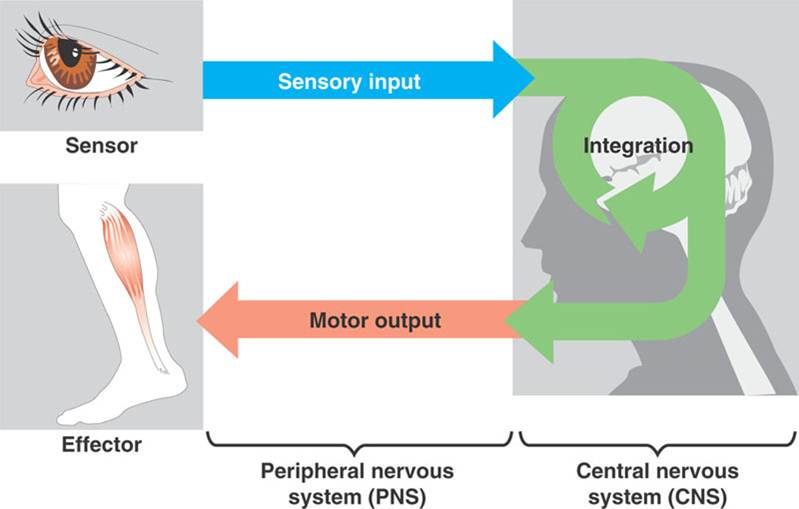

The cerebellum processes pain inputs and is important for motor learning. Yet, how the cerebellum interacts with the motor cortex in individuals with recurrent pain is not clear. Functional connectivity between the cerebellum and motor cortex can be measured by a twin coil transcranial magnetic stimulation technique in which stimulation is applied to the cerebellum prior to stimulation over the motor cortex, which inhibits motor evoked potentials (MEPs) produced by motor cortex stimulation alone, called cerebellar inhibition (CBI). Healthy individuals without pain have been shown to demonstrate reduced CBI following motor acquisition. We hypothesized that CBI would not reduce to the same extent in those with mild-recurrent neck pain following the same motor acquisition task. We further hypothesized that a common treatment for neck pain (spinal manipulation) would restore reduced CBI following motor acquisition. Motor acquisition involved typing an eight-letter sequence of the letters Z,P,D,F with the right index finger. Twenty-seven neck pain participants received spinal manipulation (14 participants, 18–27 years) or sham control (13 participants, 19–24 years). Twelve healthy controls (20–27 years) also participated. Participants had CBI measured; they completed manipulation or sham control followed by motor acquisition; and then had CBI re-measured. Following motor acquisition, neck pain sham controls remained inhibited (58 ± 33% of test MEP) vs. healthy controls who disinhibited (98 ± 49% of test MEP, P<0.001), while the spinal manipulation group facilitated (146 ± 95% of test MEP, P<0.001). Greater inhibition in neck pain sham vs. healthy control groups suggests that neck pain may change cerebellar-motor cortex interaction. The change to facilitation suggests that spinal manipulation may reverse inhibitory effects of neck pain.


From the Full-Text Article:

Introduction

The neck is linked biomechanically and neurologically to the upper limbs, and yet, we know little about the mechanisms by which altered sensory feedback from the neck due to pain, fatigue, and altered posture affects upper limb sensorimotor integration (SMI) and the ability to learn new motor skills. [1–4] Motor learning refers to the acquisition or improvement of a motor skill with practice. [5] The cerebellum is known to undergo neuroplastic changes following motor training and is responsible for modulation of motor circuitry. [6] It plays a key role in processing sensory input to predict sensory consequences of movement for online motor corrections as well as for updating body schema in feedforward models of motor control [7], which allows corrections to be made prior to the time physically needed to receive sensory feedback from distal sources such as the hand. [8]

There are more articles like this @ our:
Chiropractic Subluxation Neurology section

(more…)

The Manipulative Therapies: Osteopathy and Chiropractic

By |March 2, 2018|Alternative Medicine, Complementary Medicine|

The Manipulative Therapies: Osteopathy and Chiropractic

The Chiro.Org Blog


SOURCE:   British Medical Journal 1999 (Oct 30); 319 (7218): 1176-1179


Andrew Vickers and Catherine Zollman


Osteopathy and chiropractic share a common origin. Their roots can be found in folk traditions of “bone setting,” and both were systematised in the late 19th century in the United States: Daniel D Palmer, the founder of chiropractic, is said to have met with Andrew Taylor Still, the founder of osteopathy, before setting up his own school. The therapies remain relatively similar, and many textbooks and journals are relevant to both. The term “manipulative therapy” refers to both osteopathy and chiropractic.


From the FULL TEXT Article:

Background

Osteopathy and chiropractic are therapies of the musculoskeletal system: practitioners work with bones, muscles, and connective tissue, using their hands to diagnose and treat abnormalities of structure and function.

The best known technique is the “high velocity thrust,” a short, sharp motion usually applied to the spine. This maneuver is designed to release structures with a restricted range of movement. High velocity thrusts often produce the sound of joint “cracking,” which is associated with manipulative therapy. There are various methods of delivering a high velocity thrust. Chiropractors are more likely to push on vertebrae with their hands, whereas osteopaths tend use the limbs to make levered thrusts. That said, osteopathic and chiropractic techniques are converging, and much of their therapeutic repertoire is shared.

You may also enjoy the rest of:

BMJ’s   “ABC of Complementary Medicine” series

(more…)

Bad is More Powerful Than Good: The Nocebo Response in Medical Consultations

By |February 28, 2018|Nocebo|

Bad is More Powerful Than Good: The Nocebo Response in Medical Consultations

The Chiro.Org Blog


SOURCE:   Am J Med. 2015 (Feb);   128 (2):   126–9


Maddy Greville-Harris, PhD, Paul Dieppe, MD

School of Psychology,
University of Southampton,
United Kingdom.


Although there has been a lot of research looking at the placebo response, nocebo responses in the healthcare setting have been largely overlooked. This article explores the potential role of negative patient-doctor communication in facilitating nocebo responses in the medical consultation. We suggest that invalidation, that is, communicating a lack of understanding and acceptance to the patient (albeit unintentionally), is a key factor in understanding the nocebo response. This article reviews evidence from the experimental and healthcare setting, which suggests that the negative effects of invalidation may be stronger than we think.

KEYWORDS:   Communicating understanding; Doctor–patient interaction; Health communication; Invalidation; Nocebo response; Placebo response; Validation


Much attention has been given to the so-called placebo response, that is, people getting better in response to sham or dummy treatments that contain no active ingredient. [1] The opposite nocebo response, that is, people getting worse in response to sham interventions, has also been recognized for a long time, but has resulted in less attention from health researchers, [2, 3] who often focus on the ethical concerns around knowingly inducing such responses. [4–6]

There are more articles like this @ our:

The Problem with Placebos/Shams Page

(more…)

The Use of Nutritional Guidance Within Chiropractic Patient Management

By |February 26, 2018|Nutrition|

The Use of Nutritional Guidance Within Chiropractic Patient Management: A Survey of 333 Chiropractors from the ACORN Practice-based Research Network

The Chiro.Org Blog


SOURCE:   Chiropractic & Manual Therapies 2018 (Feb 20); 26: 7


Mi Kyung Lee, Lyndon Amorin-Woods, Vincenzo Cascioli, and Jon Adams

School of Health Professions,
Murdoch University,
Perth, Australia.


BACKGROUND:   Food consumption and nutritional status affect an individual’s health throughout their life-course and an unhealthy diet is a major risk factor for the current global burden of chronic disease. The promotion of health and good nutrition through healthy eating requires the active involvement of all health professionals including chiropractors. This paper reports findings from the first nationally representative examination of the use of nutritional guidance within chiropractic patient management in Australia.

METHODS:   A sample of 1000 practising chiropractors was randomly selected from the Australian Chiropractic Research Network (ACORN) practice-based research network database for a cross-sectional study and 33% participated in the online survey in November 2016. The questionnaire, based on previous designs used in similar surveys and nutrition resources developed by the National Health and Medical Research Council, was pretested prior to the survey. Pearson’s Chi square and bivariate logistic regression were undertaken to explore relationships with variables of interest.

RESULTS:   The demographic details of the respondents are similar to those of the chiropractic workforce registered in Australia. Most chiropractors provided nutritional advice as part of their patient care and around a quarter provided specific dietary advice to their patients, including the use of nutrition supplements. Nutrition-related conditions most commonly encountered by the chiropractors were musculoskeletal, usually inflammatory in origin. Common nutritional assessment methods used included questioning patients to assess their nutritional and health status and physical appearance. Most of the participants provided nutritional resources to their patients in their clinics. However, the Australian Dietary Guidelines and the accompanying Australian Guide to Healthy Eating were not well utilised by the respondents. Australian chiropractors often referred patients with nutrition issues to qualified dietitians and other health professionals when deemed necessary.

There are more articles like this @ our:

Nutrition Section

(more…)

Blues Plans Issuing Denials for Certain Modifiers

By |February 24, 2018|CPT Coding|

Blues Plans Issuing Denials for Certain Modifiers

The Chiro.Org Blog


SOURCE:   ACA Today ~ Feb 7, 2018

By Julie Lenhardt

ACA senior director of payment policy.


ACA has recently heard from members in a few states that some Blue Cross Blue Shield plans are automatically denying claims that contain the -25 and -59 modifiers. The states we have heard from to date include Illinois, Oklahoma and Texas. The Blues plans in these states are owned by Health Care Service Corporation (HCSC), an umbrella company that also owns the Blues plans in Montana and New Mexico.

ACA has since learned that during the fall, HCSC instituted a code-auditing enhancement to its claims system to “improve auditing of professional and outpatient facility claims that are submitted… by clinically validating modifiers submitted on such claims.” For many chiropractic clinics, this means E/M codes and CPT code 97140 (as well as a few others) may automatically be denied. However, it is important to note that this is not occurring only with chiropractic claims – the code-auditing enhancement applies to all claims with the specified modifiers submitted by any health care professional or outpatient facility.

In some cases, the denials state the modifiers are used inappropriately. In other cases, providers have received letters stating their utilization of the modifier is higher than average. In either case, ACA recommends that chiropractors who receive a denial based on the -25 and/or -59 modifiers appeal the denials if they feel their usage of the modifiers is appropriate.

Before submitting the appeal, review the claim to ensure the modifiers were used appropriately. For example, modifier -25 should be appended to E/M codes performed on the same date as CMT, “if the patient’s condition requires a separately identifiable E/M service, above and beyond the usual pre-service and post-service work associated with the procedure.”

Some specific examples of when it is appropriate to bill for both a CMT and E/M code on the same date of service are:

(more…)

A Tailored Exercise Program Versus General Exercise

By |February 24, 2018|Exercise and Chiropractic|

A Tailored Exercise Program Versus General Exercise for a Subgroup of Patients with Low Back Pain and Movement Control Impairment: A Randomised Controlled Trial with One-year Follow-up

The Chiro.Org Blog


SOURCE:   Man Ther. 2015 (Oct); 20 (5): 672–679


Jeannette Saner, Jan Kool, Judith M. Sieben, Hannu Luomajoki, Carolien HG. Bastiaenen, Rob A. de Bie

Zurich University of Applied Sciences ZHAW,
School of Health Professions,
Institute of Physiotherapy,
Technikumstrasse 71,
Postfach 8401, Winterthur, Switzerland


BACKGROUND:   Exercise is an effective treatment for patients with sub-acute and chronic non-specific low back pain (NSLBP). Previous studies have shown that a subgroup of patients with NSLBP and movement control impairment (MCI) can be diagnosed with substantial reliability. However, which type of exercises are most beneficial to this subgroup is still unknown.

OBJECTIVES:   The effectiveness of a specific exercise treatment to improve movement control was tested in this study.

METHODS:   Using a multicentre randomised controlled trial (RCT), we compared exercises that targeted movement control impairment (MCI) (MC) with a general exercise (GE) treatment. After randomisation, patients in both groups n(MC = 52; GE = 54) were treated in eight private physiotherapy practices and five hospital outpatient physiotherapy centres. Follow-up measurements were taken at post-treatment, six months and 12 months. The primary outcome measurement was the Patient Specific Function Scale (PSFS).

RESULTS:   The Patient Specific Function Scale (PSFS) showed no difference between groups after treatment, or at six months and 12 months. Secondary outcome analysis for pain and disability, measured with the Graded Chronic Pain scale and the Roland Morris Disability Questionnaire respectively, showed that a small improvement post-treatment levelled off over the long term. Both groups improved significantly (p < 0.001) over the course of one year.

There are more articles like this @ our:

Exercise and Chiropractic Page

(more…)