

Support Chiropractic Research!

Frank M. Painter

About Frank M. Painter

I was introduced to Chiro.Org in early 1996, where my friend Joe Garolis helped me learn HTML, the "mark-up language" for websites. We have been fortunate that journals like JMPT have given us permission to reproduce some early important articles in Full-Text format. Maintaining the Org website has been, and remains, my favorite hobby.

A Meta-analysis of Core Stability Exercise

By |May 1, 2018|Exercise and Chiropractic|

A Meta-analysis of Core Stability Exercise versus General Exercise for Chronic Low Back Pain

The Chiro.Org Blog


SOURCE:   PLoS One. 2012; 7 (12): e52082


Xue-Qiang Wang, Jie-Jiao Zheng, Zhuo-Wei Yu, 2 Xia Bi, Shu-Jie Lou, Jing Liu, et. al.

Department of Sport Rehabilitation,
Shanghai University of Sport,
Shanghai, China.


OBJECTIVE:   To review the effects of core stability exercise or general exercise for patients with chronic low back pain (LBP).

SUMMARY OF BACKGROUND DATA:   Exercise therapy appears to be effective at decreasing pain and improving function for patients with chronic LBP in practice guidelines. Core stability exercise is becoming increasingly popular for LBP. However, it is currently unknown whether core stability exercise produces more beneficial effects than general exercise in patients with chronic LBP.

METHODS:   Published articles from 1970 to October 2011 were identified using electronic searches. For this meta-analysis, two reviewers independently selected relevant randomized controlled trials (RCTs) investigating core stability exercise versus general exercise for the treatment of patients with chronic LBP. Data were extracted independently by the same two individuals who selected the studies.

RESULTS:   From the 28 potentially relevant trials, a total of 5 trials involving 414 participants were included in the current analysis. The pooling revealed that core stability exercise was better than general exercise for reducing pain [mean difference (-1.29); 95% confidence interval (-2.47, -0.11); P = 0.003] and disability [mean difference (-7.14); 95% confidence interval (-11.64, -2.65); P = 0.002] at the time of the short-term follow-up. However, no significant differences were observed between core stability exercise and general exercise in reducing pain at 6 months [mean difference (-0.50); 95% confidence interval (-1.36, 0.36); P = 0.26] and 12 months [mean difference (-0.32); 95% confidence interval (-0.87, 0.23); P = 0.25].

There are more articles like this @ our:
Exercise and Chiropractic Care

(more…)

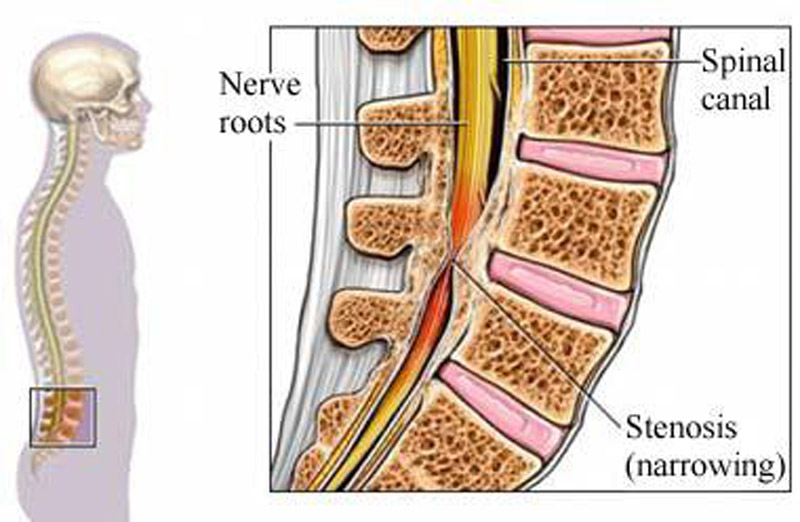
Consensus on the Clinical Diagnosis of Lumbar Spinal Stenosis

By |April 30, 2018|Spinal Stenosis|

Consensus on the Clinical Diagnosis of Lumbar Spinal Stenosis: Results of an International Delphi Study

The Chiro.Org Blog


SOURCE:   Spine (Phila Pa 1976). 2016 (Aug 1); 41 (15): 1239–1246


Christy Tomkins-Lane, PhD, Markus Melloh, MD, PhD, Jon Lurie, MD, et. al.

Department of Health and Physical Education,
Mount Royal University,
Calgary, Canada


STUDY DESIGN:   Delphi.

OBJECTIVE:   The aim of this study was to obtain an expert consensus on which history factors are most important in the clinical diagnosis of lumbar spinal stenosis (LSS).

SUMMARY OF BACKGROUND DATA:   LSS is a poorly defined clinical syndrome. Criteria for defining LSS are needed and should be informed by the experience of expert clinicians.

METHODS:   Phase 1 (Delphi Items): 20 members of the International Taskforce on the Diagnosis and Management of LSS confirmed a list of 14 history items. An online survey was developed that permits specialists to express the logical order in which they consider the items, and the level of certainty ascertained from the questions. Phase 2 (Delphi Study) Round 1: Survey distributed to members of the International Society for the Study of the Lumbar Spine. Round 2: Meeting of 9 members of Taskforce where consensus was reached on a final list of 10 items. Round 3: Final survey was distributed internationally. Phase 3: Final Taskforce consensus meeting.

RESULTS:   A total of 279 clinicians from 29 different countries, with a mean of 19 (±SD: 12) years in practice participated.

The six top items were

“leg or buttock pain while walking,”
“flex forward to relieve symptoms,”
“feel relief when using a shopping cart or bicycle,”
“motor or sensory disturbance while walking,”
“normal and symmetric foot pulses,”
“lower extremity weakness,”
and
“low back pain.”
Significant change in certainty ceased after six questions at 80% (P < .05).

There are more articles like this @ our:

Low Back Pain and Chiropractic Page
and the:

Low Back Pain Guidelines Page

(more…)

Biomechanics of Spinal Manipulative Therapy

By |April 29, 2018|Biomechanics|

Biomechanics of Spinal Manipulative Therapy

The Chiro.Org Blog


SOURCE:   Spine J. 2001 (Mar); 1 (2): 121–130


John J. Triano, DC, PhD

Conservative Medicine,
Chiropractic Division,
Texas Back Institute,
6300 W. Parker Road,
Plano, TX 75093, USA.


BACKGROUND CONTEXT:   Modern scientific investigations into spinal manipulative therapy (SMT) began in 1975. Conditions often treated include acute and chronic low back pain, radicular pain, neck pain, and some forms of headache. The field of spinal manipulation has often been treated by the literature, incorrectly, as being homogeneous. Much of the confusion regarding this form of treatment can be traced to the ambiguity surrounding the procedures themselves. This report summarizes the clinical biomechanics of SMT and evidence for its associated manipulable lesion is reviewed. Finally, a classification system based on biomechanics is proposed that may facilitate more detailed research in the future.

PURPOSE:   A categorization system for SMT was sought that would be more objective than is clinically available. Such a system may serve as a means to strengthen future studies, determine operating principles, applicability, treatment effectiveness, and nature of the manipulable lesion.

STUDY DESIGN:   Literature synthesis.

METHODS:   A search of the indexed biomechanical and medical literature as well as a hand search of published works was conducted. The criteria for article selection consisted of studies that included measurements of mechanical characteristics of treatment techniques used under the general headings of SMT or manual therapy. A second set of studies was identified that explored the biomechanics of buckling behavior of vertebral segments as a model of the manipulable lesion. Quantitative characteristics of SMT were extracted and grouped to form a basis for classification.

RESULTS:   A total of 31 articles were identified that contained quantitative data on the biomechanical properties of SMT methods. An additional seven studies were found that quantified spinal buckling behavior. Common features of SMT procedures lead to a matrix that biomechanically characterizes the types of procedures in use. Buckling behavior was compared qualitatively with clinical observations to form a plausible and evidence-based hypothesis of the manipulable lesion.

There are more articles like this @ our:
About Chiropractic Adjusting Page

(more…)

Prognostic Significance of Subgroup Classification for Infant Patients

By |April 26, 2018|Colic|

Prognostic Significance of Subgroup Classification for Infant Patients with Crying Disorders: A Prospective Cohort Study

The Chiro.Org Blog


SOURCE:   J Can Chiropr Assoc. 2012 (Mar); 56 (1): 40–48


Joyce Miller, BS, DC and Dave Newell, BS, MSc, PhD

Anglo-European College of Chiropractic
(Bournemouth University),
3-15 Parkwood Road,
Bournemouth, Dorset BH5 2DF, UK


INTRODUCTION:   Few convincing treatment options have been identified for the excessively crying infant. One explanation may be a lack of identification of patient subgroups. This study used a clinically plausible categorization protocol to subgroup infants and compared changes in symptoms between these subgroups during treatment.

METHODS:   An observational cohort design was employed. All infants presenting with excessive infant crying between July 2007 and March 2008 were categorized into three subgroups,

        (A)   infant colic,

(B)   irritable infant syndrome of musculoskeletal origin (IISMO) and

(C)   inefficient feeding crying infants with disordered sleep (IFCIDS) based on history and physical findings.

Mothers completed questionnaires which rated their own and their child’s characteristics prior to and at the end, of a course of manual therapy. Independent associations between infant subgroups and changes in continuous outcomes (crying, stress, sleep, and consolability) were assessed. Multivariable analysis of covariance was used to identify and control for potential confounders.

RESULTS:   A total of 158 infants were enrolled. There was no significant difference in demographic profile between groups or any significant difference in infant crying or level of maternal stress at the start. Only the putative subgroups were significantly associated with differences in outcomes. In general, colic babies improved the most in consolability and crying.

There are more articles like this @ our:

Infantile Colic and Chiropractic Page

(more…)

Infant Demographic Profile and Parent Report of Treatment Outcomes

By |April 25, 2018|Pediatrics|

Infant Demographic Profile and Parent Report of Treatment Outcomes at a Chiropractic Clinic in the UK:
An Observational Study

The Chiro.Org Blog


SOURCE:   J Clinical Chiropractic Pediatrics 2017 (Jan); 17 (1): 1398–1404


Johanna M. Jaskulski, MChiro and Joyce E. Miller, BS, DC, PhD

Private practice.
ProChiro Baesweiler,
Nordrhein-Westfalen, Deutschland


Background:   Children, particularly infants, commonly present to chiropractors. Few studies have concentrated on the demographic profile of infants as well as clinical changes reported by parents of infants under chiropractic care.

Objectives:   To identify the demographic profile of infants presenting to a chiropractic clinic and to investigate any change of infant symptoms and maternal feelings following an episode of chiropractic care.

Setting:   This health care observation study was performed at a chiropractic teaching clinic on the south coast of England.

Subjects/Patients:   The study included all mother-infant dyads who presented to the clinic between August 2011 and June 2015 and could read and write English and who consented to complete the forms. Exclusion criteria were mothers of infants older than one year of age at presentation.

Methods:   All mothers were asked to complete two questionnaires at the initial visit and two follow-up questionnaires at discharge. Data collected were sociodemographic characteristics along with questions asking for graded responses regarding the daily amount of irritable behavior in their child, level of distress the mother feels with her child’s behavior, restfulness of infant sleep during the week and difficulty to console the child when crying as well as to the clinical experience provided. Additionally, the validated Edinburgh Postnatal Depression Scale (EPDS) was used as a report of the mother’s feelings.

Results:   413 mothers completed the intake questionnaires. 197 (48%) mothers completed the discharge questionnaires. At intake, 50.3% (n=182) of the patients were four weeks of age or younger. The presenting complaint appeared before the age of two weeks in 79.1% (n=161) of the cases. 30.2% (n=160) presented with colic/crying and 22.9% (n=121) with a feeding related complaint. The modal length of an episode of care was two weeks. Over the course of treatment, average maternal distress levels reduced by 48%. Mean amount of irritability reduced by 31%; mean restfulness of sleep improved by 27% and mean difficulty to console reduced by 38% in the infant. The median EPDS score dropped by 50% over the time of care. 96.3% of parents rated 8–10 satisfaction with care on a scale of 1–10.

There are more articles like this @ our:
Chiropractic Pediatrics Section

(more…)

A Survey of American Chiropractic Association Members’ Experiences

By |April 24, 2018|Integrative Care|

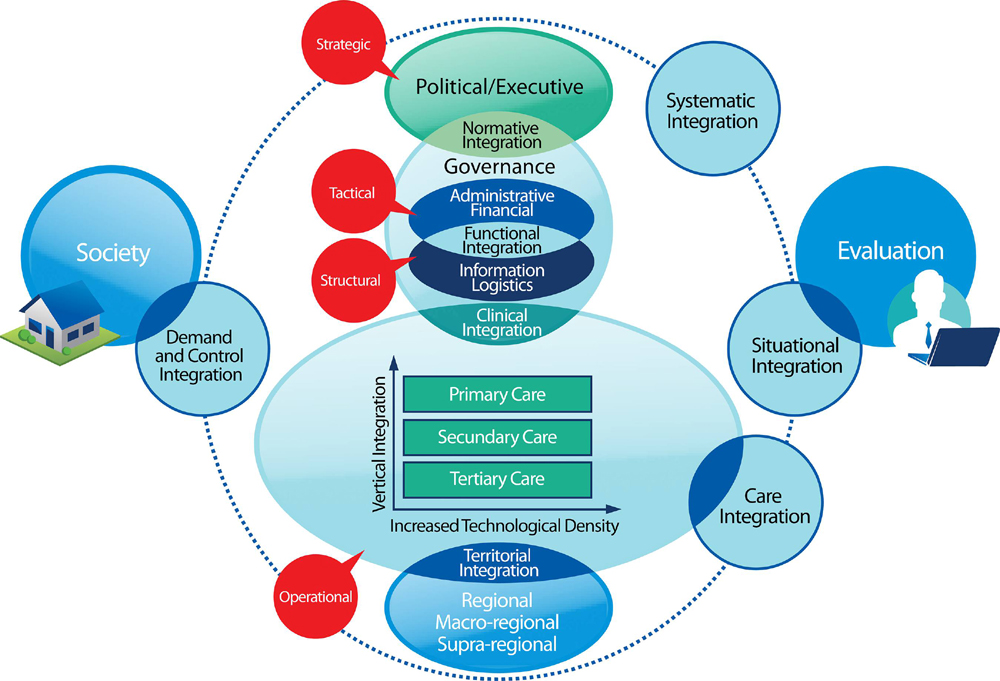
A Survey of American Chiropractic Association Members’ Experiences, Attitudes, and Perceptions of Practice in Integrated Health Care Settings

The Chiro.Org Blog


SOURCE:   J Chiropractic Medicine 2015 (Dec); 14 (4): 227–239


Leo J. Bronston, DC, Lauren E. Austin-McClellan, DC, MS, Anthony J. Lisi, DC, Kevin C. Donovan, DC, and Walter W. Engle, DC

University of Bridgeport College of Chiropractic,
Bridgeport, CT;
Staff Chiropractor,
VA Connecticut Healthcare System,
West Haven, CT.


OBJECTIVE:   The purpose of this study is to examine the self-report of experiences, attitudes, and perceived educational needs of American Chiropractic Association members regarding practice in integrated health care settings.

METHODS:   This was a descriptive observational study of the American Chiropractic Association members. Participants completed an electronic survey reporting their current participation and interest in chiropractic integrated practice.

RESULTS:   The survey was completed in 2011 by 1142 respondents, for a response rate of 11.8%. The majority of respondents (82.9%) did not currently practice in an integrated setting, whereas 17.1% did. Those practicing in various integrated medical settings reported delivering a range of diagnostic, therapeutic, and case management services. Participation in administrative and scholarly activities was less common. Respondents not practicing in integrated settings reported being interested in delivering a very similar array of clinical services. Doctors of chiropractic practicing in hospital or outpatient medical facilities reported frequent engagement in interprofessional collaboration. Both nonintegrated and integrated respondents reported very similar educational interests on a range of clinical topics.

There are more articles like this @ our:

Integrated Health Care and Chiropractic Page

(more…)