

Support Chiropractic Research!

Frank M. Painter

About Frank M. Painter

I was introduced to Chiro.Org in early 1996, where my friend Joe Garolis helped me learn HTML, the "mark-up language" for websites. We have been fortunate that journals like JMPT have given us permission to reproduce some early important articles in Full-Text format. Maintaining the Org website has been, and remains, my favorite hobby.

Kinematic Analysis of Dynamic Lumbar Motion in Patients

By |January 23, 2019|Radiology|

Kinematic Analysis of Dynamic Lumbar Motion in Patients with Lumbar Segmental Instability Using Digital Videofluoroscopy

The Chiro.Org Blog


SOURCE:   Eur Spine J. 2009 (Nov); 18 (11): 1677–1685

Amir Ahmadi, Nader Maroufi, Hamid Behtash, Hajar Zekavat, and Mohamad Parnianpour

Faculty of Rehabilitation,
Iran University of Medical Sciences,
P.O. Box 15875-4391,
Tehran, Iran.
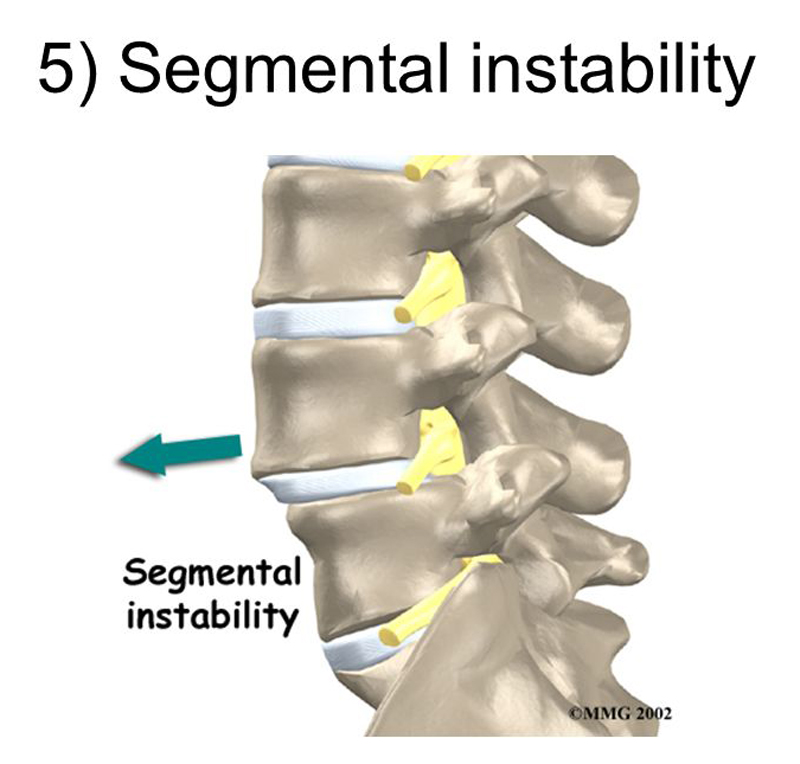

The study design is a prospective, case-control. The aim of this study was to develop a reliable measurement technique for the assessment of lumbar spine kinematics using digital video fluoroscopy in a group of patients with low back pain (LBP) and a control group. Lumbar segmental instability (LSI) is one subgroup of nonspecific LBP the diagnosis of which has not been clarified. The diagnosis of LSI has traditionally relied on the use of lateral functional (flexion-extension) radiographs but use of this method has proven unsatisfactory. Fifteen patients with chronic low back pain suspected to have LSI and 15 matched healthy subjects were recruited. Pulsed digital videofluoroscopy was used to investigate kinematics of lumbar motion segments during flexion and extension movements in vivo. Intersegmental linear translation and angular displacement, and pathway of instantaneous center of rotation (PICR) were calculated for each lumbar motion segment. Movement pattern of lumbar spine between two groups and during the full sagittal plane range of motion were analyzed using ANOVA with repeated measures design.

Intersegmental linear translation was significantly higher in patients during both flexion and extension movements at L5-S1 segment (p < 0.05). Arc length of PICR was significantly higher in patients for L1-L2 and L5-S1 motion segments during extension movement (p < 0.05). This study determined some kinematic differences between two groups during the full range of lumbar spine. Devices, such as digital videofluoroscopy can assist in identifying better criteria for diagnosis of LSI in otherwise nonspecific low back pain patients in hope of providing more specific treatment.

There are more articles like this @ our:

RADIOLOGY Section

(more…)

Chiropractic Management of a Patient With Chronic Pain

By |January 21, 2019|Chronic Neck Pain|

Chiropractic Management of a Patient With Chronic Pain in a Federally Qualified Health Center: A Case Report

The Chiro.Org Blog


SOURCE:   J Chiropractic Medicine 2018 (Jun);   17 (2):   117–120

David J. Mann, DC and Ross Mattox, DC

Department of Integrated Clinics,
Logan University,
St. Louis, Missouri.


OBJECTIVE:   The aim of this case report is to describe the response of a patient with chronic pain who received chiropractic care in a federally qualified health center.

CLINICAL FEATURES:   A 61-year-old female patient with neck and back pain after a traumatic motor vehicle accident 3 years prior was referred for chiropractic care. She had neck pain, low back pain, knee pain, and pain associated with over 20 surgeries, as well as depression, opioid dependence, and low quality of life.

INTERVENTIONS AND OUTCOMES:   The patient was treated with chiropractic manipulation for her low back and neck pain and was counseled on nutrition and exercise. After 6 months, she reported improvements in pain, improved quality of life, and discontinuation of opioid pain medication.

There are more articles like this @ our:

SPINAL PAIN MANAGEMENT Page

(more…)

Chiropractors Contribute to Work Disability Prevention

By |January 20, 2019|Chiropractic Care, Return To Work, Workers' Compensation|

Can Chiropractors Contribute to Work Disability Prevention Through Sickness Absence Management for Musculoskeletal Disorders? – A Comparative Qualitative Case Study in the Scandinavian Context

The Chiro.Org Blog


SOURCE:   Chiropractic & Manual Therapies 2018 (Apr 26); 26: 15

Mette Jensen Stochkendahl, Ole Kristoffer Larsen, Casper Glissmann Nim, Iben Axén, Julia Haraldsson, Ole Christian Kvammen, and Corrie Myburgh

Nordic Institute of Chiropractic and Clinical Biomechanics,
Campusvej 55, DK-5230
Odense M, Denmark.


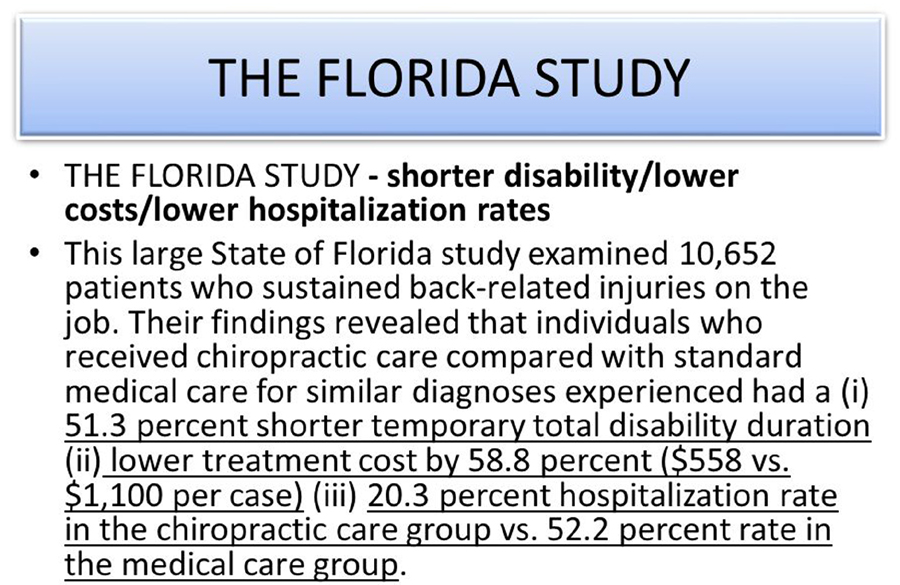
BACKGROUND:   Despite extensive publication of clinical guidelines on how to manage musculoskeletal pain and back pain in particular, these efforts have not significantly translated into decreases in work disability due to musculoskeletal pain. Previous studies have indicated a potential for better outcomes by formalized, early referral to allied healthcare providers familiar with occupational health issues. Instances where allied healthcare providers of comparable professional characteristics, but with differing practice parameters, can highlight important social and organisational strategies useful for informing policy and practice. Currently, Norwegian chiropractors have legislated sickness certification rights, whereas their Danish and Swedish counterparts do not. Against the backdrop of legislative variation, we described, compared and contrasted the views and experiences of Scandinavian chiropractors engaging in work disability prevention and sickness absence management.

METHODS:   This study was embedded in a two-phased, sequential exploratory mixed-methods design. In a comparative qualitative case study design, we explored the experience of chiropractors regarding sickness absence management drawn from face-to-face, semi-structured interviews. We subsequently coded and thematically restructured their experiences and perceptions.

RESULTS:   Twelve interviews were conducted. Thematically, chiropractors’ capacity to support patients in sickness absence management revolved around four key issues: issues of legislation and politics; the rationale for being a sickness absence management partner; whether an integrated sickness absence management pathway existed/could be created; and finally, the barriers to service provision for sickness absence management.

There are more articles like this @ our:
WORKERS’ COMPENSATION Page

(more…)

Managing Sickness Absence of Patients

By |January 19, 2019|Return To Work, Workers' Compensation|

Managing Sickness Absence of Patients with Musculoskeletal Pain – A Cross-sectional Survey of Scandinavian Chiropractors

The Chiro.Org Blog


SOURCE:   Chiropractic & Manual Therapies 2019 (Jan 11); 27: 1

Mette Jensen Stochkendahl, Casper Glissmann Nim, Eleanor Boyle, Ole Kristoffer Larsen, Iben Axén, Ole Christian Kvammen and Corrie Myburgh

Nordic Institute of Chiropractic and Clinical Biomechanics,
Campusvej 55, DK-5230
Odense M, Denmark.


BACKGROUND:   Musculoskeletal pain is a major cause of work disability. Many patients with musculoskeletal pain seek care from health care providers other than their general practitioners, including a range of musculoskeletal practitioners. Therefore, these musculoskeletal practitioners may play a key role by engaging in sickness absence management and work disability prevention. This study aimed to determine the prevalence of musculoskeletal practitioners’ practice behaviours, and their perceptions and beliefs about sickness absence management by using Scandinavian chiropractors as an example, as well as to examine the association between these characteristics and two different practice behaviours.

METHODS:   As part of a mixed-methods study, we surveyed members of the national chiropractic associations in Denmark, Norway, and Sweden in 2016. Descriptive statistics were used to describe prevalence. Multilevel logistic regression with backwards stepping was used to estimate odds ratios with 95% confidence intervals between each of the two practice behaviours and the characteristics.

RESULTS:   Out of the 802 respondents (response rate 56%), 372 were Danish, 349 Norwegian, and 81 Swedish. In Denmark and Norway, 38.7 and 37.8% always/often considered if sick leave was appropriate for their patient compared to 21.0% in Sweden (p = 0.007); and 86.5% of the Norwegian chiropractors always/often recommended to return-to-work versus 64.5 and 66.7% in Denmark and Sweden respectively (p < 0.001). In the final models, factors associated with the two practice behaviours were age, level of clinical experience, working as a teacher, the tendency to be updated on current legislations and policies using social services, contact with general practitioners, relevance of engagement in SAM, consideration of workplace factors, SAM as part of the clinical tool box, patient out-of-pocket fee, and recommending fast return-to-work.

There are more articles like this @ our:
WORKERS’ COMPENSATION Page

(more…)

Coverage of Nonpharmacologic Treatments for Low Back Pain

By |January 17, 2019|Chiropractic Care|

Coverage of Nonpharmacologic Treatments for Low Back Pain Among US Public and Private Insurers

The Chiro.Org Blog


SOURCE:   JAMA Netw Open. 2018 (Oct 5); 1 (6): e183044

James Heyward, MPH; Christopher M. Jones, PharmD, MPH; Wilson M. Compton, MD, MPE; et al

Center for Drug Safety and Effectiveness,
Johns Hopkins Bloomberg School of Public Health,
Baltimore, Maryland.


IMPORTANCE:   Despite epidemic rates of addiction and death from prescription opioids in the United States, suggesting the importance of providing alternatives to opioids in the treatment of pain, little is known regarding how payers’ coverage policies may facilitate or impede access to such treatments.

OBJECTIVE:   To examine coverage policies for 5 nonpharmacologic approaches commonly used to treat acute or chronic low back pain among commercial and Medicare Advantage insurance plans, plus an additional 6 treatments among Medicaid plans.

DESIGN, SETTING, AND PARTICIPANTS:   Cross-sectional study of 15 commercial, 15 Medicaid, and 15 Medicare Advantage health plans for the 2017 calendar year in 16 states representing more than half of the US population. Interviews were conducted with 43 senior medical and pharmacy health plan executives from representative plans.

MAIN OUTCOMES AND MEASURES:   Medical necessity and coverage status for the treatments examined, as well as the use of utilization management tools and cost-sharing magnitude and structure.

RESULTS:   Commercial and Medicare insurers consistently regarded physical and occupational therapy as medically necessary, but policies varied for other therapies examined.

Payers most commonly covered

physical therapy (98% [44 of 45 plans]),

occupational therapy (96% [43 of 45 plans]), and

chiropractic care (89% [40 of 45 plans]),

while transcutaneous electrical nerve stimulation (67% [10 of 15 plans]) and steroid injections (60% [9 of 15 plans]) were the most commonly covered among the therapies examined for Medicaid plans only.

Despite evidence in the literature to support use of acupuncture and psychological interventions, these therapies were either not covered by plans examined (67% of all plans [30 of 45] did not cover acupuncture) or lacked information about coverage (80% of Medicaid plans [12 of 15] lacked information about coverage of psychological interventions). Utilization management tools, such as prior authorization, were common, but criteria varied greatly with respect to which conditions and what quantity and duration of services were covered. Interviewees represented 6 Medicaid managed care organizations, 2 Medicare Advantage or Part D plans, 9 commercial plans, and 3 trade organizations (eg, Blue Cross Blue Shield Association). Interviews with plan executives indicated a low level of integration between the coverage decision-making processes for pharmacologic and nonpharmacologic therapies for chronic pain.

There are more articles like this @ our:

SPINAL PAIN MANAGEMENT Page

(more…)

Pain-Related Fear-Dissociable Neural Sources

By |January 15, 2019|Fear Avoidance, Outcome Assessment, Pain Management|

Pain-Related Fear-Dissociable Neural Sources of Different Fear Constructs

The Chiro.Org Blog


SOURCE:   eNeuro. 2019 (Jan 3);   5 (6) pii: ENEURO.0107-18.2018

Michael Lukas Meier, Andrea Vrana, Barry Kim Humphreys, Erich Seifritz, Philipp Stämpfli, and Petra Schweinhardt

Integrative Spinal Research,
Department of Chiropractic Medicine,
Balgrist University Hospital,
8008 Zurich, Switzerland.


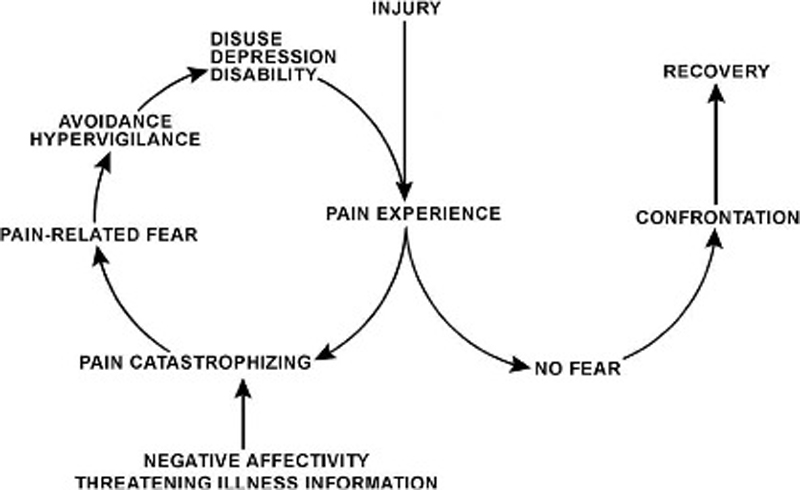
Fear of pain demonstrates significant prognostic value regarding the development of persistent musculoskeletal pain and disability. Its assessment often relies on self-report measures of pain-related fear by a variety of questionnaires. However, based either on “fear of movement/(re)injury/kinesiophobia,” “fear avoidance beliefs,” or “pain anxiety,” pain-related fear constructs plausibly differ while it is unclear how specific the questionnaires are in assessing these different constructs. Furthermore, the relationship of pain-related fear to other anxiety measures such as state or trait anxiety remains ambiguous. Advances in neuroimaging such as machine learning on brain activity patterns recorded by functional magnetic resonance imaging might help to dissect commonalities or differences across pain-related fear constructs. We applied a pattern regression approach in 20 human patients with nonspecific chronic low back pain to reveal predictive relationships between fear-related neural pattern information and different pain-related fear questionnaires.

More specifically, the applied multiple kernel learning approach allowed the generation of models to predict the questionnaire scores based on a hierarchical ranking of fear-related neural patterns induced by viewing videos of activities potentially harmful for the back. We sought to find evidence for or against overlapping pain-related fear constructs by comparing the questionnaire prediction models according to their predictive abilities and associated neural contributors. By demonstrating evidence of nonoverlapping neural predictors within fear-processing regions, the results underpin the diversity of pain-related fear constructs. This neuroscientific approach might ultimately help to further understand and dissect psychological pain-related fear constructs.

There are more articles like this @ our:

SPINAL PAIN MANAGEMENT Page

(more…)