

Support Chiropractic Research!

Frank M. Painter

About Frank M. Painter

I was introduced to Chiro.Org in early 1996, where my friend Joe Garolis helped me learn HTML, the "mark-up language" for websites. We have been fortunate that journals like JMPT have given us permission to reproduce some early important articles in Full-Text format. Maintaining the Org website has been, and remains, my favorite hobby.

Maternal Report of Outcomes of Chiropractic Care for Infants

By |July 2, 2019|Patient Satisfaction, Pediatrics|

Maternal Report of Outcomes of Chiropractic Care for Infants

The Chiro.Org Blog


SOURCE:   J Manipulative Physiol Ther. 2019 (Mar; 42 (3): 167–176

Joyce E. Miller, DC, PhD, Heather A. Hanson, DC, MSc, Mandy Hiew, BA, Derek S. Lo Tiap Kwong, BA, Zicheng Mok, BA, Yun-Han Tee, BA

Outpatient Teaching Clinic,
AECC University College,
Bournemouth, Dorset, UK.
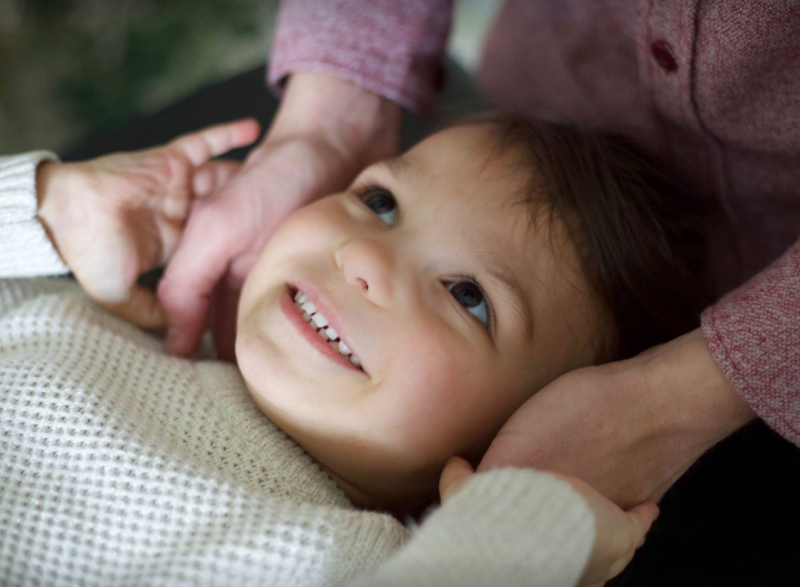

OBJECTIVE:   The purpose of this study was to investigate the report by mothers of their infants’ condition before and after a trial of care provided by registered chiropractic clinicians in addition to ratings of satisfaction, cost of care, and reports of any adverse events or side effects. A second purpose was to report the demographic profile of infants who presented for care to 16 chiropractic clinics in the United Kingdom.

METHODS:   This observational study prospectively collected reports by mothers of their infants’ demographic profiles and outcomes across several domains of infant behavior and their own mental state using the United Kingdom Infant Questionnaire. Participating registered chiropractors were recruited through the Royal College of Chiropractors annual meeting in January 2016, and 15 clinics and the Anglo-European College of Chiropractic University College teaching clinic volunteered to participate.

RESULTS:   In all, 2001 mothers completed intake questionnaires and 1092 completed follow-up forms. Statistically significant (P < .05) improvements were reported across all aspects of infant behavior studied, including feeding problems, sleep issues, excessive crying, problems with supine sleep position, infant pain, restricted cervical range of motion, and time performing prone positioning. Maternal ratings of depression, anxiety, and satisfaction with motherhood also demonstrated statistically significant improvement (P < .05). In total, 82% (n = 797) reported definite improvement of their infants on a global impression of change scale. As well, 95% (n = 475) reported feeling that the care was cost-effective, and 90.9% (n = 712) rated their satisfaction 8 or higher on an 11–point scale. Minor self-limiting side effects were reported (5.8%, n = 42/727) but no adverse events.

There are more articles like this @ our:
PEDIATRICS Section

(more…)

Observed Patterns of Cervical Radiculopathy

By |July 1, 2019|Radiculopathy|

Observed Patterns of Cervical Radiculopathy: How Often Do They Differ From a Standard, “Netter Diagram” Distribution?

The Chiro.Org Blog


SOURCE:   Spine J. 2019 (Jul); 19 (7): 1137–1142

Steven J. McAnany MD , John M. Rhee MD , Evan O. Baird MD , Weilong Shi MD , Jeffrey Konopka MD , Thomas M. Neustein MD , Rafael Arceo MD

Department of Orthopedic Surgery,
Hospital for Special Surgery,
535 East 70th St,
New York, NY 10021, USA.


BACKGROUND CONTEXT:   Traditionally, cervical radiculopathy is thought to present with symptoms and signs in a standard, textbook, reproducible pattern as seen in a “Netter diagram.” To date, no study has directly examined cervical radicular patterns attributable to single level pathology in patients undergoing ACDF.

PURPOSE:   The purpose of this study is to examine cervical radiculopathy patterns in a surgical population and determine how often patients present with the standard textbook (ie, Netter diagram) versus nonstandard patterns.

STUDY DESIGN/SETTING:   A retrospective study.

PATIENT SAMPLE:   Patients who had single-level radiculopathy with at least 75% improvement of preoperative symptoms following ACDF were included.

OUTCOME MEASURES:   Epidemiologic variables were collected including age, sex, weight, body mass index, laterality of symptoms, duration of symptoms prior to operative intervention, and the presence of diabetes mellitus. The observed pattern of radiculopathy at presentation, including associated neck, shoulder, upper arm, forearm, and hand pain and/or numbness, was determined from chart review and patient-derived pain diagrams.

METHODS:   We identified all patients with single level cervical radiculopathy operated on between March 2011 and March 2016 by six surgeons. The observed pattern of radiculopathy was compared to a standard textbook pattern of radiculopathy that strictly adheres to a dermatomal map Fisher exact test was used to analyze categorical data and Student t test was used for continuous variables.

There are more articles like this @ our:

RADICULOPATHY Page

(more…)

Leadership and Capacity Building in International Chiropractic Research

By |June 21, 2019|Uncategorized|

Leadership and Capacity Building in International Chiropractic Research: Introducing the Chiropractic Academy for Research Leadership (CARL)

The Chiro.Org Blog


SOURCE:   Chiropractic & Manual Therapies 2018 (Feb 6); 26: 5

Jon Adams, Greg Kawchuk, Alexander Breen, Diana De Carvalho, Andreas Eklund, Matthew Fernandez, Martha Funabashi, Michelle M. Holmes, Melker S. Johansson, Katie de Luca, Craig Moore, Isabelle Pagé, Katherine A. Pohlman, Michael S. Swain, Arnold Y. L. Wong, and Jan Hartvigsen

Faculty of Health,
University of Technology Sydney,
Sydney, Australia.


In an evidence-based health care environment, healthcare professions require a sustainable research culture to remain relevant. At present however, there is not a mature research culture across the chiropractic profession largely due to deficiencies in research capacity and leadership, which may be caused by a lack of chiropractic teaching programs in major universities. As a response to this challenge the Chiropractic Academy for Research Leadership, CARL, was created with the aim of develop a global network of successful early-career chiropractic researchers under the mentorship of three successful senior academics from Australia, Canada, and Denmark. The program centres upon an annual week-long program residential that rotates continental locations over the first three-year cycle and between residentials the CARL fellows work on self-initiated research and leadership initiatives.

There are more articles like this @ our:
Chiropractic Research Section

(more…)

The Research Crisis in American Institutions of CAM

By |June 18, 2019|Chiropractic Research|

The Research Crisis in American Institutions of Complementary and Integrative Health:
One Proposed Solution for the Chiropractic Profession

The Chiro.Org Blog


SOURCE:   Chiropractic & Manual Therapies 2019 (Jun 17); 27: 32

Ian D. Coulter and Patricia M. Herman

RAND Corporation,
1776 Main Street, P.O. Box 2138,
Santa Monica, CA 90407-2138, USA


A crisis confronts the Complementary and Integrative Health (CIH) teaching institutions in the US. Research infrastructure is needed to build and sustain productive research programs and retain their own research faculty. In most health professions, this infrastructure is largely built through research grants. In CIH, most educational institutions are funded through student tuition, which has historically also had to be the source for building their research programs. Only a limited number of these institutions have emerged as National Institute of Health (NIH) grant-funded programs. As a result, the American chiropractic institutions have seen a retrenchment in the number of active research programs. In addition, although research training programs e.g., NIH’s K awards are available for CIH researchers, these programs generally result in these researchers leaving their institutions and depriving future CIH practitioners of the benefit of being trained in a culture of research.

One proposed solution is to leverage the substantial research infrastructure and long history of collaboration available at the RAND Corporation (https://www.rand.org) This article presents the proposed five components of the RAND Center for Collaborative CIH Research and the steps required to bring it to being:

1)   the CIH Research Network –   an online resource and collaborative site for CIH researchers;

2)   the CIH Research Advisory Board –   the governing body for the Center selected by its members;

3)   the RAND CIH Interest Group –   a group of RAND researchers with an interest in and who could provide support to CIH research;

There are more articles like this @ our:
Chiropractic Research Section

(more…)

A Narrative Review of Lumbar Fusion Surgery

By |June 6, 2019|Guidelines, Low Back Pain|

A Narrative Review of Lumbar Fusion Surgery With Relevance to Chiropractic Practice

The Chiro.Org Blog


SOURCE:   J Chiropractic Medicine 2016 (Dec);   15 (4):   259–271

Clinton J. Daniels, DC, MS,
Pamela J. Wakefield, DC,
Glenn A. Bub, DC,
James D. Toombs, MD

Veteran Affairs Saint Louis Health Care System,
St. Louis, MO.


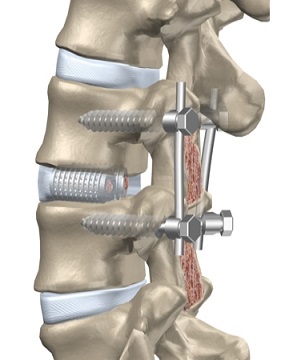
OBJECTIVE:   The purpose of this narrative review was to describe the most common spinal fusion surgical procedures, address the clinical indications for lumbar fusion in degeneration cases, identify potential complications, and discuss their relevance to chiropractic management of patients after surgical fusion.

METHODS:   The PubMed database was searched from the beginning of the record through March 31, 2015, for English language articles related to lumbar fusion or arthrodesis or both and their incidence, procedures, complications, and postoperative chiropractic cases. Articles were retrieved and evaluated for relevance. The bibliographies of selected articles were also reviewed.

RESULTS:   The most typical lumbar fusion procedures are posterior lumbar interbody fusion, anterior lumbar interbody fusion, transforaminal interbody fusion, and lateral lumbar interbody fusion. Fair level evidence supports lumbar fusion procedures for degenerative spondylolisthesis with instability and for intractable low back pain that has failed conservative care. Complications and development of chronic pain after surgery is common, and these patients frequently present to chiropractic physicians. Several reports describe the potential benefit of chiropractic management with spinal manipulation, flexion-distraction manipulation, and manipulation under anesthesia for postfusion low back pain. There are no published experimental studies related specifically to chiropractic care of postfusion low back pain.

There are more articles like this @ our:
Low Back Pain Guidelines Page and the:

Low Back Pain and Chiropractic Page

(more…)

Who Will Have Sustainable Employment After a Back Injury?

By |June 1, 2019|Clinical Prediction Rule, Return To Work|

Who Will Have Sustainable Employment After a Back Injury? The Development of a Clinical Prediction Model in a Cohort of Injured Workers

The Chiro.Org Blog


SOURCE:   J Occup Rehabil. 2017 (Sep); 27 (3): 445–455

Heather M. Shearer, Pierre Cote, Eleanor Boyle, Jill A. Hayden, John Frank, William G. Johnson

UOIT-CMCC Center for the Study of Disability Prevention and Rehabilitation,
University of Ontario Institute of Technology,
2000 Simcoe St. North,
Oshawa, ON, L1H 7K4, Canada.


Our objective was to develop a clinical prediction model to identify workers with sustainable employment following an episode of work-related low back pain (LBP).

Methods   We used data from a cohort study of injured workers with incident LBP claims in the USA to predict employment patterns 1 and 6 months following a workers’ compensation claim. We developed three sequential models to determine the contribution of three domains of variables:

(1)   basic demographic/clinical variables;

(2)   health-related variables; and

(3)   work-related factors.

Multivariable logistic regression was used to develop the predictive models. We constructed receiver operator curves and used the c-index to measure predictive accuracy.

Results   Seventy-nine percent and 77 % of workers had sustainable employment at 1 and 6 months, respectively. Sustainable employment at 1 month was predicted by initial back pain intensity, mental health-related quality of life, claim litigation and employer type (c-index = 0.77).

There are more articles like this @ our:

The RETURN TO WORK Section and the:

Clinical Prediction Rule Page

(more…)