Support Chiropractic Research!

Frank M. Painter

About Frank M. Painter

I was introduced to Chiro.Org in early 1996, where my friend Joe Garolis helped me learn HTML, the "mark-up language" for websites. We have been fortunate that journals like JMPT have given us permission to reproduce some early important articles in Full-Text format. Maintaining the Org website has been, and remains, my favorite hobby.

Chiropractic and Health Care Reform: An Uncertain Future or an Opportunity?

By |April 10, 2012|Health Care Reform|

Chiropractic and Health Care Reform: An Uncertain Future or an Opportunity?

The Chiro.Org Blog


SOURCE:   Dynamic Chiropractic

By Claire Johnson, DC, MSEd and Lori Byrd, MS


The United States is currently experiencing a health care crisis. Much of the current health care system focuses limited resources on the treatment of disease, and very few resources are aimed at primary and secondary prevention.

Although 70 percent of factors influencing health are environmental and behavioral, and only 10 percent of the factors attributed to health are associated with access to health care, the actual reimbursement for health services accounts for 96 percent of the $2.3 trillion spent each year. [1] Thus, we need to take a closer look at health care reform and how doctors of chiropractic will approach this changing landscape.

In March 2010, the Patient Protection and Affordable Care Act was law signed into law. The intention of the act is to put “in place comprehensive health insurance reforms that will hold insurance companies more accountable, lower health care costs, guarantee more health care choices, and enhance the quality of health care for all Americans.” [2] However, it is not exactly clear how this will be done or if the promised goals will be met, especially during this time of reduced funding and economic crises.

Chiropractic is one of the largest complementary and alternative medicine professions, and one of the largest licensed health care professions in the United States. [3-4] It is considered to be a holistic and wellness-oriented profession, traditionally not using drugs or surgery to help patients maintain health. Care typically incorporates wellness, lifestyle and prevention approaches with patient management, and focuses on the body’s natural ability to heal itself. Services provided by doctors of chiropractic have demonstrated high patient satisfaction, cost-effectiveness and parity compared to other types of care for similar conditions. (more…)

ACOEM Recognizes the Value of Chiropractic for Chronic Spinal Pain

By |April 4, 2012|Chiropractic Care, Chronic Pain, Guidelines, Spinal Manipulation|

ACOEM Recognizes the Value of Chiropractic for Chronic Spinal Pain

The Chiro.Org Blog


SOURCE:   Dynamic Chiropractic 2008 (Sep 23); 26 (20): 1

Tina Beychok, Associate Editor


Pain is the most prevalent health condition among U.S. workers and the most expensive in terms of lost productivity. Recent studies suggest more than six in 10 adults over the age of 30 experience chronic pain. Furthermore, health care expenditures for back and neck pain have risen to more than $80 billion a year in the U.S. – a dramatic increase over the past eight years, without evidence of improved health. In addition to the costs of lost productivity, an estimated $64 billion per year is lost due to workers continuing to work, even though pain reduces their job performance. This phenomenon is called “presenteeism.”

Unfortunately, workers’ comp can be a quagmire of contradictory and insufficient rules and regulations as to what treatments are and aren’t covered. The American College of Occupational and Environmental Medicine (ACOEM) has been in the process of revising its Occupational Medicine Practice Guidelines, which have not always taken a positive view of chiropractic manipulation. In fact, the second edition of the guidelines, released in 2005, was heavily criticized by some in the chiropractic community. [1]

ACOEM’s latest chronic pain guidelines (a chapter of the overall guidelines) may represent a step in the right direction in terms of recognizing the value of chiropractic care. The guidelines actually recommend manipulation for chronic, persistent low back or neck pain and cervicogenic headache. [2] This is significant because in the past, the guidelines failed to recommend manipulation, even when other treatment strategies (medication, etc.) were rated as less effective.

(more…)

Radiologic Manifestations of Spinal Subluxations

By |March 30, 2012|Chiropractic Care, Radiology, Subluxation|

Radiologic Manifestations of Spinal Subluxations

The Chiro.Org Blog


We would all like to thank Dr. Richard C. Schafer, DC, PhD, FICC for his lifetime commitment to the profession. In the future we will continue to add materials from RC’s copyrighted books for your use.

This is Chapter 6 from RC’s best-selling book:
“Basic Chiropractic Procedural Manual”

These materials are provided as a service to our profession. There is no charge for individuals to copy and file these materials. However, they cannot be sold or used in any group or commercial venture without written permission from ACAPress.


Chapter 6: Radiologic Manifestations of Spinal Subluxations

This chapter describes the radiologic signs that may be expected when spinal subluxations are demonstrable by radiography. Through the years, there have been several concepts within the chiropractic profession about what actually constitutes a subluxation. Each has had its rationale (anatomical, neurologic, or kinematic), and each has had certain validity contributing to our understanding of this complex phenomenon.

You may review the full Chapter 6 @:

Radiologic Manifestations of Spinal Subluxations


Kinetic Intersegmental Subluxations


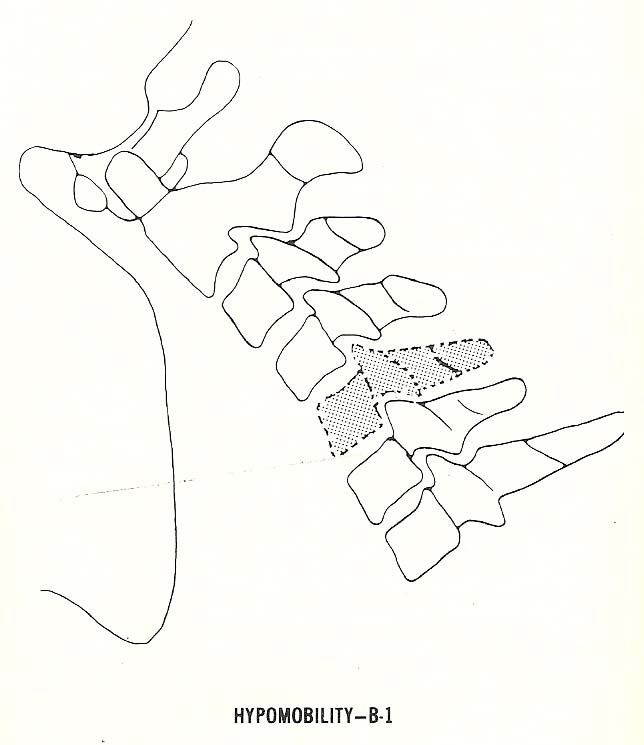
Segmental hypomobility, also called a “fixation subluxation” by many clinicians, may affect one or several motor units.

It is characterized by reduced motion of the “Spinal Motion Unit” (Please refer to Spinal Anatomy 101), which has been forced to the extreme of a range of motion (eg, flexion, extension, etc). See Figure 6.14. Stress views or videofluoroscopy are necessary to depict this and other kinetic subluxations radiographically, but motion palpation and some orthopedic tests may reveal their presence clinically.

Editor’s Note:   In the following picture, the inferior facet of C5 fails to slide forwards and upwards upon the superior facet of C6. Because of that, the IVF cannot open more fully, and the spinous process of C5 fails to move away from the C6 spinous. All together, these are the classic signs of HYPO-mobility.


(more…)

Regular Vitamin and Mineral Supplementation Lowers Colon Cancer Risk More Than Eighty Percent

By |March 28, 2012|Cancer, Prevention, Supplementation|

Regular Vitamin and Mineral Supplementation Lowers Colon Cancer Risk More Than Eighty Percent

The Chiro.Org Blog


SOURCE:   Natural News


Researchers, just publishing in the Canadian Journal of Physiology and Pharmacology (CJPP), have found that a diet enhanced with vitamin and mineral supplementation can lower the risk of developing precancerous colon cancer lesions by up to 84%. Colon cancer is the second most common form of the disease affecting men and women in the US, with nearly 150,000 new diagnoses each year.

The Full Text article describes how animals that were fed a high-fat, low fiber diet, while also being exposed to a carcinogen, developed pre-cancerous lesions of the colon along a pathway similar to that found in humans.

The group of animals that underwent a similar treatment and diet, but were also provided a daily vitamin and mineral supplement, demonstrated an 84% reduction in the formation of pre-cancerous lesions which did not develop into tumors.

(more…)

The Chiropractic Care of Patients with Asthma

By |March 19, 2012|Asthma, Chiropractic Care, Placebo, Spinal Manipulation|

The Chiropractic Care of Patients with Asthma: A Systematic Review of the Literature to Inform Clinical Practice

The Chiro.Org Blog


SOURCE:   Clinical Chiropractic 2012 (Mar); 15 (1): 23–30


Joel Alcantara, Joey D. Alcantara, Junjoe Alcantara

International Chiropractic Pediatric Association,
Media, 327 N Middletown Rd,
Media, PA 19063, USA


Introduction   Estimates place some 300 million people worldwide suffer from asthma with 180,000 deaths attributed to the disease. The financial burden from Asthma in Western countries ranges from $300 to $1,300 per patient per year. In the United States, asthma medication costs between $1 billion and $6.2 billion per annum. With an increasing prevalence of 50% every decade, there is no question that the burden of asthma is tremendous. The prevalence of complementary and alternative medicine (CAM) use amongst adult asthmatics ranges from 4% to 79% whilst, in children, it ranges from 33% to 89%. Of the various practitioner-based CAM therapies, chiropractic stands as the most popular for both children and adults. As with other chiropractors, the authors aspire to the principles of evidence-based practice in the care of asthma sufferers. Recent systematic reviews of the literature places into question the effectiveness of chiropractic. To assuage the discord between our clinical experience and those of our patients with the dissonant literature, we performed a systematic review of the literature on the chiropractic care of patients with asthma.

Methods   Our systematic review utilized the following databases for the years indicated: MANTIS [1965–2010]; Pubmed [1966–2010]; ICL [1984–2010]; EMBASE [1974–2010], AMED [1967–2010], CINAHL [1964–2010], Index to Chiropractic Literature [1984–2010], Alt-Health Watch [1965–2010] and PsychINFO [1965–2010]. Inclusion criteria for manuscript review were manuscripts of primary investigation/report published in peer-reviewed journals in the English language involving the care of asthmatic patients.

Results   The studies found span of research designs from non-experimental to true experimental studies consisting of 3 randomized controlled clinical trials (RCTs), 10 case reports, 3 case series, 7 cohort studies, 3 survey studies, 5 commentaries8 and 6 systematic reviews. The lower level design studies provide some measure of evidence on the effectiveness of chiropractic care for patients with asthma while a critical appraisal of 3 RCTs revealed questionable validity of the sham SMTs involved and hence the conclusions and interpretations derived from them. The RCTs on chiropractic and asthma are arguably comparison trials rather than controlled clinical trials per se.

There are more articles like this @ our:

Asthma and Chiropractic Page

(more…)