

Support Chiropractic Research!

BLOG

Association of Subclinical Neck Pain With Altered

By |March 11, 2018|Chronic Neck Pain|

Association of Subclinical Neck Pain With Altered Multisensory Integration at Baseline and 4-Week Follow-up Relative to Asymptomatic Controls

The Chiro.Org Blog


SOURCE:   J Manipulative Physiol Ther. 2018 (Feb); 41 (2): 81–91


Bassem Farid, BHSc (Hons), Paul Yielder, PhD, Michael Holmes, PhD, Heidi Haavik, PhD, Bernadette A. Murphy, DC, PhD

Health Sciences,
University of Ontario Institute of Technology,
Oshawa, Ontario, Canada.
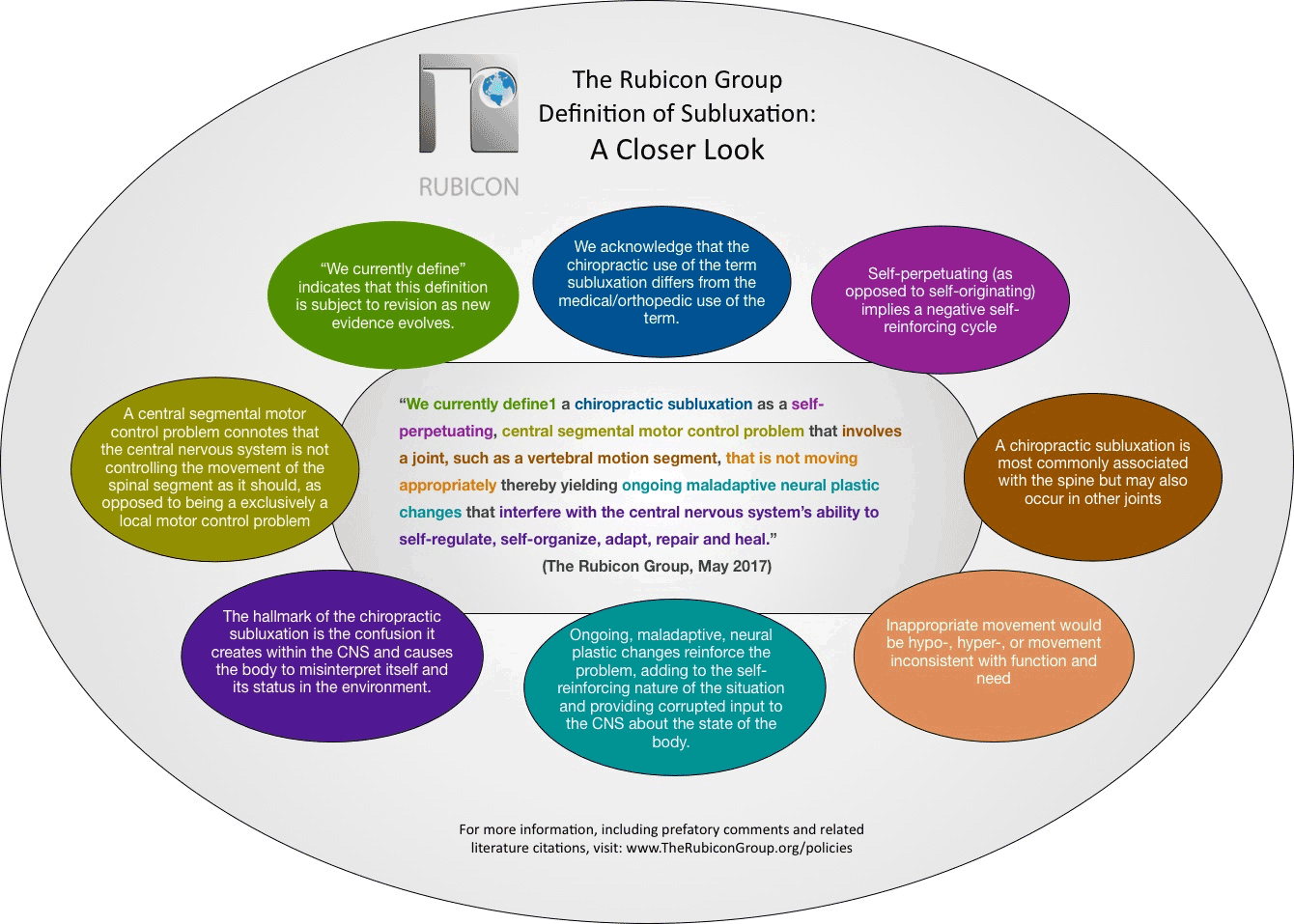

OBJECTIVE:   The purpose of this study was to test whether people with subclinical neck pain (SCNP) had altered visual, auditory, and multisensory response times, and whether these findings were consistent over time.

METHODS:   Twenty-five volunteers (12 SCNP and 13 asymptomatic controls) were recruited from a Canadian university student population. A 2-alternative forced-choice discrimination task with multisensory redundancy was used to measure response times to the presentation of visual (color filled circles), auditory (verbalization of the color words, eg, red or blue), and multisensory (simultaneous audiovisual) stimuli at baseline and 4 weeks later.

RESULTS:   The SCNP group was slower at both visual and multisensory tasks (P = .046, P = .020, respectively), with no change over 4 weeks. Auditory response times improved slightly but significantly after 4 weeks (P = .050) with no group difference.

There are more articles like this @ our:
Chiropractic Subluxation Neurology section

(more…)

Are Manual Therapies, Passive Physical Modalities, or Acupuncture Effective for the Management of Patients with Whiplash-associated Disorders

By |March 10, 2018|Chronic Neck Pain|

Are Manual Therapies, Passive Physical Modalities, or Acupuncture Effective for the Management of Patients with Whiplash-associated Disorders or Neck Pain and Associated Disorders? An Update of the Bone and Joint Decade Task Force on Neck Pain and Its Associated Disorders by the OPTIMa Collaboration

The Chiro.Org Blog


SOURCE:   Spine J. 2016 (Dec); 16 (12): 1598-1630


Jessica J. Wong, BSc, DC, FCCS(C); Heather M. Shearer, DC, MSc, FCCS(C); Silvano Mior, DC, PhD; Craig Jacobs, BFA, DC, MSc, FCCS(C); Pierre Côté, DC, PhD; Kristi Randhawa, BHSc, MPH; Hainan Yu, MBBS, MSc; Danielle Southerst, BScH, DC, FCCS(C); Sharanya Varatharajan, BSc, MSc; Deborah Sutton, BScOT, MEd, MSc; Gabrielle van der Velde, DC, PhD; Linda J. Carroll, PhD; Arthur Ameis, FRCPC, DESS, FAAPM&R; Carlo Ammendolia, DC, PhD; Robert Brison, MD, MPH; Margareta Nordin, Dr. Med. Sci.; Maja Stupar, DC, PhD; Anne Taylor-Vaisey, MLS

UOIT-CMCC Centre for the Study of Disability Prevention and Rehabilitation,
University of Ontario Institute of Technology (UOIT) and
Canadian Memorial Chiropractic College (CMCC);
Department of Graduate Studies,
Canadian Memorial Chiropractic College.


BACKGROUND CONTEXT:   In 2008, the Bone and Joint Decade 2000-2010 Task Force on Neck Pain and Its Associated Disorders (Neck Pain Task Force) found limited evidence on the effectiveness of manual therapies, passive physical modalities, or acupuncture for the management of whiplash-associated disorders (WAD) or neck pain and associated disorders (NAD).

PURPOSE:   This review aimed to update the findings of the Neck Pain Task Force, which examined the effectiveness of manual therapies, passive physical modalities, and acupuncture for the management of WAD or NAD.

STUDY DESIGN/SETTING:   This is a systematic review and best evidence synthesis.

SAMPLE:   The sample includes randomized controlled trials, cohort studies, and case-control studies comparing manual therapies, passive physical modalities, or acupuncture with other interventions, placebo or sham, or no intervention.

OUTCOME MEASURES:   The outcome measures were self-rated or functional recovery, pain intensity, health-related quality of life, psychological outcomes, or adverse events.

METHODS:   We systematically searched five databases from 2000 to 2014. Random pairs of independent reviewers critically appraised eligible studies using the Scottish Intercollegiate Guidelines Network criteria. Studies with a low risk of bias were stratified by the intervention’s stage of development (exploratory vs. evaluation) and synthesized following best evidence synthesis principles. Funding was provided by the Ministry of Finance.

RESULTS:   We screened 8,551 citations, and 38 studies were relevant and 22 had a low risk of bias. Evidence from seven exploratory studies suggests that (1) for recent but not persistent NAD grades I-II, thoracic manipulation offers short-term benefits; (2) for persistent NAD grades I-II, technical parameters of cervical mobilization (eg, direction or site of manual contact) do not impact outcomes, whereas one session of cervical manipulation is similar to Kinesio Taping; and (3) for NAD grades I-II, strain-counterstrain treatment is no better than placebo. Evidence from 15 evaluation studies suggests that (1) for recent NAD grades I-II, cervical and thoracic manipulation provides no additional benefit to high-dose supervised exercises, and Swedish or clinical massage adds benefit to self-care advice; (2) for persistent NAD grades I-II, home-based cupping massage has similar outcomes to home-based muscle relaxation, low-level laser therapy (LLLT) does not offer benefits, Western acupuncture provides similar outcomes to non-penetrating placebo electroacupuncture, and needle acupuncture provides similar outcomes to sham-penetrating acupuncture; (3) for WAD grades I-II, needle electroacupuncture offers similar outcomes as simulated electroacupuncture; and (4) for recent NAD grades III, a semi-rigid cervical collar with rest and graded strengthening exercises lead to similar outcomes, and LLLT does not offer benefits.

There are more articles like this @ our:

Chronic Neck Pain and Chiropractic Page

(more…)

The Identity, Role, Setting, and Future of Chiropractic Practice

By |March 8, 2018|Chiropractic Identity|

The Identity, Role, Setting, and Future of Chiropractic Practice: A Survey of Australian and New Zealand Chiropractic Students

The Chiro.Org Blog


SOURCE:   J Chiropractic Education 2018 (Mar 6) [Epub]


Katie E. de Luca, BAppSci (Ex and Sp Sci), MChiro, PhD, Jordan A. Gliedt, DC, Matthew Fernandez, BSpSc, MChiro, PhD, Greg Kawchuk, DC, PhD, and Michael S. Swain, BChiroSc, MChiro, MPhil

Chiropractic Academy for Research Leadership
24 Salmon Circuit,
South West Rocks,
New South Wales 2431, Australia


OBJECTIVE:   To evaluate Australian and New Zealand chiropractic students’ opinions regarding the identity, role setting, and future of chiropractic practice

METHODS:   An online, cross-sectional survey was administered to chiropractic students in all chiropractic programs in Australia and New Zealand. The survey explored student viewpoints about the identity, role/scope, setting, and future of chiropractic practice as it relates to chiropractic education and health promotion. Associations between the number of years in the program, highest degree preceding chiropractic education, institution, and opinion summary scores were evaluated by multivariate analysis of variance tests.

RESULTS:   A total of 347 chiropractic students participated in the study. For identity, most students (51.3%) hold strongly to the traditional chiropractic theory but also agree (94.5%) it is important that chiropractors are educated in evidence-based practice. The main predictor of student viewpoints was a student’s chiropractic institution (Pillai’s trace =.638, F[16, 1368] = 16.237, p < .001). Chiropractic institution explained over 50% of the variance around student opinions about role/scope of practice and approximately 25% for identity and future practice.

There are more articles like this @ our:
The Chiropractic Identity Page

(more…)

Dose-Response and Efficacy of Spinal Manipulation for Care of Cervicogenic Headache

By |March 7, 2018|Cervicogenic Headache|

Dose-Response and Efficacy of Spinal Manipulation for Care of Cervicogenic Headache:
A Dual-Center Randomized Controlled Trial

The Chiro.Org Blog


SOURCE:   Spine J. 2018 (Oct); 18 (10): 1741–1754


Mitchell Haas, DC, MAa, Gert Bronfort, DC, PhD, Roni Evans, DC, PhD, Craig Schulz, DC, MSa, Darcy Vavrek, ND, MS, Leslie Takaki, MA, Linda Hanson, DC, MS, Brent Leininger, DC, MS, Moni B. Neradilek, MS

Integrative Health & Wellbeing Research Program,
Earl E. Bakken Center for Spirituality & Healing,
University of Minnesota,
420 Delaware Street SE,
Minneapolis, MN, USA, 55455.


BACKGROUND CONTEXT:   The optimal number of visits for the care of cervicogenic headache (CGH) with spinal manipulative therapy (SMT) is unknown.

PURPOSE:   To identify the dose-response relationship between visits for SMT and chronic CGH outcomes; to evaluate the efficacy of SMT by comparison with a light massage control.

STUDY DESIGN/SETTING:   Two-site, open-label randomized controlled trial.

PATIENT SAMPLE:   Participants were 256 adults with chronic CGH.

OUTCOME MEASURES:   The primary outcome was days with CGH in the prior 4 weeks evaluated at the 12- and 24-week primary endpoints. Secondary outcomes included CGH days at remaining endpoints, pain intensity, disability, perceived improvement, medication use, and patient satisfaction.

METHODS:   Participants were randomized to 4 dose levels of chiropractic SMT: 0, 6, 12, or 18 sessions. They were treated 3 times per week for 6 weeks and received a focused light-massage control at sessions when SMT was not assigned. Linear dose effects and comparisons to the no-manipulation control group were evaluated at 6, 12, 24, 39, and 52 weeks. This study was funded by the National Center for Complementary and Integrative Health (R01AT006330) and is registered at ClinicalTrials.gov (NCT01530321). The authors declare no conflicts of interest.

RESULTS:   A linear dose-response was observed for all follow-ups, a reduction of approximately 1 CGH day/4 weeks per additional 6 SMT visits (p<.05); a maximal effective dose could not be determined. CGH days/4 weeks were reduced from about 16 to 8 for the highest and most effective dose of 18 SMT visits. Mean differences in CGH days/4 weeks between 18 SMT visits and control were -3.3 (p=.004) and -2.9 (p=.017) at the primary endpoints, and similar in magnitude at the remaining endpoints (p<.05). Differences between other SMT doses and control were smaller in magnitude (p > .05). CGH intensity showed no important improvement nor differed by dose. Other secondary outcomes were generally supportive of the primary.

There are more articles like this @ our:
Headache and Chiropractic Page

(more…)

Subclinical Recurrent Neck Pain and its Treatment Impacts

By |March 3, 2018|Subluxation|

Subclinical Recurrent Neck Pain and its Treatment Impacts Motor Training-induced Plasticity of the Cerebellum and Motor Cortex

The Chiro.Org Blog


SOURCE:   PLoS One. 2018 (Feb 28); 13 (2): e0193413


Julianne K. Baarbé, Paul Yielder, Heidi Haavik, Michael W. R. Holmes, Bernadette Ann Murphy

Division of Neurology,
Krembil Research Institute,
University Health Network,
Toronto, Ontario, Canada.


The cerebellum processes pain inputs and is important for motor learning. Yet, how the cerebellum interacts with the motor cortex in individuals with recurrent pain is not clear. Functional connectivity between the cerebellum and motor cortex can be measured by a twin coil transcranial magnetic stimulation technique in which stimulation is applied to the cerebellum prior to stimulation over the motor cortex, which inhibits motor evoked potentials (MEPs) produced by motor cortex stimulation alone, called cerebellar inhibition (CBI). Healthy individuals without pain have been shown to demonstrate reduced CBI following motor acquisition. We hypothesized that CBI would not reduce to the same extent in those with mild-recurrent neck pain following the same motor acquisition task. We further hypothesized that a common treatment for neck pain (spinal manipulation) would restore reduced CBI following motor acquisition. Motor acquisition involved typing an eight-letter sequence of the letters Z,P,D,F with the right index finger. Twenty-seven neck pain participants received spinal manipulation (14 participants, 18–27 years) or sham control (13 participants, 19–24 years). Twelve healthy controls (20–27 years) also participated. Participants had CBI measured; they completed manipulation or sham control followed by motor acquisition; and then had CBI re-measured. Following motor acquisition, neck pain sham controls remained inhibited (58 ± 33% of test MEP) vs. healthy controls who disinhibited (98 ± 49% of test MEP, P<0.001), while the spinal manipulation group facilitated (146 ± 95% of test MEP, P<0.001). Greater inhibition in neck pain sham vs. healthy control groups suggests that neck pain may change cerebellar-motor cortex interaction. The change to facilitation suggests that spinal manipulation may reverse inhibitory effects of neck pain.


From the Full-Text Article:

Introduction

The neck is linked biomechanically and neurologically to the upper limbs, and yet, we know little about the mechanisms by which altered sensory feedback from the neck due to pain, fatigue, and altered posture affects upper limb sensorimotor integration (SMI) and the ability to learn new motor skills. [1–4] Motor learning refers to the acquisition or improvement of a motor skill with practice. [5] The cerebellum is known to undergo neuroplastic changes following motor training and is responsible for modulation of motor circuitry. [6] It plays a key role in processing sensory input to predict sensory consequences of movement for online motor corrections as well as for updating body schema in feedforward models of motor control [7], which allows corrections to be made prior to the time physically needed to receive sensory feedback from distal sources such as the hand. [8]

There are more articles like this @ our:

Chiropractic Subluxation Neurology section

(more…)

The Manipulative Therapies: Osteopathy and Chiropractic

By |March 2, 2018|Alternative Medicine, Complementary Medicine|

The Manipulative Therapies: Osteopathy and Chiropractic

The Chiro.Org Blog


SOURCE:   British Medical Journal 1999 (Oct 30); 319 (7218): 1176-1179


Andrew Vickers and Catherine Zollman


Osteopathy and chiropractic share a common origin. Their roots can be found in folk traditions of “bone setting,” and both were systematised in the late 19th century in the United States: Daniel D Palmer, the founder of chiropractic, is said to have met with Andrew Taylor Still, the founder of osteopathy, before setting up his own school. The therapies remain relatively similar, and many textbooks and journals are relevant to both. The term “manipulative therapy” refers to both osteopathy and chiropractic.


From the FULL TEXT Article:

Background

Osteopathy and chiropractic are therapies of the musculoskeletal system: practitioners work with bones, muscles, and connective tissue, using their hands to diagnose and treat abnormalities of structure and function.

The best known technique is the “high velocity thrust,” a short, sharp motion usually applied to the spine. This maneuver is designed to release structures with a restricted range of movement. High velocity thrusts often produce the sound of joint “cracking,” which is associated with manipulative therapy. There are various methods of delivering a high velocity thrust. Chiropractors are more likely to push on vertebrae with their hands, whereas osteopaths tend use the limbs to make levered thrusts. That said, osteopathic and chiropractic techniques are converging, and much of their therapeutic repertoire is shared.

You may also enjoy the rest of:

BMJ’s   “ABC of Complementary Medicine” series

(more…)