

Support Chiropractic Research!

Frank M. Painter

About Frank M. Painter

I was introduced to Chiro.Org in early 1996, where my friend Joe Garolis helped me learn HTML, the "mark-up language" for websites. We have been fortunate that journals like JMPT have given us permission to reproduce some early important articles in Full-Text format. Maintaining the Org website has been, and remains, my favorite hobby.

Systematic Review of Self-Reported Prognosis

By |July 21, 2017|Chiropractic Management, Mild Traumatic Brain Injury|

Systematic Review of Self-Reported Prognosis in Adults After Mild Traumatic Brain Injury: Results of the International Collaboration on Mild Traumatic Brain Injury Prognosis

The Chiro.Org Blog


Arch Phys Med Rehabil. 2014 (Mar); 95 (3 Suppl): S132–151


J. David Cassidy, PhD, DrMedSc, Carol Cancelliere, DC, MPH,
Linda J. Carroll, PhD, Pierre Côté, DC, PhD,
Cesar A. Hincapié, DC, MHSc, Lena W. Holm, et al.

Institute of Sports Science and Clinical Biomechanics,
Faculty of Health, University of Southern Denmark,
Odense, Denmark


OBJECTIVE:   To update the mild traumatic brain injury (MTBI) prognosis review published by the World Health Organization Task Force in 2004.

DATA SOURCES:   MEDLINE, PsycINFO, Embase, CINAHL, and SPORTDiscus were searched from 2001 to 2012. We included published, peer-reviewed studies with more than 30 adult cases.

STUDY SELECTION:   Controlled trials and cohort and case-control studies were selected according to predefined criteria. Studies had to assess subjective, self-reported outcomes. After 77,914 titles and abstracts were screened, 299 articles were eligible and reviewed for scientific quality. This includes 3 original International Collaboration on MTBI Prognosis (ICoMP) research studies.

DATA EXTRACTION:   Eligible studies were critically appraised using the Scottish Intercollegiate Guidelines Network criteria. Two reviewers independently reviewed each study and tabled data from accepted articles. A third reviewer was consulted for disagreements.

DATA SYNTHESIS:   Evidence from accepted studies was synthesized qualitatively into key findings, and prognostic information was prioritized according to design as exploratory or confirmatory. Of 299 reviewed studies, 101 (34%) were accepted and form our evidence base of prognostic studies. Of these, 23 addressed self-reported outcomes in adults, including 2 of the 3 original ICoMP research studies. These studies show that common postconcussion symptoms are not specific to MTBI/concussion and occur after other injuries as well. Poor recovery after MTBI is associated with poorer premorbid mental and physical health status and with more injury-related stress. Most recover over 1 year, but persistent symptoms are more likely in those with more acute symptoms and more emotional stress.

There are more articles like this @ our new:
Mild Traumatic Brain Injury Page

(more…)

Sport Concussion Knowledge and Clinical Practices

By |July 19, 2017|Concussion, Mild Traumatic Brain Injury|

Sport Concussion Knowledge and Clinical Practices: A Survey of Doctors of Chiropractic With Sports Certification

The Chiro.Org Blog


SOURCE:   J Chiropractic Medicine 2015 (Sep);   14 (3):   169–175


William J. Moreau, DC, DACBSP, CSCS,
Dustin C. Nabhan, DC, DACBSP, CSCS, RMSK,
Taylor Walden, BA

Managing Director,
United States Olympic Committee,
Colorado Springs, CO


OBJECTIVE:   The purpose of this study is to describe the knowledge base and clinical practices regarding concussion by sports-certified doctors of chiropractic.

METHODS:   A 21–item survey was distributed to the 312 attendees of the 2014 American Chiropractic Board of Sports Physicians Sports Sciences Symposium. Results were measured by frequency analysis and descriptive statistics for all surveys completed by sports-certified chiropractors.

RESULTS:   Seventy-six surveys were returned by sports-certified doctors of chiropractic. All (N = 76) 100% of respondents believe that the evaluation of concussion should be performed by a health care provider with training in concussion. The respondents actively assess and manage concussion in adults (96%), adolescents (95%), and children (75%). A majority (79%) of respondents believe that the Sideline Concussion Assessment Tool–3 represents a current standard of care for the sideline evaluation of the athlete who possibly has sustained a sport concussion. Most respondents agreed or strongly agreed that manual therapies may be appropriate in certain circumstances in adults (80%) and minors (80%).

There are more articles like this @ our new:

Mild Traumatic Brain Injury Page

(more…)

The Reduction of Asthma Symptoms and Medication

By |July 18, 2017|Asthma, Chiropractic Care|

The Reduction of Asthma Symptoms and Medication After Chiropractic Care

The Chiro.Org Blog


SOURCE:   Chiropractic J Australia 2017;   45:   138–143


Thomas A. Brozovich D.C.

Clinical Sciences,
Palmer College of Chiropractic,
Davenport, IA USA


Objective:   To discuss the chiropractic management of a patient with asthma who was treated using chiropractic care.

Clinical features:   A 5–year-old male with a history of asthma for 3–1/2 years sought chiropractic care for his asthma symptoms, which included tightness of the chest, shortness of breath, nasal congestion, and nonproductive cough that were not responding to allopathic treatment.

Intervention and Outcome:   He was adjusted based on location of his subluxations (intersegmental joint dysfunction). He had 5 treatments over 3 days. Treatment consisted of chiropractic adjustment to the cervical and thoracic region. We observed a quick and drastic reduction in his symptoms and he has been able to reduce all of his medication over the next few months with the exception of a rescue inhaler of albuterol, which he needs only infrequently.

There are more articles like this @ our:

Asthma and Chiropractic Page

(more…)

Fish-oil Supplementation Enhances the Effects of Strength

By |July 12, 2017|Nutrition, Omega-3 Fatty Acids|

Fish-oil Supplementation Enhances the Effects of Strength Training in Elderly Women

The Chiro.Org Blog


SOURCE:   Am J Clin Nutr. 2012 (Feb); 95 (2): 428–436


Cintia LN Rodacki, André LF Rodacki,
Gleber Pereira, Katya Naliwaiko,

Paraná Federal University,
Setor de Ciências Biológicas,
Curitiba, Paraná, Brazil.


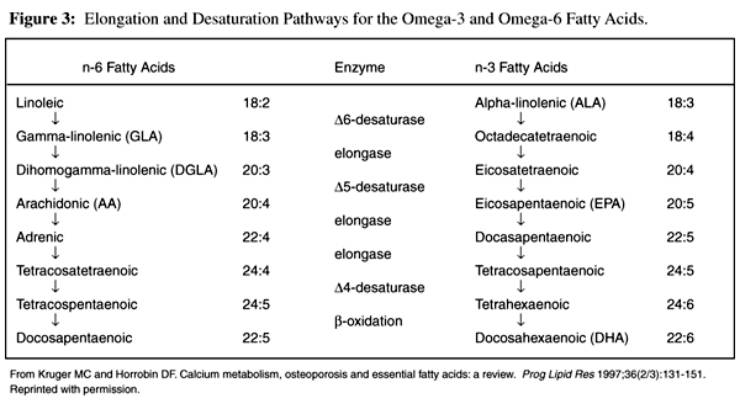
BACKGROUND:   Muscle force and functional capacity generally decrease with aging in the older population, although this effect can be reversed, attenuated, or both through strength training. Fish oil (FO), which is rich in n-3 (omega-3) polyunsaturated fatty acids (PUFAs), has been shown to play a role in the plasma membrane and cell function of muscles, which may enhance the benefits of training. The effect of strength training and FO supplementation on the neuromuscular system of the elderly has not been investigated.

OBJECTIVE:   The objective was to investigate the chronic effect of FO supplementation and strength training on the neuromuscular system (muscle strength and functional capacity) of older women.

DESIGN:   Forty-five women (aged 64 ± 1.4 y) were randomly assigned to 3 groups. One group performed strength training only (ST group) for 90 d, whereas the others performed the same strength-training program and received FO supplementation (2 g/d) for 90 d (ST90 group) or for 150 d (ST150 group; supplemented 60 d before training). Muscle strength and functional capacity were assessed before and after the training period.

RESULTS:   No differences in the pretraining period were found between groups for any of the variables. The peak torque and rate of torque development for all muscles (knee flexor and extensor, plantar and dorsiflexor) increased from pre- to posttraining in all groups. However, the effect was greater in the ST90 and ST150 groups than in the ST group. The activation level and electromechanical delay of the muscles changed from pre- to posttraining only for the ST90 and ST150 groups. Chair-rising performance in the FO groups was higher than in the ST group.

There are more articles like this @ our:

Omega-3 Fatty Acids Page

(more…)

Schoolbags and Back Pain in Children Between 8 and 13 Years

By |July 9, 2017|Backpacks, Pediatrics|

Schoolbags and Back Pain in Children Between 8 and 13 Years: A National Study

The Chiro.Org Blog


SOURCE:   Br J Pain. 2017 (May); 11 (2): 81–86 ~ FULL TEXT


Karl Spiteri, Maria-Louisa Busuttil,
Samuel Aquilina, Dorothy Gauci,
Erin Camilleri, and Victor Grech

Malta Association of Physiotherapists,
Gzira, Malta.


Schoolbag weight in schoolchildren is a recurrent and contentious issue within the educational and health sphere. Excessive schoolbag weight can lead to back pain in children, which increases the risk of chronic back pain in adulthood. There is limited research regarding this among the Maltese paediatric population. A cross-sectional study was undertaken across all schools in Malta among students aged 8–13 years (inclusive). Data were collected using a questionnaire detailing schoolbag characteristics, self-reported pain and demographic variables, such as age and gender. Structured interviews with participants were also carried out by physiotherapists. A total of 4,005 participants were included in the study, with 20% of the total Malta schoolchildren population. Over 70% of the subjects had a schoolbag that exceeded the recommended 10% bag weight to body ratio. A total of 32% of the sample complained of back pain, with 74% of these defining it as low in intensity on the face pain scale-revised. The presence of back pain was statistically related to gender, body mass index (BMI), school and bag weight to body weight ratio. After adjusting for other factors, self-reported back pain in schoolchildren is independently linked to carrying heavy schoolbags. This link should be addressed to decrease the occurrence of back pain in this age group.


From the FULL TEXT Article:

Introduction

Carrying schoolbags and school attendance is a daily routine for students. The incorrect handling of schoolbags with excessive bag weight can lead to back pain in children. [1–4] It is recommended that the total weight of the schoolbag does not exceed 10% of body weight. [1] The development of back pain in children is of concern since it increases the risk of developing chronic back pain in adulthood. [5] Studies have shown that the prevalence of low back pain in schoolchildren ranges from 25% to 55% in those aged between 10 and 15 years. [6–8] In most cases, the pain intensity is relatively low.[7]

There are more articles like this @ our:

Backpacks and Children Page

(more…)

Posterior, Lateral, and Anterior Hip Pain Due to Musculoskeletal Origin

By |July 7, 2017|Hip Pathology|

Posterior, Lateral, and Anterior Hip Pain Due to Musculoskeletal Origin: A Narrative Literature Review of History, Physical Examination, and Diagnostic Imaging

The Chiro.Org Blog


SOURCE:   J Chiropractic Medicine 2016 (Dec); 15 (4): 281–293


Patrick J. Battaglia, DC, Kevin D’Angelo, DC,
Norman W. Kettner, DC, DACBR

Department of Radiology,
Logan University, Chesterfield, MO.


OBJECTIVE:   The purpose of this study was to present a narrative review of the literature of musculoskeletal causes of adult hip pain, with special attention to history, physical examination, and diagnostic imaging.

METHODS:   A narrative review of the English medical literature was performed by using the search terms “hip pain” AND “anterior,” “lateral,” and “posterior.” Additionally, specific entities of hip pain or pain referral sources to the hip were searched for. We used the PubMed search engine through January 15, 2016.

RESULTS:   Musculoskeletal sources of adult hip pain can be divided into posterior, lateral, and anterior categories. For posterior hip pain, select considerations include lumbar spine and femoroacetabular joint referral, sacroiliac joint pathology, piriformis syndrome, and proximal hamstring tendinopathy. Gluteal tendinopathy and iliotibial band thickening are the most common causes of lateral hip pain. Anterior hip pain is further divided into causes that are intra-articular (ie, labral tear, osteoarthritis, osteonecrosis) and extra-articular (ie, snapping hip and inguinal disruption [athletic pubalgia]). Entrapment neuropathies and myofascial pain should also be considered in each compartment. A limited number of historical features and physical examination tests for evaluation of adult hip pain are supported by the literature and are discussed in this article. Depending on the clinical differential, the gamut of diagnostic imaging modalities recommended for accurate diagnosis include plain film radiography, computed tomography, magnetic resonance imaging, skeletal scintigraphy, and ultrasonography.

There are more articles like this @ our:

Low Back Pain and Chiropractic Page

(more…)