

Support Chiropractic Research!

Frank M. Painter

About Frank M. Painter

I was introduced to Chiro.Org in early 1996, where my friend Joe Garolis helped me learn HTML, the "mark-up language" for websites. We have been fortunate that journals like JMPT have given us permission to reproduce some early important articles in Full-Text format. Maintaining the Org website has been, and remains, my favorite hobby.

Chiropractic or Osteopathic Manipulation for Children in the United States

By |July 11, 2018|Pediatrics|

Chiropractic or Osteopathic Manipulation for Children in the United States: An Analysis of Data from the 2007 National Health Interview Survey

The Chiro.Org Blog


SOURCE:   J Altern Complement Med. 2012 (Apr); 18 (4): 347–353

Harrison Ndetan, MSc, MPH, DrPH, Marion Willard Evans, Jr., DC, PhD, MCHES, Cheryl Hawk, DC, PhD, and Clark Walker, BS, MPH

Cheryl Hawk, DC, PhD
Logan College of Chiropractic
Chesterfield, MO 63017

OBJECTIVES:   The aim of this study was to describe use of chiropractic and/or osteopathic manipulation by children in the United States along with the specific health conditions for which they sought care.

METHODS:   The study was a secondary data analysis of the National Health Interview Survey 2007, Child Alternative Medicine file as well as the Child Core Sample. National population estimates were generated for reported use of chiropractic or osteopathic manipulation (C/OM) by children for specific health conditions. Odds ratios (OR) and 95% confidence intervals (CI) were generated from binary logistic regression models that assessed the likelihood that children of specific characteristics would use this therapy.

RESULTS:   National estimates indicated that 2.3 million children (2.3%) in the United States had used C/OM in 2007. C/OM was the most common complementary and alternative medicine procedure. Children aged 12–18 years were more likely to have seen these providers than were younger age groups (OR=3.4 [95% CI, 2.1–5.5]). Homeopathy (1.2%), massage (1.0), and naturopathy (0.3%) were the next most common procedures. The most common complaints were back and neck pain. Other conditions for which children were seen included other musculoskeletal conditions, sinusitis, allergies, and nonmigraine headaches. Racial categories did not differ significantly regarding use of manipulation, but those children with both mother and father in the household were more likely to have used this form of care (OR=1.7 [95% CI, 1.1–2.6]).

There are more articles like this @ our:
Chiropractic Pediatrics Section

(more…)

The Effect of Chiropractic Treatment on Infantile Colic

By |July 10, 2018|Colic|

The Effect of Chiropractic Treatment on Infantile Colic: Study Protocol for a Single-blind Randomized Controlled Trial

The Chiro.Org Blog


SOURCE:   Chiropractic & Manual Therapies 2018 (Jun 7); 26: 17

Lise Vilstrup Holm, Dorte Ejg Jarbøl, Henrik Wulff Christensen, Jens Søndergaard, and Lise Hestbæk

Nordic Institute of Chiropractic and Clinical Biomechanics,
University of Southern Denmark,
Campusvej 55, DK-5230 Odense M, Denmark.


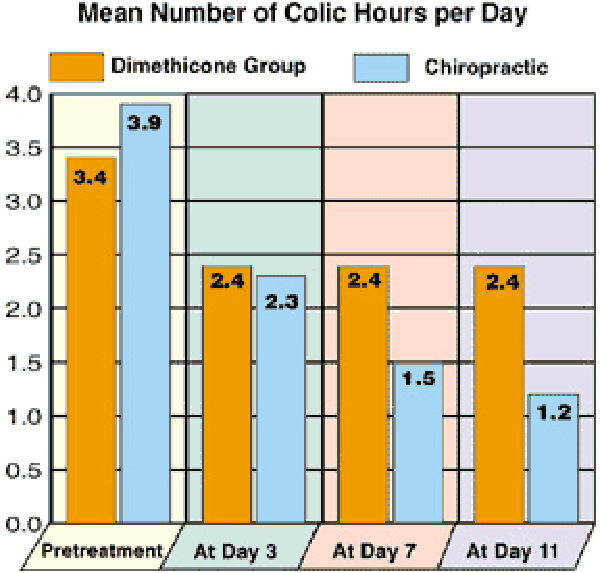
BACKGROUND:   Infantile colic is a common condition during early childhood affecting around one of six newborns. The condition is characterized by inconsolable crying and fussing in otherwise healthy and thriving infants. The most used definition is excessive crying for at least three hours a day for at least three days for at least three weeks. The cause of colic is still unknown although many hypotheses and thereby many different treatment modalities have been investigated. Chiropractic care is used increasingly in treatment of infants, including for infantile colic, although the evidence worldwide is sparse. A randomized, controlled trial was designed to evaluate the effect of chiropractic treatment on infantile colic. This paper describes the protocol as well as results from a pilot study examining the acceptability and feasibility of the intervention.

METHOD:   The study is designed as a single-blind randomized, controlled trial. The invited families are residents on the Island of Funen and information about the project is distributed from the maternity wards and health visitors. Children at the age of 2–14 weeks with unexplained excessive crying are screened for eligibility and recruited by the primary investigator through home visits. Eligible children are then randomized to chiropractic treatment or control. All children attend in the chiropractor clinic two times a week for two weeks. The parents are unaware of their child’s allocation during the project period. The primary outcome measure is change in daily hours of crying based on the parental diaries.The study intends to include 200 children, and the intervention has, during a pilot study, been found acceptable and feasible among families with newborns.

DISCUSSION:   In a single-blind randomized controlled design we will evaluate the effectiveness of chiropractic treatment on infantile colic. The study will contribute to determine the effect of chiropractic treatment on infantile colic in an area where limited evidence exists. Furthermore, the study aims to explore if subgroups of children with suspected musculoskeletal problems will benefit more from the intervention than others. If they obtain better results, this could imply the need for stratified care.

There are more articles like this @ our:
Infantile Colic and Chiropractic Page

(more…)

Comparative Effectiveness of Usual Care With or Without

By |July 9, 2018|Cost-Effectiveness of Chiropractic|

Comparative Effectiveness of Usual Care With or Without Chiropractic Care in Patients with Recurrent Musculoskeletal Back and Neck Pain

The Chiro.Org Blog


SOURCE:   J Gen Intern Med. 2018 (Jun 25) [Epub]

Charles Elder, MD MPH, Lynn DeBar, PhD MPH, Cheryl Ritenbaugh, PhD MPH, John Dickerson, PhD, William M. Vollmer, PhD, Richard A. Deyo, MD MPH, Eric S. Johnson, PhD, and Mitchell Haas, DC MA

Kaiser Permanente Center for Health Research,
Portland, OR, USA.


BACKGROUND:   Chiropractic care is a popular alternative for back and neck pain, with efficacy comparable to usual care in randomized trials. However, the effectiveness of chiropractic care as delivered through conventional care settings remains largely unexplored.

OBJECTIVE:   To evaluate the comparative effectiveness of usual care with or without chiropractic care for patients with chronic recurrent musculoskeletal back and neck pain.

STUDY DESIGN:   Prospective cohort study using propensity score-matched controls.

PARTICIPANTS:   Using retrospective electronic health record data, we developed a propensity score model predicting likelihood of chiropractic referral. Eligible patients with back or neck pain were then contacted upon referral for chiropractic care and enrolled in a prospective study. For each referred patient, two propensity score-matched non-referred patients were contacted and enrolled. We followed the participants prospectively for 6 months.

MAIN MEASURES:   Main outcomes included pain severity, interference, and symptom bothersomeness. Secondary outcomes included expenditures for pain-related health care.

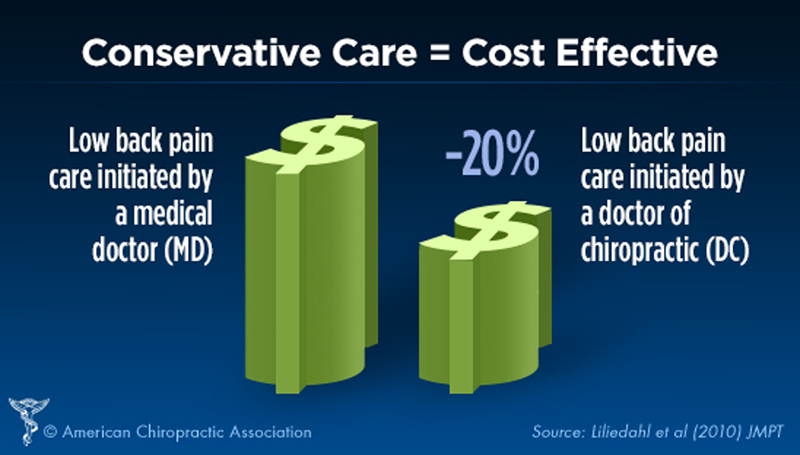
KEY RESULTS:   Both groups’ (N = 70 referred, 139 non-referred) pain scores improved significantly over the first 3 months, with less change between months 3 and 6. No significant between-group difference was observed. (severity – 0.10 (95% CI – 0.30, 0.10), interference – 0.07 (– 0.31, 0.16), bothersomeness – 0.1 (– 0.39, 0.19)). After controlling for variances in baseline costs, total costs during the 6–month post-enrollment follow-up were significantly higher on average in the non-referred versus referred group ($1,996 [SD = 3874] vs $1,086 [SD = 1212], p = .034). Adjusting for differences in age, gender, and Charlson comorbidity index attenuated this finding, which was no longer statistically significant (p = .072).

There are more articles like this @ our:
Cost-Effectiveness of Chiropractic Page

(more…)

A Hypothesis of Chronic Back Pain

By |July 8, 2018|Neurology, Subluxation|

A Hypothesis of Chronic Back Pain: Ligament Subfailure Injuries Lead to Muscle Control Dysfunction

The Chiro.Org Blog


SOURCE:   European Spine Journal 2006 (May); 15 (5): 668–676

Manohar M. Panjabi

Biomechanics Research Laboratory,
Department of Orthopaedics and Rehabilitation,
Yale University School of Medicine,
New Haven, CT 06520-8071, USA.


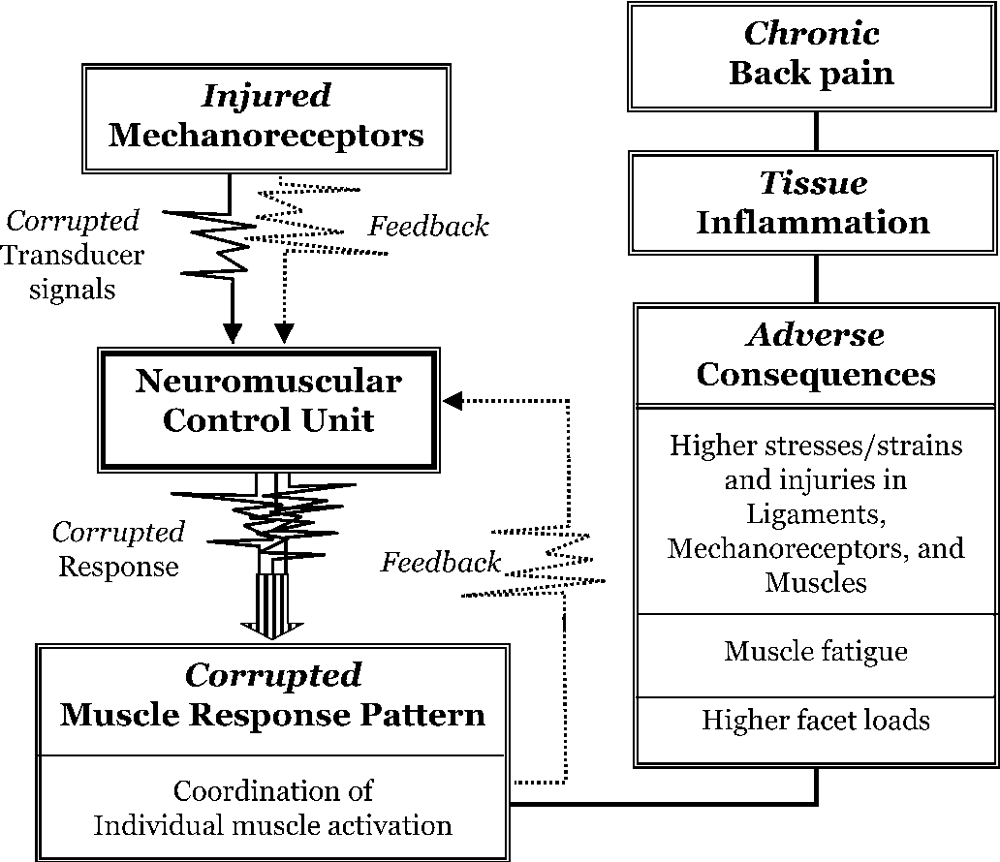
Clinical reports and research studies have documented the behavior of chronic low back and neck pain patients. A few hypotheses have attempted to explain these varied clinical and research findings. A new hypothesis, based upon the concept that subfailure injuries of ligaments (spinal ligaments, disc annulus and facet capsules) may cause chronic back pain due to muscle control dysfunction, is presented. The hypothesis has the following sequential steps. Single trauma or cumulative microtrauma causes subfailure injuries of the ligaments and embedded mechanoreceptors. The injured mechanoreceptors generate corrupted transducer signals, which lead to corrupted muscle response pattern produced by the neuromuscular control unit.

Muscle coordination and individual muscle force characteristics, i.e. onset, magnitude, and shut-off, are disrupted. This results in abnormal stresses and strains in the ligaments, mechanoreceptors and muscles, and excessive loading of the facet joints. Due to inherently poor healing of spinal ligaments, accelerated degeneration of disc and facet joints may occur. The abnormal conditions may persist, and, over time, may lead to chronic back pain via inflammation of neural tissues. The hypothesis explains many of the clinical observations and research findings about the back pain patients. The hypothesis may help in a better understanding of chronic low back and neck pain patients, and in improved clinical management.


From the Full-Text Article:

Introduction

There are more articles like this @ our:
What is the Chiropractic Subluxation? Page

(more…)

The Role of Vitamins and Minerals in Energy Metabolism and Well-being

By |July 6, 2018|Multivitamins|

The Role of Vitamins and Minerals in Energy Metabolism and Well-being

The Chiro.Org Blog


SOURCE:   J Int Med Res. 2007 (May); 35 (3):   277–289

Huskisson E, Maggini S, Ruf M.

King Edward VII Hospital,
London, UK.


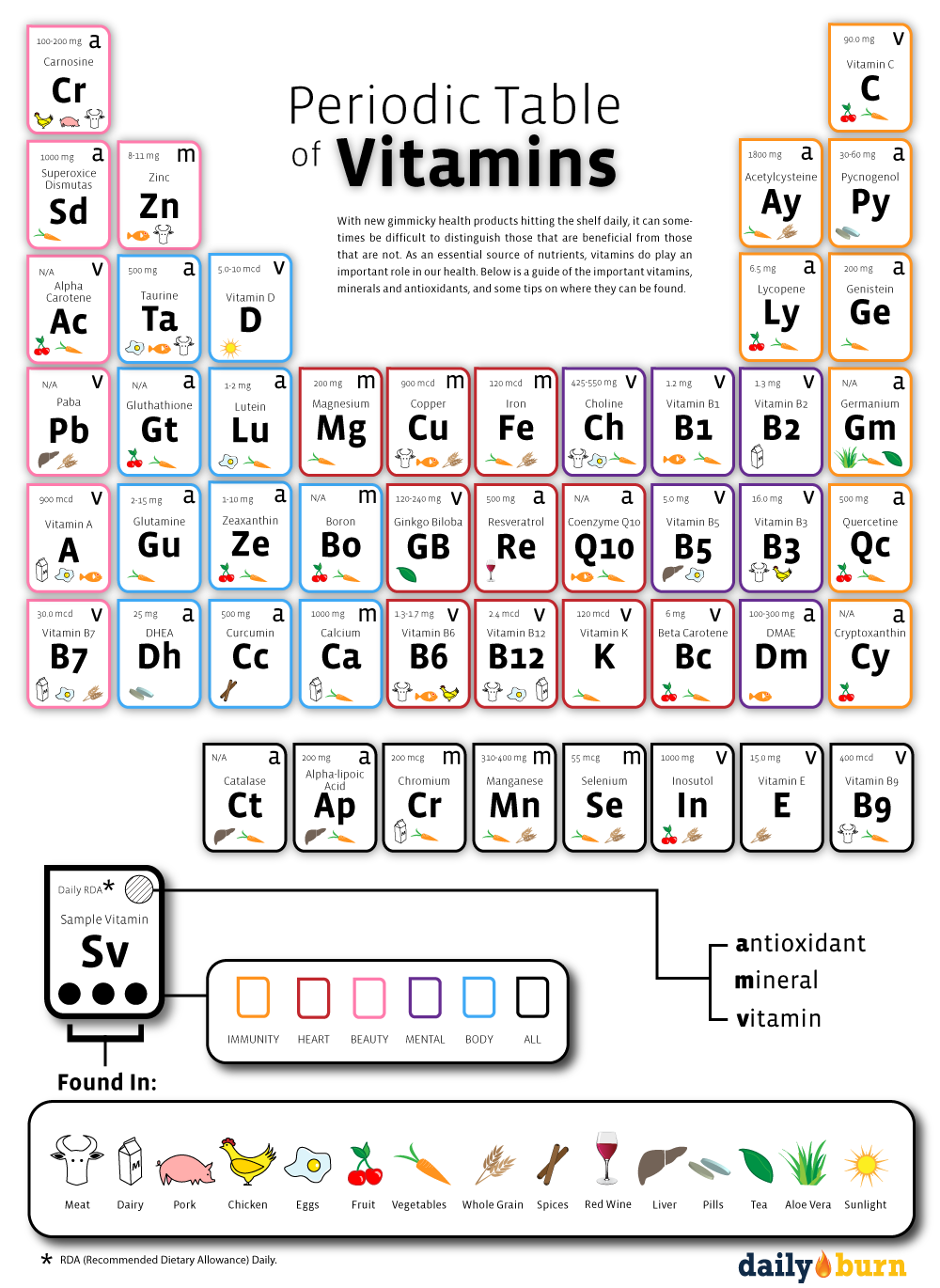
Physicians are frequently confronted with patients complaining of fatigue, tiredness and low energy levels. In the absence of underlying disease, these symptoms could be caused by a lack of vitamins and minerals. Certain risk groups like the elderly and pregnant women are well-recognized. Our aim was, therefore, to find out if other, less well-established groups might also be at risk.

Thus, the objectives of this review are: to describe the inter-relationship between micronutrients, energy metabolism and well-being; identify risk groups for inadequate micronutrient intake; and explore the role of micronutrient supplementation in these groups. A review of the literature identified an important group at risk of inadequate micronutrient intake: young adults, often women, with a demanding lifestyle who are physically active and whose dietary behaviour is characterized by poor choices and/or regular dieting. Micronutrient supplementation can alleviate deficiencies, but supplements must be taken for an adequate period of time.


From the FULL TEXT Article:

Introduction

Every doctor is familior wi1b the patient who presents complaining of a lack of energy. tiredness and exhaustion, and for whom thorough examination and even routine laboratory tests do not provide a satisfactory explanation for their symptoms. Without any underlying diseases, might these symptoms be caused by a lack of vitamins and minerals?

There are more articles like this @ our:

Nutrition Section

(more…)

A Prospective Cohort Study of the Impact of Return-to-Work

By |June 29, 2018|Return To Work|

A Prospective Cohort Study of the Impact of Return-to-Work Coordinators in Getting Injured Workers Back on the Job

The Chiro.Org Blog


SOURCE:   J Occup Rehabil. 2018 (Jun); 28 (2): 298–306

Tyler J. Lane, Rebbecca Lilley, Sheilah Hogg-Johnson, Anthony D. LaMontagne, Malcolm R. Sim, Peter M. Smith

Department of Epidemiology and Preventive Medicine,
School of Public Health and Preventive Medicine,
Monash University, Level 2,
553 St Kilda Road,
Melbourne, VIC, 3004, Australia.


Purpose   To assess the impact of workplace-based return-to-work (RTW) Coordinators’ interpersonal and functional activities on RTW outcomes.

Methods   Multivariable logistic regression analyses of cross-sectional and longitudinal survey responses of 632 injured workers with at least 10 days of work absence in Victoria, Australia, adjusting for demographic and other workplace factors. Outcome was being back at work for at least 1 month, measured at both baseline and 6 month follow-up survey. Participant responses to stressfulness of Coordinator interactions were dichotomised into good and poor and evaluated as a proxy for Coordinators’ interpersonal activities, while having a RTW plan was evaluated as a proxy for functional activities.

Results   At baseline, RTW plans doubled the odds of RTW (OR 2.02; 95% CI 1.40-2.90) and attenuated the impact of good Coordinator interactions (1.14; 0.77-1.70). At 6-month follow-up, the opposite was observed: good interactions nearly doubled odds of RTW (1.90; 1.22-2.95) while RTW plans were non-significant (1.02; 0.68-1.54).

There are more articles like this @ our:

The RETURN TO WORK Section

(more…)