

Support Chiropractic Research!

Escalation of Care

Chiropractic Students Versus Emergency Care Practitioners in Simulated Musculoskeletal Emergencies

By |November 11, 2025|All About Chiropractic, Care Plans, Cervical Disk Herniation, Chiropractic Education, Chiropractic Management, Diagnosis, Escalation of Care, Evidence-based Medicine|

Chiropractic Students Versus Emergency Care Practitioners in Simulated Musculoskeletal Emergencies

The Chiro.Org Blog


SOURCE:   Health SA 2025 (Oct 31): 30: 3195


Ivanna Balanco • Helen Slabber • Christopher Yelverton

Department of Chiropractic,
Faculty of Health Sciences,
University of Johannesburg,
Johannesburg, South Africa.


Background:   As primary contact practitioners, chiropractors and emergency care practitioners (ECPs are first points of access for patients with musculoskeletal (MSK) complaints. A comparison of their diagnostic competency in distinguishing these presentations from underlying emergency pathologies remains an understudied area.

Aim:   To compare the diagnostic abilities of Master of Health Science (MHSc) chiropractic students and ECPs in distinguishing MSK from emergency conditions.

Setting:   The research was conducted at the University of Johannesburg, Faculty of Health Sciences, simulation laboratory.

Methods:   First-year (n = 10) and second-year Master’s (n = 10) chiropractic students and ECPs (n = 10) were assessed using standardised patient scenarios: meningitis, disc herniation and stroke, and assessed on diagnostic assessment, diagnosis and clinical and diagnostic investigation referrals.

Results:   Second-year MHSc students outperformed ECPs in the clinical management of a disc herniation case (Case 2; p < 0.01). Diagnostic accuracy was high (> 90%) for meningitis and stroke across all groups. Differences in investigation preferences emerged, with chiropractic students favouring advanced imaging and ECPs recommending more basic tests. No significant performance differences were found in the other two cases.

Conclusion:   Based on a simulated assessment, chiropractic students demonstrated equivalent competence to emergency care practitioners (ECPs) in diagnosing emergencies, but outperformed them in managing an MSK condition. These preliminary findings suggest chiropractors could contribute to the management of MSK burden in emergency departments.

Contribution:   MHSc chiropractic training enhances diagnostic proficiency in differentiating MSK disorders from emergent pathologies, an important competency for safe and effective practice as primary contact practitioners.

Keywords:   chiropractic; clinical competence; diagnosis; emergency medical services; musculoskeletal disease; simulation.


From the FULL TEXT Article:

Introduction

Musculoskeletal (MSK) conditions represent a significant global health burden, ranking as the second leading cause of disability worldwide and affecting approximately one in five working-age adults (Lowe, Taylor & Hill 2017; Weinstein 2016). Back pain, a prevalent MSK complaint, contributes substantially to reduced work productivity, absenteeism and healthcare costs (Ingram & Symmons 2018; Menke 2003). This high prevalence strains healthcare systems, leading to long wait times for specialist care, including surgery (Joshipura & Gosselin 2020).

There are more articles like this @

ALL ABOUT CHIROPRACTIC Section

(more…)

Initial Choice of Spinal Manipulation Reduces Escalation of Care for Chronic Low Back Pain Among Older Medicare Beneficiaries

By |May 10, 2022|Chiropractic Management, Escalation of Care, Opioid Epidemic|

Initial Choice of Spinal Manipulation Reduces Escalation of Care for Chronic Low Back Pain Among Older Medicare Beneficiaries

The Chiro.Org Blog


SOURCE:   Spine (Phila Pa 1976) 2021 (May 11) [EPUB]

James M Whedon, Anupama Kizhakkeveettil, Andrew W Toler, Serena Bezdjian, Daniel Rossi, Sarah Uptmor, Todd A MacKenzie, Jon D Lurie, Eric L Hurwitz, Ian Coulter, Scott Haldeman

Southern California University of Health Sciences,
Whittier, CA, USA

Geisel School of Medicine at Dartmouth,
Hanover, NH, USA.
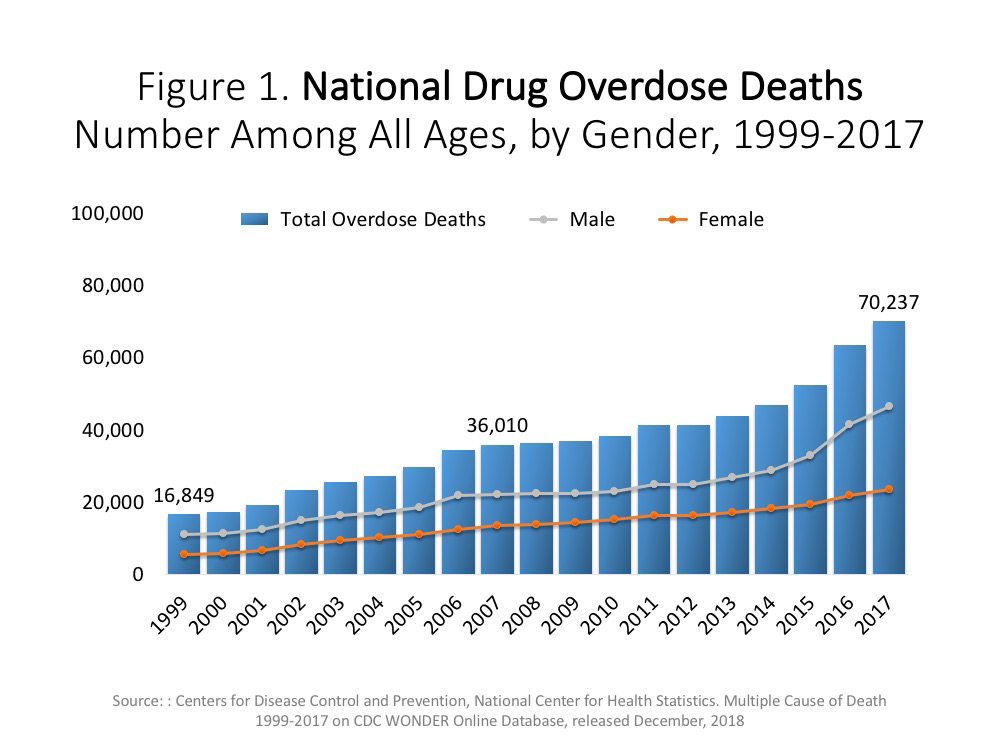


Study design:   We combined elements of cohort and crossover-cohort design.

Objective:   The objective of this study was to compare long-term outcomes for Spinal Manipulative Therapy (SMT) and Opioid Analgesic Therapy (OAT) regarding escalation of care for patients with chronic low back pain (cLBP).

Summary of background data   : Current evidence-based guidelines for clinical management of cLBP include both OAT and SMT. For long-term care of older adults, the efficiency and value of continuing either OAT or SMT are uncertain.

Methods:   We examined Medicare claims data spanning a five-year period. We included older Medicare beneficiaries with an episode of cLBP beginning in 2013. All patients were continuously enrolled under Medicare Parts A, B, and D. We analyzed the cumulative frequency of encounters indicative of an escalation of care for cLBP, including hospitalizations, emergency department visits, advanced diagnostic imaging, specialist visits, lumbosacral surgery, interventional pain medicine techniques, and encounters for potential complications of cLBP.

Results:   SMT was associated with lower rates of escalation of care as compared to OAT. The adjusted rate of escalated care encounters was approximately 2.5 times higher for initial choice of OAT vs. initial choice of SMT (with weighted propensity scoring: rate ratio 2.67, 95% CI 2.64-2.69, p < .0001).

There are more like this @ our:

MEDICARE Section and the:

NON-PHARMACOLOGIC THERAPY Section

(more…)