

Support Chiropractic Research!

BLOG

Low Speed Frontal Crashes and Low Speed Rear Crashes

By |May 29, 2017|Whiplash|

Low Speed Frontal Crashes and Low Speed Rear Crashes: Is There a Differential Risk for Injury?

The Chiro.Org Blog


SOURCE:   Annu Proc Assoc Adv Automot Med. 2002; 46: 79–91


Croft AC, Haneline MT, Freeman MD

Spine Research Institute of San Diego,
San Diego, California, USA.
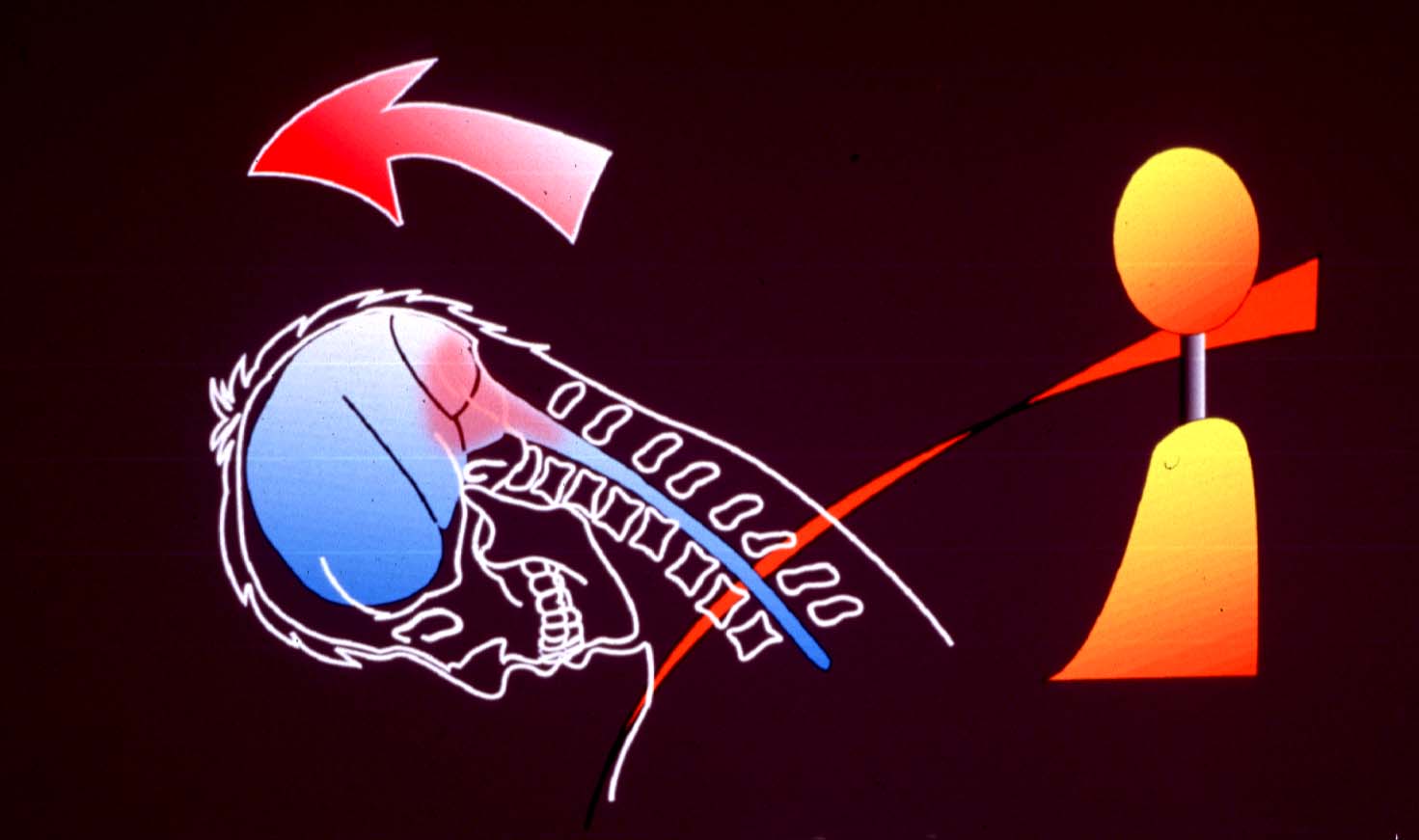

We compared male and female subjects in crash tests in which each subject experienced both frontal and rear impacts. Crash speed and other crash parameters were held constant. We believe this was the first experiment using an independent variable of crash vector and dependent variables of head linear acceleration and volunteer qualitative tolerance.

There are more articles like this @ our:

Whiplash and Chiropractic Page

(more…)

Manual Therapies for Primary Chronic Headaches

By |May 24, 2017|Headache|

Manual Therapies for Primary Chronic Headaches: A Systematic Review of Randomized Controlled Trials

The Chiro.Org Blog


SOURCE:   J Headache Pain. 2014 (Oct 2); 15: 67 ~ FULL TEXT


Aleksander Chaibi and Michael Bjørn Russell

Head and Neck Research Group,
Research Centre, Akershus University Hospital,
1478 Lørenskog, Oslo, Norway.


This is to our knowledge the first systematic review regarding the efficacy of manual therapy randomized clinical trials (RCT) for primary chronic headaches. A comprehensive English literature search on CINHAL, Cochrane, Medline, Ovid and PubMed identified 6 RCTs all investigating chronic tension-type headache (CTTH). One study applied massage therapy and five studies applied physiotherapy. Four studies were considered to be of good methodological quality by the PEDro scale. All studies were pragmatic or used no treatment as a control group, and only two studies avoided co-intervention, which may lead to possible bias and makes interpretation of the results more difficult. The RCTs suggest that massage and physiotherapy are effective treatment options in the management of chronic tension-type headache (CTTH).

One of the RCTs showed that physiotherapy reduced headache frequency and intensity statistical significant better than usual care by the general practitioner. The efficacy of physiotherapy at post-treatment and at 6 months follow-up equals the efficacy of tricyclic antidepressants. Effect size of physiotherapy was up to 0.62. Future manual therapy RCTs are requested addressing the efficacy in chronic migraine with and without medication overuse. Future RCTs on headache should adhere to the International Headache Society’s guidelines for clinical trials, i.e., frequency as primary end-point, while duration and intensity should be secondary end-point, avoid co-intervention, includes sufficient sample size and follow-up period for at least 6 months.

KEYWORDS:   Randomized clinical trials, Primary chronic headache, Manual therapies, Massage, Physiotherapy, Chiropractic


From the FULL TEXT Article:

Introduction

Primary chronic headaches i.e. chronic migraine (CM), chronic tension-type headache (CTTH) and chronic cluster headache has significant health, economic and social costs. About 3% of the general population suffers from chronic headache with female predominance [1]. The International Classification of Headache Disorders III β (ICDH–III β) defines CM as ≥15 headache days/month for at least 3 months with features of migraine in ≥8 days/month, CTTH is defined as on average ≥15 days/month with tension-type headache for at least 3 months, and chronic cluster headache as attacks at least every other day for more than 1 year without remission, or with remissions lasting <1 month [2].

There are more articles like this @ our:

Headache and Chiropractic Page

(more…)

Running Exercise Strengthens the Intervertebral Disc

By |May 23, 2017|Chiropractic Care, Disc Derangement|

Running Exercise Strengthens the Intervertebral Disc

The Chiro.Org Blog


SOURCE:   Scientific Reports 2017 (Apr 19); 7: 45975 ~ FULL TEXT


Daniel L. Belavý,a, Matthew J. Quittner,
Nicola Ridgers, Yuan Ling,
David Connell, and Timo Rantalainen

Deakin University,
School of Exercise and Nutrition Sciences,
Institute for Physical Activity and Nutrition,
221 Burwood Highway,
Burwood, Victoria, 3125, Australia.


There is currently no evidence that the intervertebral discs (IVDs) can respond positively to exercise in humans. Some authors have argued that IVD metabolism in humans is too slow to respond anabolically to exercise within the human lifespan. Here we show that chronic running exercise in men and women is associated with better IVD composition (hydration and proteoglycan content) and with IVD hypertrophy. Via quantitative assessment of physical activity we further find that accelerations at fast walking and slow running (2 m/s), but not high-impact tasks, lower intensity walking or static positions, correlated to positive IVD characteristics. These findings represent the first evidence in humans that exercise can be beneficial for the IVD and provide support for the notion that specific exercise protocols may improve IVD material properties in the spine. We anticipate that our findings will be a starting point to better define exercise protocols and physical activity profiles for IVD anabolism in humans.


From the Full-Text Article:

Background

There are more articles like this @ our:

Disc Herniation and Chiropractic Page

(more…)

Complementary and Integrative Medicine in the Management

By |May 19, 2017|Chiropractic Care, Headache|

Complementary and Integrative Medicine in the Management of Headache

The Chiro.Org Blog


SOURCE:   BMJ. 2017 (May 16); 357: j1805


Denise Millstine, Christina Y Chen, Brent Bauer

Integrative Medicine Section,
Department of General Internal Medicine;
Women’s Health Internal Medicine,
Mayo Clinic, Scottsdale, AZ 85260


Headaches, including primary headaches such as migraine and tension-type headache, are a common clinical problem. Complementary and integrative medicine (CIM), formerly known as complementary and alternative medicine (CAM), uses evidence informed modalities to assist in the health and healing of patients. CIM commonly includes the use of nutrition, movement practices, manual therapy, traditional Chinese medicine, and mind-body strategies. This review summarizes the literature on the use of CIM for primary headache and is based on five meta-analyses, seven systematic reviews, and 34 randomized controlled trials (RCTs).

The overall quality of the evidence for CIM in headache management is generally low and occasionally moderate. Available evidence suggests that traditional Chinese medicine including acupuncture, massage, yoga, biofeedback, and meditation have a positive effect on migraine and tension headaches. Spinal manipulation, chiropractic care, some supplements and botanicals, diet alteration, and hydrotherapy may also be beneficial in migraine headache. CIM has not been studied or it is not effective for cluster headache. Further research is needed to determine the most effective role for CIM in patients with headache.


From the FULL TEXT Article:

Introduction

Headache is one of the most common clinical problems seen by healthcare providers. [1] Primary headache, as defined by the International Classification of Headache Disorders (ICHD), comprises headaches caused by independent pathophysiology, not by secondary causes, and includes tension-type headache, migraine, and cluster headaches. [2]

There are more articles like this @ our:

Headache and Chiropractic Page and the:

Integrated Health Care and Chiropractic Page

(more…)

Elon Musk’s chiropractic connection

By |May 16, 2017|History, Uncategorized|

Source Regina Leader-Post

Dr. Scott Haldeman is a board certified Neurologist in active clinical practice in Santa Ana, California. He currently is a distinguished Professor at the University of California, the Chairman of the Research Council for the World Federation of Chiropractic and the Founder/President of World Spine Care.


Accomplished in his own right, he also happens to be the uncle of one of the worlds great innovators, Elon Musk. Read how the young Musk spent time on the Haldeman family farm in Saskatchewan. Both Scott’s father and his grandmother (Musk’s great-grandmother) were chiropractors. In fact, Almeda Haldeman became Canada’s first known chiropractor in the early 1900’s.

You can read the rest of the story here.

Information on the Haldeman’s and other chiropractic pioneers can be found in Dr J.C. Keating’s notes in our Chiropractic History section.