

Support Chiropractic Research!

BLOG

Rethinking the Fear Avoidance Model

By |June 12, 2017|Biopsychosocial Model, Fear Avoidance|

Rethinking the Fear Avoidance Model: Toward a Multidimensional Framework of Pain-related Disability

The Chiro.Org Blog


SOURCE:   Pain. 2013 (Nov); 154 (11): 2262–2265


Timothy H. Wideman, Gordon G. J. Asmundson, Rob J. E. M Smeets, Alex J. Zautra,

School of Medicine,
Johns Hopkins University,
Baltimore, MD, USA.


Introduction

Nearly 20 years ago the Fear Avoidance Model (FAM) was advanced to explain the development and persistence of disabling low back pain. The model has since inspired productive research and has become the leading paradigm for understanding disability associated with musculoskeletal pain conditions. The model has also undergone recent expansion by addressing learning, motivation and self-regulation theory [10, 34]. In contrast to these extensions, however, one relatively constant aspect of the model is the recursive series of fear-related cognitive, affective, and behavioral processes shown in Figure 1 [31, 32, 34].

There are more articles like this @ our:
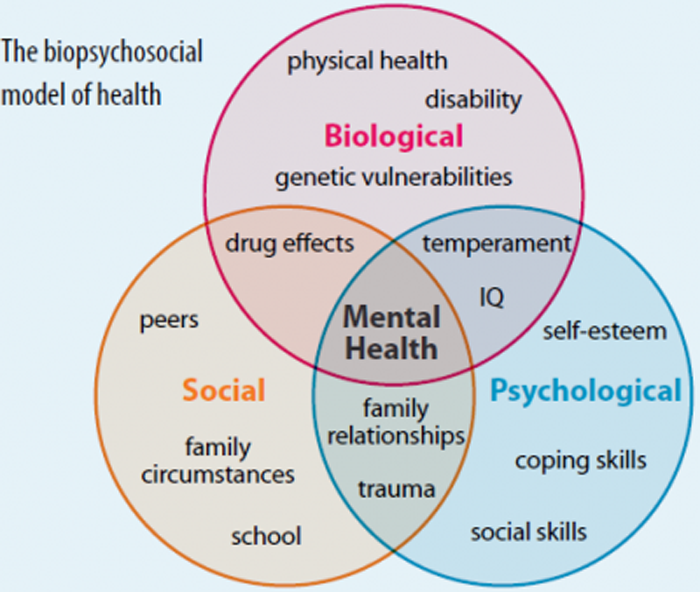
The Biopsychosocial Model Page

(more…)

The Biopsychosocial Model and Chiropractic

By |June 9, 2017|Biopsychosocial Model|

The Biopsychosocial Model and Chiropractic:
A Commentary with Recommendations for
the Chiropractic Profession

The Chiro.Org Blog


SOURCE:   Chiropractic & Manual Therapies 2017 (Jun 7); 25: 16


Jordan A. Gliedt, Michael J. Schneider, Marion W. Evans, Jeff King and James E. Eubanks Jr

College of Chiropractic,
Logan University


There is an increasing awareness, interest and acceptance of the biopsychosocial (BPS) model by all health care professionals involved with patient care. The areas of spine care and pain medicine are no exception, and in fact, these areas of health care are a major centerpiece of the movement from the traditional biomedical model to a BPS model of patient assessment and delivery of care. The chiropractic approach to health care has a history that is grounded in key aspects of the BPS model. The profession has inherently implemented certain features of the BPS model throughout its history, perhaps without a full understanding or realization. The purpose of this paper is to present an overview of the BPS model, its relationship with spine care and pain management, and to discuss the BPS model, particularly psychosocial aspects, in the context of its historical relationship with chiropractic. We will also provide recommendations for the chiropractic profession as it relates to successful adoption of a full integration of the BPS model.

There are more articles like this @ our:

The Biopsychosocial Model Page

(more…)

Food Groups and Risk of All-cause Mortality

By |June 6, 2017|Nutrition|

Food Groups and Risk of All-cause Mortality: A Systematic Review and Meta-Analysis of Prospective Studies

The Chiro.Org Blog


SOURCE:   Am J Clin Nutr. 2017 (Jun); 105 (6): 1462-1473


Lukas Schwingshackl, Carolina Schwedhelm, \Georg Hoffmann, Anna-Maria Lampousi et al.

German Institute of Human Nutrition Potsdam-Rehbruecke,
Nuthetal, Germany;


Background:   Suboptimal diet is one of the most important factors in preventing early death and disability worldwide.

Objective:   The aim of this meta-analysis was to synthesize the knowledge about the relation between intake of 12 major food groups, including whole grains, refined grains, vegetables, fruits, nuts, legumes, eggs, dairy, fish, red meat, processed meat, and sugar-sweetened beverages, with risk of all-cause mortality.

Design:   We conducted a systematic search in PubMed, Embase, and Google Scholar for prospective studies investigating the association between these 12 food groups and risk of all-cause mortality. Summary relative risks (RRs) and 95% CIs were estimated with the use of a random effects model for high-intake compared with low-intake categories, as well as for linear and nonlinear relations. Moreover, the risk reduction potential of foods was calculated by multiplying the RR by optimal intake values (serving category with the strongest association) for risk-reducing foods or risk-increasing foods, respectively.

Results:   With increasing intake (for each daily serving) of

whole grains   (RR: 0.92; 95% CI: 0.89, 0.95),
vegetables   (RR: 0.96; 95% CI: 0.95, 0.98),
fruits   (RR: 0.94; 95% CI: 0.92, 0.97),
nuts   (RR: 0.76; 95% CI: 0.69, 0.84), and
fish   (RR: 0.93; 95% CI: 0.88, 0.98)

the risk of all-cause mortality decreased;

higher intake of

red meat   (RR: 1.10; 95% CI: 1.04, 1.18) and
processed meat   (RR: 1.23; 95% CI: 1.12, 1.36)

was associated with an increased risk of all-cause mortality in a linear dose-response meta-analysis.

A clear indication of nonlinearity was seen for the relations between vegetables, fruits, nuts, and dairy and all-cause mortality. Optimal consumption of risk-decreasing foods results in a 56% reduction of all-cause mortality, whereas consumption of risk-increasing foods is associated with a 2-fold increased risk of all-cause mortality.

There are more articles like this @ our:

Nutrition Section

(more…)

Quantifying the Impact of NSAID-associated Adverse Events

By |June 4, 2017|Iatrogenic Injury, NSAIDs|

Quantifying the Impact of NSAID-associated Adverse Events

The Chiro.Org Blog


SOURCE:   Am J Manag Care. 2013 (Nov); 19 (14 Suppl): s267–272


Michael Fine, MD

Health Net
736 Kendall Dr
Laguna Beach, CA 92651


Nonsteroidal anti-inflammatory drugs (NSAIDs) are widely used among patients experiencing many different types of pain, including inflammatory, acute pain (eg, injury, low back pain, headache, postoperative pain), and chronic pain (eg, rheumatoid arthritis, osteoarthritis).

However, both traditional NSAIDs and second-generation NSAIDs (cyclooxygenase-2 inhibitors) can lead to very expensive and serious adverse events. Gastrointestinal, cardiovascular, and renal complications associated with NSAIDs have been shown to be dose-dependent. In 2005, to help minimize these risks, the US Food and Drug Administration issued a public health advisory stating that “NSAIDs should be administered at the lowest effective dose for the shortest duration consistent with individual patient treatment goals.”

This article reviews the undue clinical and economic burden associated with NSAID-related serious adverse events.


From the FULL TEXT Article:

Introduction

Nonsteroidal anti-inflammatory drugs (NSAIDs) are the cornerstone of pain management in patients who have inflammatory, acute pain (eg, headache, postoperative pain, and orthopedic fractures), and chronic pain (eg, rheumatoid arthritis, osteoarthritis, and gout). [1, 2] Approximately 70% of people 65 years or older use NSAIDs at least once per week, with half of them taking at least 7 doses per week. In 2000, more than 111 million prescriptions were written for NSAIDs in the United States, at an approximate cost of $4.8 billion. [3] The use of NSAIDs is likely to increase even more as the US population continues to age and experience painful conditions that are more common among older adults. [4]

There are more articles like this @ our:

Iatrogenic Injury Page

(more…)

Chiropractic Gains Ground During Texas Legislative Session

By |June 1, 2017|Diagnosis|

Chiropractic Gains Ground During Texas Legislative Session

The Chiro.Org Blog


SOURCE:  Texas Chiropractic Association ~ May 30, 2017


Texas Gov. Greg Abbott signed into law Senate Bill 304, continuing the Texas Board of Chiropractic Examiners (TBCE) and upholding the right of licensed doctors of chiropractic in Texas to diagnose patients. It caps a historic legislative session for the chiropractic profession in Texas.

The Texas Board of Chiropractic Examiners is a state agency that regulates the chiropractic profession in Texas. Along with other state health care agencies, TBCE was under review by the Texas Sunset Advisory Commission last year. With the governor’s signature, the state’s chiropractic board will continue through Sept. 1, 2029, in addition to several other modifications to increase patient safety.

Also included in the bill was specific language to be incorporated into the Texas Chiropractic Act that clarifies the right of Texas chiropractors to diagnose. This nullifies a 2016 decision by the Travis County District Court in the Texas Medical Association vs. Texas Board of Chiropractic Examiners law suit in which diagnosis was deemed to exceed the scope of practice. With the signing of Senate Bill 304, the matter of diagnosis is settled.

“If the district court’s ruling had been allowed to stand, Texas would have been the only state in which chiropractors are not allowed to diagnose,” said Tyce Hergert, DC, of Grapevine, Texas, president of the Texas Chiropractic Association (TCA) and a chiropractor who practices in Southlake, Texas. “Without this right, it would endanger patient safety and potentially affect insurance reimbursement. We thank the governor for recognizing the importance of this issue and creating greater access to chiropractic care for the citizens of Texas.”

TCA is awaiting the governor’s signature on two other key bills:

There are background articles about the Texas Diagnosis battle @ our:

Prescription Rights and Expanded Practice Page

(more…)

Influences of Lumbar Disc Herniation on the Kinematics

By |May 30, 2017|Disc Derangement|

Influences of Lumbar Disc Herniation on the Kinematics in Multi-segmental Spine, Pelvis, and Lower Extremities During Five Activities of Daily Living

The Chiro.Org Blog


SOURCE:   BMC Musculoskelet Disord. 2017 (May 25); 18 (1): 216


Shengzheng Kuai, Wenyu Zhou, Zhenhua Liao,
Run Ji, Daiqi Guo, Rui Zhang and
Weiqiang Liu

Department of Mechanical Engineering,
Tsinghua University,
Haidian District,
Beijing, 100084, China.


BACKGROUND:   Low back pain (LBP) is a common problem that can contribute to motor dysfunction. Previous studies reporting the changes in kinematic characteristics caused by LBP present conflicting results. This study aimed to apply the multisegmental spinal model to investigate the kinematic changes in patients with lumbar disc herniation (LDH) during five activities of daily living (ADLs).

METHODS:   Twenty-six healthy subjects and 7 LDH patients participated in this study and performed level walking, stair climbing, trunk flexion, and ipsilateral and contralateral pickups. The angular displacement of the thorax, upper lumbar (ULx), lower lumbar (LLx), pelvis, hip, and knee was calculated using a modified full-gait-model in the AnyBody modeling system.

RESULTS:   In the patient group, the ULx almost showed no sagittal angular displacement while the LLx remained part of the sagittal angular displacement during trunk flexion and the two pickups. In the two pickups, pelvic tilt and lower extremities’ flexion increased to compensate for the deficiency in lumbar motion. LDH patients exhibited significantly less pelvic rotation during stair climbing and greater pelvic rotation in other ADLs, except in contralateral pickup. In addition, LDH patients demonstrated more antiphase movement in the transverse plane between ULx and LLx, during level walking and stair climbing, between thorax and pelvis in the two pickups.

There are more articles like this @ our:

Disc Herniation and Chiropractic Page

(more…)