

Support Chiropractic Research!

BLOG

Why Chiropractic Care Reduces Blood Pressure

By |July 17, 2011|Blood Pressure, Chiropractic Technique|

Why Chiropractic Care Reduces Blood Pressure

The Chiro.Org Blog


Several news stories reported on a study performed at the University of Leeds in England, and published in the August 1, 2007 issue of the Journal of Neuroscience [1], that showed links between neck muscles and the brain and that this link plays a crucial role in controlling blood pressure.

One report by UPI on August 2, 2007 starts off by stating:

“A University of Leeds chance discovery in a British laboratory shows why a chiropractic adjustment for a pain in the neck may do wonders for blood pressure.“

This article quotes study leader Professor Jim Deuchars, who notes that his finding found pathways between the neck and the brain and shows how the neck muscles could play an important role in controlling blood pressure, and why chiropractic care works so well with blood pressure.

He states, “By identifying the pathways we can see why these treatments might work and it could also explain why some people suffering whiplash injuries may experience a change in their blood pressure.”

As he mentions in the article, Professor Deuchars notes that the Leeds study further corroborates the work done at the Hypertension Center at the University of Chicago Medical Center and published in the March 2, 2007 issue of the Journal of Human Hypertension. In that previous study 25 people in the study group receiving the chiropractic adjustments all showed a significant reduction in blood pressure compared with groups in the study that did not get chiropractic adjustments. (more…)
Fundamentals of Initial Case Management Following Trauma

By |July 15, 2011|Education|

Fundamentals of Initial Case Management Following Trauma

The Chiro.Org Blog


By Richard C. Schafer, DC, PhD, FICC

The following materials are provided as a service to our profession. There is no charge for individuals to copy and file these materials. However, they cannot be sold or used in any group or commercial venture without written permission from ACAPress.


Without a doubt, no other health-care approach equals the efficacy of chiropractic in the general field of conservative neuromusculoskeletal rehabilitation.

For many centuries, therapeutic rehabilitation was a product of personal experience passed on from clinician to clinician. In the last 20 years, however, it has become an applied science. In its application, of course, much empiricism remains that can be called an intuitive art –and this is true for all forms of professional health care.

INTRODUCTION

The word trauma means more than the injuries so common with falls, accidents, and contact sports. Taber1 defines it as “A physical injury or wound often caused by an external force or violence” or “an emotional or psychologic shock that may produce disordered feelings or behavior.” This is an extremely narrow definition for trauma can also be caused by intrinsic forces as seen in common strain. In addition to its cause being extrinsic or intrinsic, with a physical and emotional aspect, it also can be the result of either a strong overt force or repetitive microforces. This latter factor, so important in treating a unique patient’s specific pathophysiology, is too often neglected outside the chiropractic profession.

Taber1 states rehabilitation is “The process of treatment and education that lead the disabled individual to attainment of maximum function, a sense of well being, and a personally satisfying level of independence. The person requiring rehabilitation may be disabled from a birth defect or from an illness. The combined effects of the individual, family, friends, medical, nursing, allied health personnel, and community resources make rehabilitation possible.” It is surprising that Taber excludes trauma as a prerequisite for rehabilitation for it is the most common factor involved.

Other authors define rehabilitation strictly in terms of exercise and restorative therapeutic modalities and regimens. Some limit the term to preventing or reversing the noxious effects of the inactivity or lessened activity associated with the healing process. While it is true that these definitions hold significant components of clinical reconditioning and restoration, the scope of rehabilitation means much more to the chiropractic physician. (more…)

Medicare Electronic Prescribing Program Exemptions: CMS Policy Is Clear

By |July 15, 2011|Announcement|

Medicare Electronic Prescribing Program Exemptions: CMS Policy Is Clear

The Chiro.Org Blog


A recent misrepresentation of Federal policy related to the Centers for Medicare and Medicaid Services (CMS) Electronic Prescribing Program has recently circulated through the chiropractic profession.


To clarify any confusion this may have caused, ACA would like to direct DCs to this issue of MLN Matters, which provides information directly from CMS (Medicare) regarding the electronic prescribing program exemptions.

In short:   providers who are NOT:   MDs, DOs, podiatrists, nurse practitioners or physician assistants are exempt from the e-Rx payment adjustment. (more…)

Chiropractic Technique Review: Pierce Results System

By |July 10, 2011|Chiropractic Technique|

Chiropractic Technique Review: Pierce Results System

The Chiro.Org Blog


SOURCE:   Chiro.Org’s Technique Page


The Chiropractic Technique, known as the Pierce Results System, (formerly known as Pierce/Stillwagon, or PST) was developed by Vernon Pierce, D.C., Sr. It is a biomechanical analysis of spine kinematics (or spinal motion), utilizing “stress views” of the spine (flexion, extension, rotation, and/or lateral bending views where required) or videofluoroscopy (VF, or “moving x-ray” studies) to determine the loss of spinal function, which is at the core of the “vertebral subluxation complex”.

Structure and Function

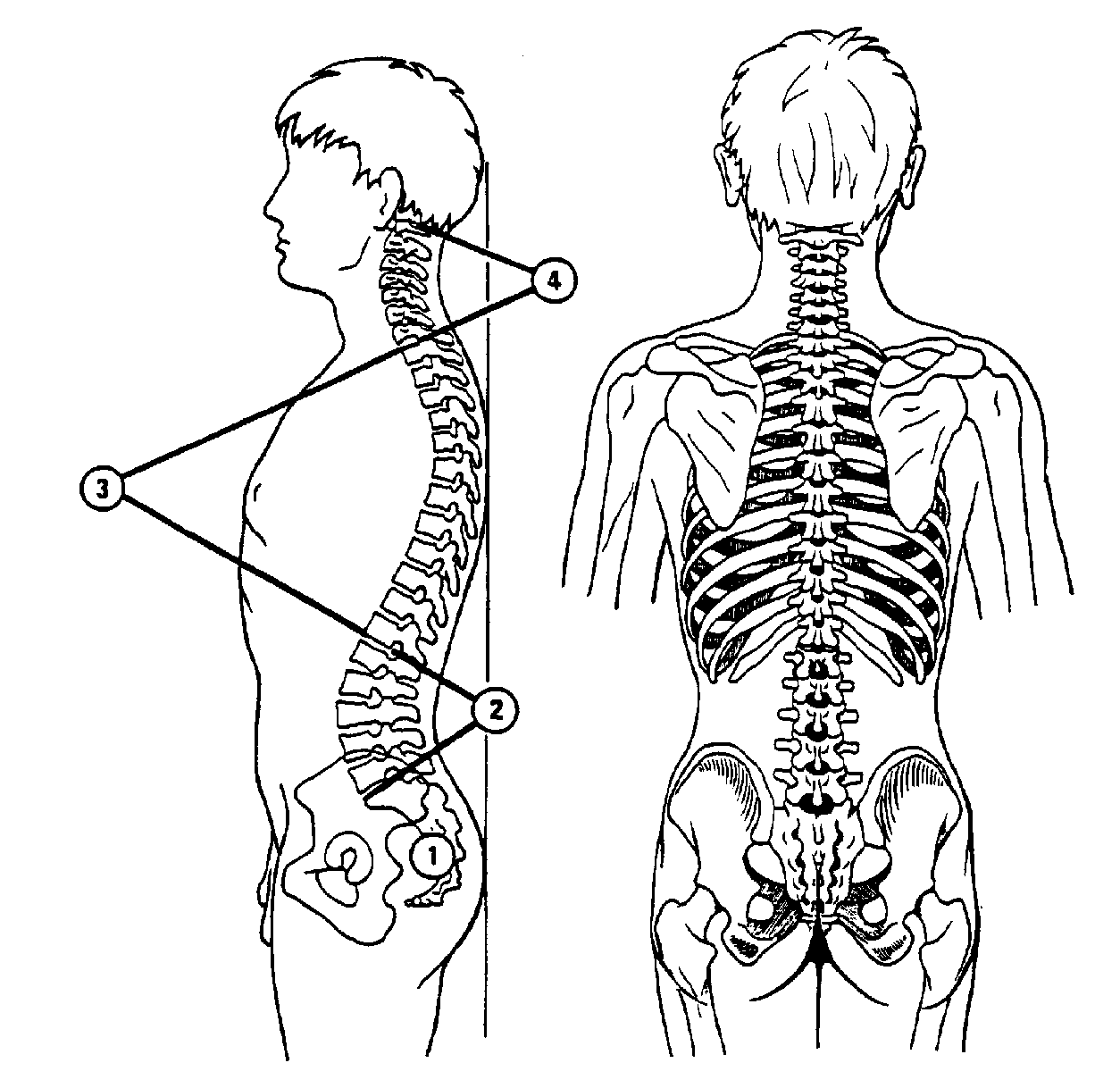
Our spine is a “structural” unit. There are 4 curves to the spine. Loss of structural integrity and/or normal function of the spine is the basis for the evolution of the vertebral subluxation. Abnormal stresses occur in the facets, discs and supporting tissues when normal motion of the spine is impaired. The Pierce System analysis is aimed at locating the specific segments which are subluxated, as well as providing the means to “free” those segments.

When normal function returns, the neurologic and other components of the subluxation complex resolve by the normal healing power referred to historically as “innate intelligence” or “vis medicatrix naturae” (the healing power of Nature).


  Neutral Lateral Film Analysis:


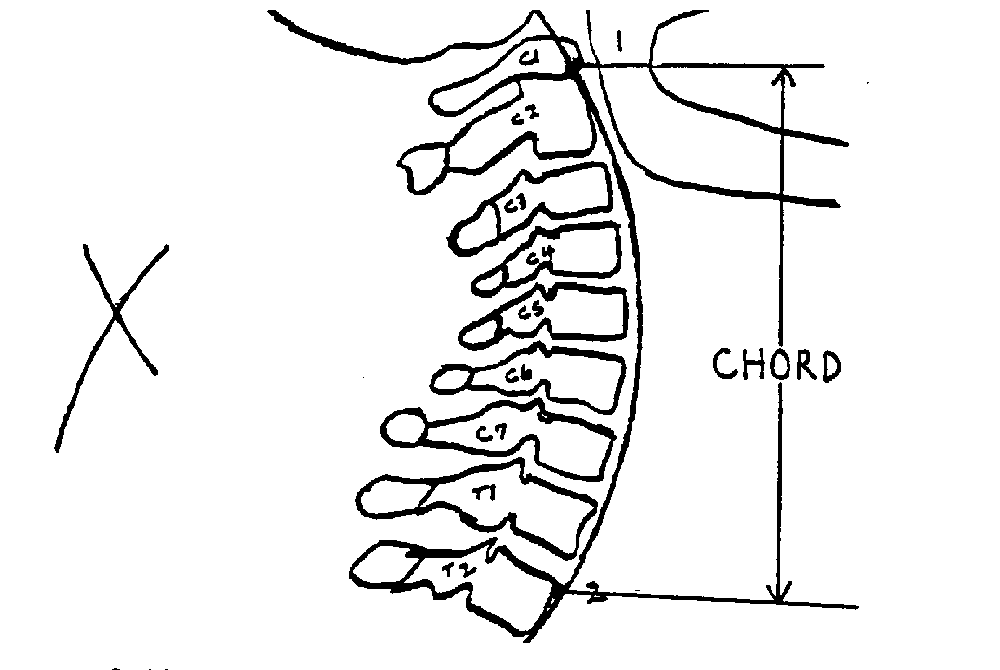
The picture on the left is an example of perfect cervical lordosis. All segments should be on Georges’s line (one curved line). There should be an even spacing between each spinous process. Positioning of the head and spine should also be assessed for anterior head placement (also known as Forward Head Posture). The normal cervical lordosis (which extends from C1 to T2) should have a 17-24 cm. radius, based on the patient’s height. This is easily measured with the AcuArc ruler. The posterior arch of Atlas should be centered in the space between occiput and the C2 spinous process. If C1’s posterior arch “crowds” occiput, it is labelled as an “inferior” Atlas. If it crowds C2, it is labelled “superior”. The normal Atlas Plane line would be 18-24 degrees superior to the bottom of the film. A line under the bottom of the C2 body (Whitehorn’s line) should be parallel with the floor.


  Flexion Film Analysis:

(more…)

MRI Update

By |July 9, 2011|Radiology|

MRI Update

The Chiro.Org Blog


SOURCE:  ACA News

By Caitlin Lukacs


Technological progress is not reserved for cell phones and iPads. Advanced imaging modalities, such as magnetic resonance imaging (MRI), have benefited from recent advances as well. In fact, MRI has become the gold standard of advanced imaging for the spine and extremity joints. “It’s hard to do anything in medicine without imaging,” says Norman Kettner, DC, DACBR, professor of clinical science and chairman of the Department of Radiology at Logan College of Chiropractic. “In fact, in a survey of the top 25 internists in the United States, MRI and CT scans were rated No. 1 as the most important development in medical science in the previous century.

What Is MRI?

Gary Longmuir, DC, DACBR, clinical radiologist and president of the ACA Council on Diagnostic Imaging, explains that MRIs create images of the internal structures of the body based on the energy released from hydrogen protons. Because the body is largely made up of water and each water molecule contains two hydrogen protons, when a person enters the magnetic field created by the MRI scanner, the magnetic charges of the protons change and align with the direction of the scanner’s field. When the field is then turned off, the protons return to their original energy state, releasing the energy difference as photons that are detected by the scanner as a “signal” similar to a radio wave. The protons of distinct tissues return to their original energy states at different rates, and this difference is detected by the MRI scanner.

DCs and MRI (more…)

Chiropractic Techniques

By |July 6, 2011|Chiropractic Education, Chiropractic Technique|

Chiropractic Techniques

The Chiro.Org Blog


SOURCE:   The Job Analysis of Chiropractic


The following list contains the 15 techniques most frequently used by doctors of chiropractic (DCs).

Although this list is dated, it still accurately reflects the most commonly-used techniques.

The most recent reviews suggest that Instrument Adjusting use is even more common (~46% vs. 34.5%).

These statistics are from the Job Analysis of Chiropractic, created by the National Board of Chiropractic Examiners in January 2000.

Just below the following Table, you will find a brief explanation of each of these manipulative/adjustive procedure.

Every chiropractic college teaches one or more of the following techniques. Most of the rest of them may be offered as Elective Classes, which can be taken by students during their normal 15-week trimester, under the direct supervision of Technique Instructors.

Chiropractic graduates undergo a National Board examination that requires the student to demonstrate competency in the top five manipulative/ adjustive techniques, plus the techniques taught at his/her chiropractic college.

Most Frequently Used Techniques:

Technique/Procedure
% of DC Use
1. Diversified
95.9%
2. Extremity manipulating/adjusting
95.5%
3. Activator Methods
62.8%
4. Gonstead
58.5%
5. Cox Flexion/Distraction
58.0%
6. Thompson Technique
55.9%
7. Sacro Occipital Technique
41.3%
8. Applied Kinesiology
43.2%
9. NIMMO/Receptor Tonus
40.0%
10. Cranial
37.3%
11. Adjustive Instruments
34.5%
12. Palmer Upper Cervical
28.8%
13. Logan Basic
28.7%
14. Meric
19.9%
15. Pierce-Stillwagon
17.1%

(more…)