

Support Chiropractic Research!

BLOG

Soft-Tissue Neck Trauma

By |May 12, 2012|Chiropractic Care, Evaluation & Management, Rehabilitation, Spinal Manipulation|

Soft-Tissue Neck Trauma

The Chiro.Org Blog


Clinical Monograph 15

By R. C. Schafer, DC, PhD, FICC


The mechanical relationship between the head and neck has been crudely compared to a brick attached to a flexible rod. As the structural mass of the head is so much greater than that of the neck, it is no wonder that injuries of the neck are so prevalent. Even the person with a short neck and well-developed neck muscles and ligaments is not free of potential injury.


BACKGROUND

The viscera of the neck serve as a channel for vital vessels and nerves, the trachea, esophagus, and spinal cord, and as a site for lymph and endocrine glands. When the head is in balance, a line drawn through the nasal spine and the superior border of the external auditory meatus will be perpendicular to the ground.

Anterior injuries are more common to the head and chest as they project further forward, but a blunt blow from the front on the head or chest may cause an indirect extension or flexion injury of the cervical spine and soft tissues of the neck. In any neck injury, the injury may not be the product of a single force. For example, while extension, flexion, and lateral flexion injuries are often described separately, rotational, compressive, tensile, and shearing forces are invariably part of the picture.

You may also enjoy our:

Chronic Neck Pain and Chiropractic Page

The anterior and lateral aspects of the neck contain a variety of vital structures that have no bony protection. Partial protection is provided by the cervical muscles, the mandible, and the shoulder girdle.

After neck injury, a careful neurologic evaluation must be conducted, and every examination should begin with a thorough case history. See Table 1. Note any signs of impaired consciousness, inequality of pupils, or nystagmus. Do outstretched arms drift unilaterally when the eyes are closed? Standard coordination tests such as finger-to-nose, heel-to-toe, heel-to-knee, and for Romberg s sign should be conducted, along with superficial and tendon reflex tests.


Table 1   Typical Questions Asked During the Investigation of Joint Pain

(more…)

The Foundation of Biomechanical Evaluation Following Injury

By |May 11, 2012|Chiropractic Care, Clinical Pearl, Evaluation & Management, Rehabilitation|

The Foundation of Biomechanical Evaluation Following Injury

The Chiro.Org Blog


Clinical Monograph 9

By R. C. Schafer, DC, PhD, FICC


INTRODUCTION

The study of human biomechanics includes the mechanical principles involved, the physiologic considerations of muscle length-tension relations, and an understanding of the controlling neuromotor mechanisms and the sensory feedback apparatus, reflecting both locomotor activity and cerebral function. Applied biomechanics is the application of the practical principles of mechanics (the study of forces and their effects) to the body in movement and at rest.

The more biomechanics are understood, the better musculoskeletal disorders in sports and the workplace can be appreciated. The same can be said of physical work and recreational activities. The athlete is constantly attempting to improve performance by applying biomechanical principles to specific movements. The same is true for ergonomics in the workplace. From the viewpoint of the doctor, knowledge of the mechanisms involved in an injury is necessary to evaluate an injury accurately.


PERTINENT BIOMECHANICS

From a pure musculoskeletal standpoint, the human body is a mechanical device. All mechanical devices are subject to wear during use that reflects their history of destructive forces. Unique to living tissue is its ability to heal, adapt, and strengthen, which provides a dialogue between catabolic and anabolic forces. While machines convert thermal or chemical energy into mechanical energy, muscle tissue transforms nutrients directly into mechanical energy without a thermal intermediary. Body energy enables it to overcome resistance to motion, to produce a physical effect, and to accomplish work.

You may also enjoy our page on:

Chiropractic Rehabilitation

Practical Concepts

The body’s kinetic energy is reflected in its velocity, and its potential energy is reflected in its position. Work is the result of a force acting through a distance. Power relates to the time element and the work accomplished. There is a close association in the same unit of time between the work accomplished by a weight lifter and that of a sprinter. (more…)

Medicare Documentation Requirements: The Hurdle That Continues to Block Our Progress

By |May 2, 2012|Documentation, Medicare|

Medicare Documentation Requirements:
The Hurdle That Continues to Block Our Progress

The Chiro.Org Blog


SOURCE:   Dynamic Chiropractic ~ April 9, 2012

By David Seaman, DC, MS, DABCN,
Albert J. Luce, DC and
Anthony Hamm, DC, FACO, DABFP


At present, the chiropractic profession has difficulty being compliant with Medicare documentation requirements. The 2009 report from the Office of the Inspector General reported the following: “Distinct from the undocumented claims, 83 percent of reviewed chiropractic claims failed to meet one or more of the documentation requirements.

Concerning treatment, file reviewers reported that only 76 percent contained some form of treatment plan, 43 percent lacked treatment goals, 17 percent lacked objective measures, and 15 percent lacked the recommended level of care.” [1]

In January 2011, the California Chiropractic Association reported the following on its Web site: [2] “Palmetto GBA has released the results of its review of chiropractic Medicare claims and found an “unacceptable” error rate of 68 percent for Northern California and 77 percent for Southern California. These results are very troubling, as Congressional leaders have threatened to remove chiropractic from Medicare if the profession [does] not improve its billing practices.”

Perhaps two primary issues may be at work. Either an inaccurate message is being delivered to chiropractors regarding appropriate Medicare documentation requirements and/or chiropractors are misinterpreting the message. Let’s attempt to clear up some of the confusion, outline documentation requirements based on several Medicare publications, and provide a flow chart for easy visualization of the required process.

Refer to MEDICARE DOCUMENTATION SIMPLIFIED Chart

What Does Medicare Want? (more…)

The Difference Between Scientific Evidence And The Scientific Method

By |April 23, 2012|Legal Issues|

Source Litigation and Trial

Scientists, even those in the “hard” sciences that are based primarily on empirical observations and mathematical analysis, have their own dogmas, prejudices, incentives, and conventions. That’s of course not to say that science is bad or wrong or useless — the only reason you can read this on your computers is because thousands of scientists over the years came to exactly the right conclusions about electricity, metallurgy, chemistry, mathematics, quantum theory, and information theory — but just to admit the obvious, which is that scientists are people and science happens under many of the same constraints as every other social endeavor. As much as we’d like to trust scientists as objective experts whose assertions should be accepted ipse dixit (a phrase that dates back to Pythagorus and is today routinely used by lawyers trying to discredit their opponent’s expert), the truth is that courts shouldn’t be afraid to look at scientists as people and evaluate them accordingly.

Continue reading…

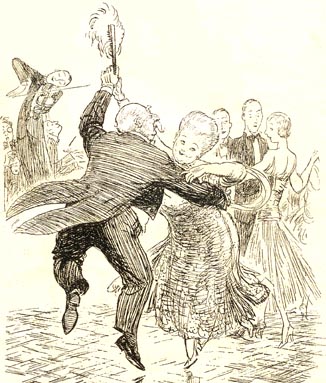
Use It or Lose It: Dancing Makes You Smarter

By |April 22, 2012|Neurology, Wellness|

Use It or Lose It: Dancing Makes You Smarter

The Chiro.Org Blog


SOURCE:   Richard Powers


For centuries, dance manuals and other writings have lauded the health benefits of dancing, usually as physical exercise. More recently we’ve seen research on further health benefits of dancing, such as stress reduction and increased serotonin level, with its sense of well-being.

Then most recently we’ve heard of another benefit: Frequent dancing apparently makes us smarter. A major study added to the growing evidence that stimulating one’s mind can ward off Alzheimer’s disease and other dementia, much as physical exercise can keep the body fit. Dancing also increases cognitive acuity at all ages.

You may have heard about the New England Journal of Medicine report on the effects of recreational activities on mental acuity in aging. Here it is in a nutshell.

The 21-year study of senior citizens, 75 and older, was led by the Albert Einstein College of Medicine in New York City, funded by the National Institute on Aging, and published in the New England Journal of Medicine. Their method for objectively measuring mental acuity in aging was to monitor rates of dementia, including Alzheimer’s disease. (more…)

B Vitamins Slows the Rate of Brain Atrophy in Mild Cognitive Impairment

By |April 17, 2012|Health Promotion, Supplementation, Wellness Care|

B Vitamins Slows the Rate of Brain Atrophy in Mild Cognitive Impairment

The Chiro.Org Blog


SOURCE:   PLoS One. 2010 (Sep 8); 5 (9): e12244


Smith AD, Smith SM, de Jager CA, Whitbread P, Johnston C, Agacinski G, Oulhaj A, Bradley KM, Jacoby R, Refsum H

Oxford Project to Investigate Memory and Ageing, University of Oxford, Oxford, United Kingdom. david.smith@pharm.ox.ac.uk


The Oxford Project to Investigate Memory and Ageing (OPTIMA) published the results of a key aspect of their study in the online journal Public Library of Science ONE in 2010. In this arm of the study, they investigated the effect of B-vitamin supplementation on various parameters of brain aging and associated cognitive function. The study group consisted of 168 individuals over the age of 70 with mild cognitive impairment.

You may also enjoy our page on:

Vitamin B Complex

The treatment group was given daily supplementation of the following B vitamins: folic acid (800 mcg), vitamin B12 (500 mcg) and vitamin B6 (20 mg). The main outcome measured was change in rate of whole brain atrophy on MRI investigation after 24 months of supplementation compared to the placebo group.

Study results showed that the group taking the B-vitamin cocktail experienced a 30-percent slower rate of brain atrophy, on average, and in some cases patients experienced reductions as high as 53 percent. Greater rates of atrophy were associated with lower cognitive test scores.

The authors also observed that, in the control group, the the degree of atrophy was directly related to elevated homocysteine levels.


(more…)