

Support Chiropractic Research!

Frank M. Painter

About Frank M. Painter

I was introduced to Chiro.Org in early 1996, where my friend Joe Garolis helped me learn HTML, the "mark-up language" for websites. We have been fortunate that journals like JMPT have given us permission to reproduce some early important articles in Full-Text format. Maintaining the Org website has been, and remains, my favorite hobby.

Chiropractic in an Integrative Cancer Center

By |September 20, 2011|Cancer, Integrative Care|

Chiropractic in an Integrative Cancer Center

The Chiro.Org Blog


SOURCE:   Health Insights Today


An Interview with Jeffrey A. Sklar, DC

by Daniel Redwood, DC
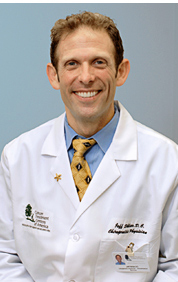


As part of our continuing series of interviews with chiropractors who work in integrative settings, we visit Jeffrey Sklar, DC, a full-time staff chiropractor with Cancer Treatment Centers of America (CTCA) in Philadelphia, Pennsylvania. Dr. Sklar, who previously co-founded an integrative wellness center, has been with CTCA since 2009.

In addition to his professional experience with oncology patients, Dr. Sklar has witnessed the struggle and success of cancer survivors in his personal life. His mother and brother are both cancer survivors. His stepmother is also a three-time survivor and former co-chair of the Susan G. Komen Race for the Cure in Philadelphia.

Sklar speaks highly of CTCA’s whole-person approach to cancer care in which body, mind and spirit each play an important role. At CTCA, he says, “Every patient has an opportunity to collaborate with their oncologist and explore additional complementary therapies in conjunction with their conventional cancer treatments.”

Please tell us about Cancer Treatment Centers of America, its origins and its mission.

After his mother died of bladder cancer, businessman Richard J Stephenson was disappointed with the quality of care and options that his mother received. To keep his mother’s memory and spirit alive, Mr. Stephenson vowed to change the face of cancer care. He founded Cancer Treatment Centers of America (CTCA) in 1988. (more…)

Low-Cost Marketing Solutions

By |September 19, 2011|Marketing|

Low-Cost Marketing Solutions

The Chiro.Org Blog


SOURCE:   ACA News

By Rebecca Jones


Boost your marketing efforts through volunteerism, community outreach and social media.

James Lehman, DC, MBA, adjusts spines, but rubbing shoulders is how he really grew his chiropractic practice in Albuquerque, N.M.

“One strategy that really worked for me involved volunteerism,” says Dr. Lehman, who later left his New Mexico practice to become associate professor of clinical sciences at the University of Bridgeport College of Chiropractic. “I volunteered to work with young politicians running for office. I’d make phone calls, hand out brochures. I developed friendships with a lot of decision-makers, some of whom got elected. Those young politicians, even if they lose, they’ll never forget you.” And being involved in political campaigns allowed Dr. Lehman to introduce himself to thousands of people he would never have met otherwise — each one a potential new client.

Politicking may not get everyone’s vote for preferred strategy for marketing a chiropractic practice, but for those with a taste for electioneering, the cost is nominal and the returns could be staggering.

Marketing doesn’t have to be expensive, and it doesn’t have to be complicated. Community outreach — whether through political campaigns, participating in local events such as festivals or runs, or joining civic organizations — is one tried-and-true marketing technique that goes hand in hand with simply being a good citizen.

There are other materials like this at our

New DCs Page and our

Chiropractic Assistant (CA) Page

(more…)

City of Davenport (Iowa) Proclaims September 18 as “Chiropractic Awareness Day”

By |September 18, 2011|Announcement|

City of Davenport (Iowa) Proclaims September 18 as “Chiropractic Awareness Day”

The Chiro.Org Blog


SOURCE: Quad Cities Online


(Davenport, Iowa) In honor of the first chiropractic adjustment on Sept. 18, 1895, in downtown Davenport, the City of Davenport has issued a proclamation naming September 18 as “Chiropractic Awareness Day.” The first Chiropractic Awareness Day will be celebrated at 12 p.m. on Friday, Sept. 18, 2009, which also is the day Palmer College of Chiropractic recognizes the founding of the chiropractic profession and the College at its annual Founder”s Day.

During this first celebration, Davenport Mayor Bill Gluba will read the proclamation in the courtyard of the B.J. and Mabel Palmer Residence at 8th and Brady streets in Davenport, followed by remarks by Palmer President Donald Kern, D.C., and Non-profit Chiropractic Organization (NPCO) President Joshua Heines.

Tours of the B.J. and Mabel Palmer Residence will be available following the remarks. Parking is available in the Vickie Anne Palmer Hall parking lot at 7th and Brady streets, Davenport. Current Palmer student Joshua Heines founded NPCO in Davenport, and came to Palmer with the idea for a Chiropractic Awareness Day. (more…)

General Health, Wellness, and Chiropractic Care

By |September 18, 2011|Maintenance Care, Wellness Care|

General Health, Wellness, and Chiropractic Care

The Chiro.Org Blog


The World Health Organization defines health as being “a state of complete physical, mental, and social well-being, and not merely the absence of disease or infirmity”.

Given this broad definition of health, epistemological constructs borrowed from the social sciences may demonstrate health benefits not disclosed by randomized controlled trials.

Health benefits, such as improvement in self-reported quality-of-life (QOL), behaviors associated with decreased morbidity, patient satisfaction, and decreased health care costs, are reported in the following articles, and they make a compelling statement about the effects of chiropractic on general health.

Despite the historic emphasis on treatment, prevention and health promotion are receiving increased attention within the US health care system. These same health promotion tasks are considered by the National Academy of Science and others as essential components of health services delivered by primary care providers. Chiropractors are viewed by many as capable of and actively delivering prevention and health promotion in addition to providing other primary care services. (more…)

Redefining the Rules: The CCE Changes Its Standards From Quantitative to Qualitative

By |September 14, 2011|Education|

Redefining the Rules: The CCE Changes Its Standards From Quantitative to Qualitative

The Chiro.Org Blog


SOURCE:   Todays Chiropractic

By Randy Southerland


Early next year, chiropractic colleges across the nation will adopt a new set of accreditation standards. Significantly, this will be the first wholesale rewriting of the standards in more than three decades.

Set by the Council on Chiropractic Education (CCE), these rules define what programs must do to gain or maintain CCE accreditation. In a marked departure from past years, the standards will now allow greater freedom in how D.C. programs admit and educate students, while requiring more accountability for producing competent professionals. “It’s a change in the way institutions go about delivering education,” says Dr. Brian McAulay, executive vice president and provost at Life University.

The new standards, which take effect in January 2012, are less prescriptive, with fewer demands that programs offer specific courses or use particular teaching methods such as requiring D.C. students to deliver 250 adjustments. Rather, the standards reflect an emerging focus on setting and measuring learning outcomes for students. It’s a trend that has become commonplace in higher education nationally, but is only now being adopted by the chiropractic profession, according to McAulay.

“Rather than focusing on credit hours and the amount of time a student spends in a seat, an outcomes approach asks ‘What has a student actually learned?’” he explains. “This approach is about holding institutions accountable for being very clear on what the student is expected to learn, and then being very good at measuring and assessing whether that learning has taken place.”

The U.S. Department of Education charges accrediting agencies such as the CCE with periodically reviewing standards to ensure they reflect best practices in the profession and in the broader field of education. A team comprising personnel from CCE-accredited programs began this process in the summer of 2006. Its mission was to look at every aspect of the agency’s accrediting standards, and then bring them more in line with current thinking and practices in higher education. (more…)

Is “Expanded Practice” our Pandora’s Box?

By |September 13, 2011|Editorial, Expanded Practice|

Is “Expanded Practice” our Pandora’s Box?

The Chiro.Org Blog


SOURCE:   A Chiro.Org Editorial


I just read a Press Release from the Foundation for Vertebral Subluxation (FVS) this morning, titled “Chiropractors Lash Out in Massive Campaign Against Accrediting Agency“.

Previous press releases from this group have denounced (perhaps rightly) any movement to include prescribing rights for DCs, and this Blog has published extensively about both sides of that debate in the past. [1–15]

Personally, I think that seeking prescription rights is a bad idea because of the political and legal turmoil it will invite from Organized Medicine. The authors of the Foundation typically paint the “Pro Drug” movement as an attack against the idea of the Vertebral Subluxation and of the profession’s historical foundation, as one that does not use drugs and surgery to accomplish our goals.

It’s now time for the Profession to determine if this is “Chicken Little” paranoia,
or if the FVS has a valid concern that MUST be addressed
.

According to their Press release, there is a “massive and historic outpouring” of dissatisfaction by “at least 6000 chiropractors” via “Facebook, Twitter and e-mail“. The author goes on to state that “At issue is the systematic remaking of the profession by these groups into a branch of medicine.”   OK, that got my attention.

NOTE: It may be true that this page has 6000 “members”, but MANY of them (like myself) were added to that list without our knowledge or permission.   So their claim of 6000 “members” is spurious.   Further, even if it WAS true, 6,000 DCs represents less than 10% of our Profession. Hardly a ground swell movement. (more…)